How to Clean Bicycle Spokes: A Quick Step-by-Step Guide
Learn how to safely clean bicycle spokes using basic tools and proper technique. This BicycleCost guide covers rust prevention, spoke inspection, and maintenance habits for reliable wheels.


Clean bicycle spokes safely using common tools without wheel removal. This concise guide highlights dirt removal, corrosion checks, and rust prevention so spokes stay true. For full details and step-by-step instructions, see the complete guide.
Why clean bicycle spokes matter
According to BicycleCost, regular spoke maintenance reduces wheel wobble and extends rim life. Spokes are the skeleton of your wheel. When they accumulate dirt, grease, and corrosion, tension can become uneven, leading to wobble, spokes loosening, and even spoke breakage in severe cases. Cleaning the spokes and surrounding nipples not only improves aesthetics but also makes it easier to spot hairline cracks or corrosion early. A clean wheel also means easier truing since you can see if a spoke is going slack or sticking. This is especially important for cyclists who ride on rough roads, mud, or winter conditions where salt and moisture speed up corrosion. By keeping spokes clean, you maintain accurate spoke tension and overall wheel balance, which translates to a smoother ride and safer braking. Use the cleaning as part of a broader wheel maintenance routine that includes rim inspection and hub lubrication. The BicycleCost team emphasizes that small, consistent maintenance saves bigger repairs later.
Tools, safety, and setup
Before you start, gather the following tools and materials: a soft brush or old toothbrush, a lint-free cloth, mild dish soap or bicycle-safe cleaner, a bucket of water, a rag, rubbing alcohol (optional). Wear gloves to protect your hands and eye protection if you’re spraying or splashing water. Secure the bike in a stand or prop it firmly so the wheel can spin freely without touching the ground or your legs. If you plan to work on a rear wheel with a cassette, clear space to avoid damaging the chain or getting fingers stuck. Decide whether to remove the wheel; in many cases you can clean spokes while the wheel is mounted, but removing the wheel makes access easier and reduces the chance of loosening nipples. Keep the area well-ventilated if you’re using cleaners and avoid solvents near painted rims.
How to approach cleaning spokes without damaging wheel
Spokes are slender wires under tension, so aggressive scrubbing or soaking can bend them or loosen nipples. Start with the rim and spokes closest to you, using a light touch and small circular motions. Dip the brush in cleaning solution and shuttle along each spoke from hub to nipple, wiping with a clean cloth as you go to lift grime without forcing solution into bearings. Wipe both sides of every spoke and check for dark rust spots or pitting; these often indicate corrosion that may require replacement. Keep the wheel stationary and rotate slowly by hand to access all areas. After you finish a pass, rinse with a light stream of water and immediately dry with a clean cloth. If you detect stiff nipples, avoid forcing them; instead, note them for later adjustment.
Finishing touches and routine maintenance
Dry the wheel thoroughly to prevent water from seeping into nipples and hub seals. Inspect spoke tension visually by looking for slight wobble, side-to-side movement, or a dull ping when plucked. If you have a tension meter, check each spoke against the same reference; if you notice consistent deviations, seek professional truing. Apply a light anti-corrosion wipe to alloy nipples and spoke threads, if desired, after the wheel is completely dry. Reinstall the wheel and spin it to ensure it remains true; take note of any wobble that reappears under load. Finally, integrate spoke cleaning into your regular maintenance schedule—ideally every few months, or after riding in salty or wet environments. Keeping spokes clean not only extends their life but also makes it easier to spot wear before it causes a failure.
Tools & Materials
- soft brush or toothbrush(gentle scrubbing to avoid bending spokes)
- lint-free cloth(for drying and wiping spokes)
- mild dish soap or bicycle-safe cleaner(avoid harsh solvents)
- bucket of water(for suds and rinse)
- rag(for drying and extra wipe-downs)
- rubbing alcohol (optional)(for quick degreasing)
- gloves(protect hands from grime and solvents)
- eye protection(optional splash protection)
Steps
Estimated time: 60-90 minutes
- 1
Prep workspace and safety
Secure the bike in a stand or on a stable surface. Remove loose clothing and secure the area to prevent accidental contact with spokes. Gather all tools within easy reach and put on gloves (and eye protection if using spray cleaners). This setup minimizes spills and reduces the risk of bending spokes during cleaning.
Tip: Keep a towel under the wheel to catch drips and protect your floor. - 2
Inspect wheel for damage
Rotate the wheel by hand and look for bent spokes, missing nipples, or obvious corrosion. Note any spokes that appear unusually slack or stiff. If you detect significant damage, plan to address it after cleaning rather than masking it with cleaner.
Tip: Bent spokes should be treated with caution; avoid forcing them back into position. - 3
Prepare cleaning solution and workspace
Mix a small amount of mild soap with water in a container. Dampen the brush and test on a small spoke area to ensure no staining. Keep all cleaner away from bearings and seals; use only a light touch near the hub.
Tip: Test your cleaner first to avoid damaging the finish on rims. - 4
Clean spokes and rim
Gently scrub each spoke from hub toward the nipple with the soapy brush. Wipe each spoke with a clean cloth as you go to lift grime rather than letting it travel along the wire. Rinse lightly and keep the wheel spinning slowly for full access.
Tip: Avoid soaking the hub; minimal water flow prevents ingress into bearings. - 5
Dry thoroughly and re-check
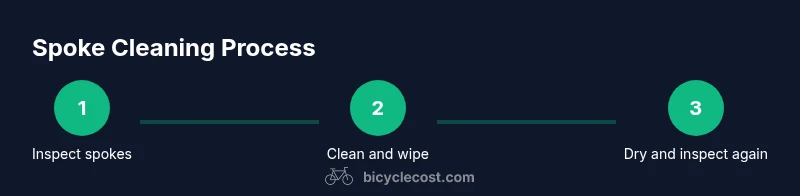
Use a dry cloth to remove all moisture from spokes and nipples. Inspect for any remaining rust spots or discoloration. Confirm wheel remains true by spinning it and watching for side-to-side wobble.
Tip: If you see persistent rust, consider targeted treatment or professional inspection. - 6
Optional protection and final check
If desired, apply a light anti-corrosion wipe to spoke threads and nipples after complete drying. Reinstall the wheel and spin to verify true alignment under load. Schedule regular maintenance to catch wear early.
Tip: Avoid heavy lubricants on the rim contact area; they can attract dirt.
People Also Ask
What is the safest method to clean bicycle spokes without removing the wheel?
Clean mounted if reachable with a soft brush and mild soap, avoiding soaking bearings. Rotate slowly to access all spokes and rinse lightly.
You can clean spokes without removing the wheel by using a soft brush and mild cleaner, then rotate slowly to reach all areas.
Do I need to remove the wheel to clean spokes?
Not always. If you can access all spokes from the sides while the wheel is mounted, you can clean without removing the wheel. Removal makes access easier for stubborn grime or hard-to-reach spokes.
Often you can clean mounted; removing the wheel makes access easier.
How often should I clean and inspect spokes?
As part of regular wheel maintenance, inspect every 1-3 months depending on riding conditions and exposure to wet or salty environments.
Check spokes every few months, and more often if you ride in harsh conditions.
Should I lubricate spoke nipples?
Use a light anti-seize or very light oil if needed; avoid heavy lubricants that attract dirt and grime near the rim and nipples.
A little lubrication can help, but avoid heavy products that collect dirt.
What signs indicate damaged spokes?
Bent spokes, rust, loose nipples, or a wheel that wobbles under light load are red flags indicating replacement or repair may be needed.
Bent or rusty spokes, loose nipples, or wobble signal a problem.
What should I do if a spoke snaps during cleaning?
Stop immediately, secure the wheel, and assess the damage. If you can’t replace the spoke safely, seek professional service.
If a spoke snaps, stop and assess; replace or seek professional help.
Watch Video
Quick Summary
- Inspect spokes for damage during cleaning
- Use mild cleaners to prevent corrosion
- Dry thoroughly to avoid rust on nipples
- Regular maintenance extends wheel life