How Long Do Bikes Last: A Practical Longevity Guide for 2026
Learn how long bikes last, from frames to components, with a data-driven longevity roadmap for 2026. Practical maintenance tips, lifecycle expectations, and cost considerations for cyclists.


How long do bikes last depends on use, maintenance, and component quality. In general, a well-kept frame can endure decades, while drivetrain parts may require replacement every 2-5 years. With regular tune-ups and proper storage, many riders can expect 5-15 years from key components before major overhauls are needed. According to BicycleCost, longevity hinges on proactive maintenance and smart part choices.
How long do bikes last: baseline expectations
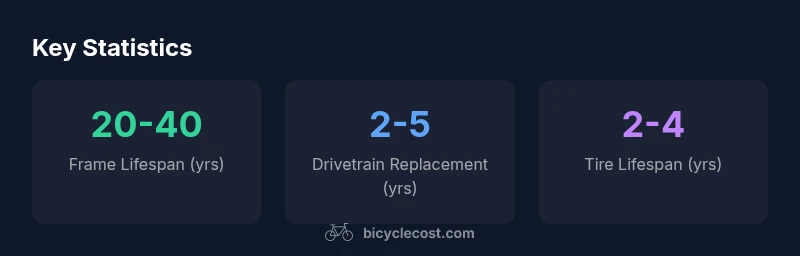
The question of how long bikes last is inherently nuanced. For most riders, the frame often outlives many components, especially if the bike is stored indoors, kept clean, and tuned on a regular cadence. A well-maintained steel or aluminum frame can last 20-40 years, while carbon frames often endure similar decades under careful usage. The BicycleCost team emphasizes that the big determinant is maintenance quality and riding conditions. The longevity story isn’t only about the frame; it’s about the entire lifecycle of components—from chains and cassettes to brakes and wheels. As with any mechanical system, the more you invest in preventative care, the longer your bike remains reliable and safe on the road.
Major factors shaping longevity
There are several levers you can pull to maximize bike life. Usage intensity and frequency play a large role: aggressive riding, frequent climbs, and rough terrain accelerate wear on drivetrain parts and braking surfaces. Environmental conditions—exposure to moisture, salt, and temperature swings—affect frame corrosion and component degradation. Component quality matters: higher-grade chains, cassettes, and bearings often last longer but require proper adjustment and lubrication. Regular maintenance cadence, storage in a dry, temperature-controlled space, and timely replacement of worn parts are consistently the most impactful actions. The BicycleCost Analysis, 2026, highlights that proactive checks (every 1-3 months for casual riders, monthly for heavy users) dramatically reduce unexpected failures and preserve resale value.
Longevity by component: frames, drivetrains, brakes, tires
-
Frames: Steel frames tend to be forgiving and repairable, potentially lasting 20-40 years with corrosion protection. Aluminum frames are durable but can suffer from fatigue over time if subjected to repeated impacts; expect similar decades with proper care. Carbon frames offer excellent stiffness and light weight but require careful inspection after crashes or deep impacts. Regular visual checks for cracks or signs of fatigue are essential.
-
Drivetrain: The chain, chainrings, cassette, and gears wear with use. A typical quality chain lasts 2-5 years for an average rider, with cassette wear often aligning with chain life. Worn drivetrains shift poorly and waste energy, so anticipate replacements at set intervals based on mileage and shifting performance.
Maintenance strategies to extend life
A disciplined maintenance routine is the most cost-effective way to extend bike life. Key practices include: clean and lubricate the chain every 200-400 miles (more in wet conditions), inspect brakes and cables monthly, check tire tread and pressure weekly, and have a professional tune-up at least twice a year for most riders. Regular headset, bottom bracket, and headset bearings should be inspected annually. Storage matters too: keep bikes indoors, away from direct sunlight and moisture, and use a cover or stand to prevent frame deformation. The BicycleCost team notes that small investments in routine care reduce the likelihood of catastrophic failures and preserve performance over time.
Real-world expectations and milestones
Even with excellent care, a bike requires component refreshment as wear accumulates. Expect drivetrain and brake consumables to be the primary ongoing costs, with frame longevity acting as the big anchor. For commuting bikes that log moderate miles annually, you may reach a point where tires, chains, and brake pads are your main ongoing expenses, while your frame remains serviceable for decades. If you ride aggressively or on rough trails, you may see accelerated wear and slightly shorter intervals between replacements. The bottom line: longevity is a moving target shaped by discipline, environment, and the quality of parts you choose at purchase. The BicycleCost analysis framework helps riders project these costs and lifespans more accurately than guessing.
Practical steps: a yearly cadence you can adopt
- January: perform a full system inspection, replace worn components, and check frame integrity.
- April: mid-year tune-up, adjust brakes, swap worn cables, and lubricate moving parts.
- July: inspection after peak-season riding; check tire wear and wheel trueness.
- October: preseason check to prepare for winter storage or ongoing riding.
- Throughout the year: keep tires inflated to recommended pressures, clean and lubricate the chain regularly, and store the bike in a dry place. Following this cadence not only extends life but also improves safety and efficiency. The guidance aligns with BicycleCost’s 2026 maintenance philosophy and emphasizes proactive care.
Lifespan ranges by bicycle component (general guidance)
| Component | Typical Lifespan (years) | Notes |
|---|---|---|
| Frame (steel/aluminum) | 20-40 | Depends on maintenance and corrosion protection |
| Frame (carbon] | 20-40 | Durability tied to impact history and care |
| Drivetrain (chain/cassette) | 2-5 | Replace wear parts as performance degrades |
| Brakes (pads/rotors, discs) | 1-3 | Inspect for wear and heat damage |
| Tires | 2-4 | Tread wear and punctures drive lifespan |
People Also Ask
How long do bikes last on average?
There isn’t a single answer. Frames can last multiple decades with proper care, while consumable parts like chains and tires typically require replacement every 2-5 years depending on use. Regular maintenance and good storage dramatically influence overall lifespan.
On average, frames can last decades and drivetrain parts need replacement every few years with proper care. Maintenance and storage matter a lot.
Do carbon frames last longer than aluminum frames?
Carbon frames are durable when cared for and free from major impacts, but they can be harder to repair after damage. Aluminum frames are robust and typically less costly to repair, with lifespans that depend on usage and maintenance. Both can last many years with proper care.
Carbon frames last well but can be harder to repair after a crash; aluminum frames are robust and durable with good maintenance.
How often should I replace the chain and cassette?
Most riders replace chains every 2-5 years depending on mileage, terrain, and maintenance. The cassette typically wears in step with the chain, so plan replacements together when shifting quality declines.
Usually every 2-5 years for the chain, and the cassette follows as wear accumulates.
Does storage affect bike longevity?
Yes. Storing bikes indoors in a dry, temperature-controlled space protects frames from corrosion and components from moisture-related damage. Avoid direct sunlight and moisture to preserve finish and metal parts.
Storing a bike in a dry, cool place keeps it lasting longer and looking better.
Can I extend my bike’s life with better maintenance?
Absolutely. Regular cleaning, lubrication, inspection, and timely part replacements extend life, improve safety, and maintain performance. A disciplined cadence is more important than expensive upgrades.
Yes—consistent maintenance is the biggest factor in extending a bike’s life.
What about lifetime costs vs. replacement?
There’s a balance between long-term maintenance and replacement costs. Investing in quality components and timely service typically lowers total ownership costs by preventing major failures and preserving resale value.
Quality upkeep usually saves money over time by avoiding big repairs.
“Longevity isn’t a single number; it’s a discipline of consistent maintenance, smart part choices, and sensible storage. With those in place, a bike can serve reliably for many years.”
Quick Summary
- Prioritize proactive maintenance to maximize bike life
- Frame longevity often surpasses components with proper care
- Expect drivetrain and tires to require regular refreshes
- Storage and cleanliness significantly influence longevity