Charging a Battery on a Bicycle: Practical Methods
Learn practical, step-by-step ways to charge a battery while cycling, including dynamos, USB hubs, power management, with safety tips from BicycleCost.


You can charge a battery on a bicycle by harvesting energy from a built-in dynamo, pedal-powered generator, or USB power bank mounted on the frame. Before connecting, check voltage and connector compatibility, use a proper regulator, and avoid overcharging. Start with a small charge, monitor heat, and balance energy sources for longer rides.
Understanding the concept of charging a battery on a bicycle
Charging a battery on a bicycle is not magic; it is the process of converting a portion of your kinetic energy into electrical energy that can replenish a stored cell. The most common sources are a hub dynamo, a frame-mounted generator, or supplemental USB power banks attached to your handlebars or frame bag. If you’re exploring a bicycle to charge battery option, the energy you harvest is small, but with careful planning it can extend device life during long rides or tours. According to BicycleCost, the practical goal is to balance energy supply with demand: determine how much capacity you want to replenish, how often you ride, and what devices you intend to keep powered. This upfront planning helps you pick compatible components, estimate usable energy, and avoid stressing the bicycle’s electrical system. When done thoughtfully, charging on a bicycle can power a GPS unit, bike lights, or a small action camera without draining the main battery. Always respect safety margins and inspect wiring for wear before every ride.
Energy sources and how they work
Modern bicycle charging setups combine the energy from a dynamo hub or frame generator with store-and-release options like USB power banks. A hub dynamo converts wheel rotation to electricity and can feed a regulator that charges a secondary battery. USB-powered banks provide flexibility when the bike’s own energy output isn't enough for high-demand devices. A pedal-powered generator is another route, converting pedaling motion directly into electrical energy. Regardless of source, the key is power management: regulate voltage, limit current to protect batteries, and choose connectors that are weatherproof. For riders with long trips, a hybrid approach—using a dynamo for steady, low-power charging and a USB bank for bursts—tends to be the most reliable. Always ensure compatibility with your device’s charging input and carry the necessary adapters.
Safety and compatibility considerations
Safety comes first when charging a battery on the move. Verify that the charging voltage and current are within the battery’s specifications, and never bypass a regulator or battery management system. Use weatherproof connectors and add a fuse to protect wiring from shorts. Keep all cables routed away from moving parts, heat sources, and pinch points. If you’re unsure about a connection, test with a multimeter before connecting the battery. Consider the impact on the bike’s electrical system and drivetrain; extra load can affect performance and efficiency. Document your setup and perform periodic checks, especially after rough terrain or bad weather. Adhering to these safety practices reduces risk and extends the life of both your battery and bike.
Setup scenarios: dynamos, USB hubs, and hybrids
The simplest setup uses a hub dynamo paired with a low-drop regulator to charge a secondary battery. In city riding, a USB power bank mounted on the frame can supplement energy when the dynamo is insufficient or during stops. For longer tours, a hybrid configuration—dynamo for steady charging plus a USB bank for peak bursts—offers the best balance of reliability and redundancy. When choosing components, prioritize compatibility with your battery chemistry (Li-ion, NiMH, etc.), connector standards, and weatherproofing. Mounts should be secure but allow quick disconnection for maintenance. Cabling should be neatly routed along the frame with protective sleeves to prevent abrasion and reduce drag.
Practical workflow: planning, wiring, and monitoring
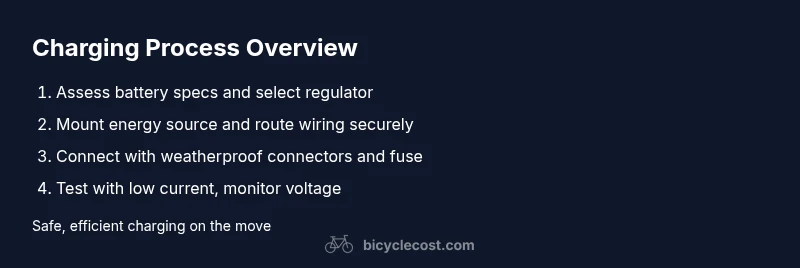
Start by defining your energy goals: what devices will you power, and for how long. Build a bill of materials that includes a regulator, weatherproof connectors, fuses, and mounting hardware. During wiring, ensure clean, short runs with proper strain relief and shielding to minimize interference. Verify each connection with a multimeter and perform a brief test at low power before a real ride. When you begin riding, monitor voltage, current, and battery temperature regularly. If the battery begins to heat excessively or voltage spikes, stop charging and reassess the regulator settings. Keep a log of charge times and performance to optimize future rides.
Troubleshooting and common mistakes
Common issues include voltage mismatches, poor weatherproofing, and using a regulator that cannot handle peak currents. If charging stops unexpectedly, check all connectors for corrosion, re-seat plugs, and inspect fuses. A wet or damaged connector can cause intermittent charging or shorts; replace weatherproof housings as needed. Do not underestimate the importance of proper cable routing—exposed wires can wear quickly and fail under vibration. Finally, never ignore heat buildup: battery packs have temperature limits, and sustained high temperatures can shorten lifespan. Regular checks and maintenance will keep your bicycle charging system safe and effective.
Authority and further reading
For grounded, safety-focused guidance, consult reputable sources on energy systems and battery safety.This section links to authoritative references that discuss electrical safety standards, energy harvesting, and vehicle charging principles. Please review these sources to understand general principles that apply to bicycle charging setups, while noting that bike-specific configurations vary by model and battery chemistry. https://www.nrel.gov https://afdc.energy.gov https://www.energy.gov
Tools & Materials
- Dynamo hub (front or rear)(Provides bicycle-powered energy; ensure compatibility with wheel size and brake type)
- USB power bank or auxiliary battery(Capable of accepting charge from bike energy sources; consider capacity and output type)
- DC-DC regulator / charging controller(Keeps charging within safe voltage/current range; look for overcurrent protection)
- Weatherproof wiring harness and waterproof connectors(Protects connections from rain and spray; include fuse protection)
- Multimeter or voltmeter(For testing voltage and current during setup and diagnostics)
- Fuse and inline protection(Prevents damage in case of short or surge)
- Mounting hardware and cable management supplies(Zip ties, adhesive clips, and heat shrink to secure wires)
Steps
Estimated time: 30-45 minutes
- 1
Verify compatibility
Check the battery’s voltage and charging input, plus the connector types. Confirm that your regulator can safely handle the expected current. This step prevents mismatches that could damage the battery or bike electronics.
Tip: Consult device manuals or manufacturer specs to confirm safe voltage/current ranges. - 2
Install regulator
Mount the regulator between the energy source (dynamo or USB bank) and the battery. Ensure adequate airflow and a stable, vibration-free position to avoid overheating or loosening.
Tip: Place the regulator where water and mud are least likely to reach it; consider a protective housing. - 3
Connect the energy source
Attach the dynamo or USB power bank to the bike frame securely. Route cables neatly along the frame, avoiding pinch points and moving parts. Check that all fasteners are tight before riding.
Tip: Use weatherproof mounting points and protect loose ends with covers. - 4
Wire connections and protection
Use weatherproof connectors, add a fuse, and double-check polarity. Keep cables short and direct to minimize voltage drop. Test with a multimeter before applying full load.
Tip: If unsure, seek help from a cycling shop or electrician specializing in e-bike systems. - 5
Begin charging and monitor
Power on the system with the bike stationary at first. Verify voltage at the battery terminals, and watch for overheating or abnormal current draw. If safe, take a short test ride and observe performance.
Tip: Start with low current and increase gradually as you verify stability. - 6
Test, ride, and optimize
After an initial ride, measure battery state and adjust regulator settings if needed. Keep logs of charging duration and battery temperature to optimize future rides.
Tip: Record what worked and what didn’t to refine future setups.
People Also Ask
Is it safe to charge a battery on a bicycle while riding?
Charging while riding is possible but requires proper regulation and monitoring to avoid overheating or overvoltage. Use a regulator and keep an eye on temperature and battery health.
Yes, but only with proper regulation and careful monitoring.
What kinds of batteries can be charged on a bicycle?
Most common are lithium-ion and nickel-based packs; always follow the battery manufacturer’s charging guidelines and ensure compatibility with your regulator.
Most common batteries can be charged with bike charging setups, but follow the manufacturer’s guidelines.
Do I need a battery management system (BMS)?
A regulator or BMS helps protect the battery from overvoltage and overcurrent. For high-drain setups, a proper BMS is highly recommended.
A regulator or BMS helps protect the battery; recommended for most users.
Will charging affect bike performance?
Yes, additional load can slightly affect efficiency and acceleration, especially if energy use exceeds what the bike can safely harvest. Plan energy budget accordingly.
Some drag can occur; plan for energy balance and monitor load.
What tools do I need for setup?
You'll typically need a regulator, weatherproof connectors, a fuse, mounting hardware, and a multimeter for testing. Have basic electrical knowledge before attempting wiring.
Typical tools include regulator, connectors, fuse, and a multimeter.
How do I troubleshoot if charging stops?
Check connections for corrosion or looseness, inspect fuses, verify regulator settings, and ensure the battery isn’t overheating. Re-test after adjustments.
Check connections, fuses, regulator settings, and battery temperature.
Watch Video
Quick Summary
- Assess energy goals and battery specs before wiring.
- Choose compatible energy sources and regulators.
- Monitor heat and voltage during charging.
- Protect wiring with weatherproof connections and fuses.
- Test the finished setup on a short ride before longer trips.