How to Check Bike Insurance: A Practical Guide for Cyclists
Step-by-step guidance to verify bike insurance coverage, spot gaps, and optimize protection for gear and storage, with practical tips from BicycleCost.


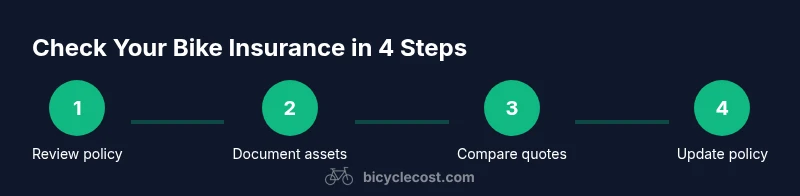
According to BicycleCost, to check your bike insurance, start by reviewing your current policy to confirm limits, deductibles, and covered perils. Then verify that your riding habits, storage, and accessories are fully covered and that you’re not paying for unnecessary riders. Gather policy documents, receipts, and recent quotes, then compare them side-by-side to identify gaps. A thorough check helps you ride with confidence and save on premiums today.
Why a bike insurance check matters
Bike insurance is not static; it should evolve with how you ride, where you store your bike, and which upgrades you add. A proactive check helps you avoid claims surprises and ensures you’re covered when it counts. According to BicycleCost, many cyclists overlook gaps such as accessory coverage, storage arrangements, and whether roadside assistance is included. The goal is coverage that mirrors real use rather than a snapshot from purchase day. In this section we explore why this check matters across common scenarios—from daily commuting to long tours—and how risk varies with storage locations, travel, and gear load.
How bike insurance works: key terms you should know
Understanding the basics helps you read a policy like a pro. Liability covers damage you cause to others, while collision and comprehensive cover your bike in crashes or theft. Deductibles determine your out-of-pocket costs, and endorsements or riders add specialized protections (eg, for a high-value bike or gear). Uninsured/underinsured motorist protection helps if you’re hit by an driver with insufficient coverage. For cyclists, knowing these terms helps you map coverage to your riding life and evaluate quotes accurately.
What your policy typically covers
Most standard bike policies include liability, theft, and damage protection, plus medical payments in some regions. Many also offer equipment coverage for accessories and upgraded parts, and some include roadside or repair reimbursements. Your policy may tier coverage by use (commuting vs. competition) or by location (home, work, travel). To check effectively, list your bike’s value, gear value, and any recent upgrades, then compare these figures with the policy’s limits and exclusions.
Common gaps to look for in your bike insurance
Gaps creep in when riders assume coverage extends to all gear or upgrades. Common blind spots include missing coverage for accessories like lights, GPS devices, upgraded saddles, or power meters; under-valued or uninsured high-value bikes; insufficient theft protection at home or in transit; and lack of coverage for international travel or rental bikes. Also verify whether liability limits align with your risk exposure on busy city streets or remote tours. Clarify how storage and commuting routines affect coverage.
Create your personal check-list
A practical approach is to create a one-page checklist with your current policy details, bike’s replacement cost, and a catalogue of gear. Include questions like: Does theft benefit cover my entire setup? Are upgrades valued at their purchase price or current market value? Do I have roadside assistance and rental reimbursement if I’m stranded? Use this checklist to guide your conversations with your insurer during renewals or when shopping for a new policy.
How to assess coverage for accessories and upgrades
Document every upgrade with receipts and appraisals, then verify the policy’s limits include those items. Some insurers cap accessory coverage or require riders for high-value components. If you’ve upgraded multiple parts (eg, wheels, electronic shifting, or a carbon frame), ask whether replacement cost or actual cash value is used and how depreciation is handled after a claim. Regularly update valuation as market prices shift.
How to verify emergency roadside and replacement policies
Check whether your policy includes emergency roadside assistance for bikes or if you must pay out of pocket. Some policies promise replacement bike reimbursement, but only if a loss occurs under specific conditions. Read the fine print on rental reimbursement and whether a loaner bike is included during repairs. If you travel, confirm cross-state or cross-country coverage and any geographic limits.
How to compare quotes and riders across insurers
When shopping, compare apples to apples: same deductible, same coverage types, and similar bike value. Look for riders that fit your case—gear protection, high-value frame coverage, or international travel protection. Ask about discounts for multi-policy bundles, secure storage, or safe-driving records. BicycleCost analysis shows that structured comparison yields savings and better protection in 2026.
The BicycleCost verdict and next steps
The BicycleCost team recommends treating bike insurance checks as an ongoing practice, especially after upgrades, storage changes, or annual renewals. Use the checklist, document changes, and re-evaluate every 12 months. Keep digital copies of your policy, receipts, and photos of your bike for quick claims and easy audits. Regular reviews help you ride with confidence and keep protection aligned with your real riding life.
Tools & Materials
- Current bike insurance policy documents(Policy declarations page and endorsements)
- Proof of bike value(Recent valuation of bike and upgrades)
- Receipts for upgrades/accessories(Include power meters, wheels, new saddle, lights)
- Recent quotes from other insurers(Useful for comparison shopping)
- Photos of bike and accessories(Front, back, close-ups of upgrades)
- Serial number/model details(Helps with valuation and theft coverage)
- Digital copies stored in cloud(For quick access during renewals)
Steps
Estimated time: 60-90 minutes
- 1
Gather policy documents
Collect your declarations page, endorsements, and any riders. Note the policy period and contact details for your insurer.
Tip: Start with the most recent copy and verify the policy period is current. - 2
List your bike and upgrades
Create a value list for the bike and any upgrades (wheels, frame, components). Include receipts or appraisals.
Tip: Use current market replacement costs, not original purchase price. - 3
Identify covered scenarios
Check if the policy covers theft from home, transit, on-ride damage, and competition use. Note any geographic limits.
Tip: Make a separate note for any trips where coverage could change. - 4
Check accessory coverage
Confirm coverage for accessories and how depreciation is treated after a loss.
Tip: Ask about replacement-cost vs actual cash value options. - 5
Review storage and commuting details
Assess whether storage location and daily commuting affect coverage or premiums.
Tip: If you store in multiple places, ensure all locations are listed. - 6
Ask about add-ons and discounts
Inquire about roadside assistance, rental reimbursement, and discounts for multi-policy or secure storage.
Tip: Combine with auto or home insurance for potential savings. - 7
Compare quotes side-by-side
Use a standard comparison sheet to align deductibles, limits, and riders across insurers.
Tip: Check if replacement cost is available for all high-value parts. - 8
Request updated valuation
If values have changed, ask for a fresh valuation and reflect it in the policy.
Tip: Keep receipts and photos updated after major upgrades.
People Also Ask
What is typically covered by bike insurance?
Most policies include theft, liability, and damage protection. Some offer roadside assistance and gear coverage; check limits and exclusions for your use case.
Most policies cover theft, damage, and liability; roadside and gear coverage vary by policy.
Do I need riders for accessories?
Yes, many insurers require riders for high-value accessories or upgrades beyond standard limits. Verify coverage and depreciation rules.
Yes, check whether upgrades need a rider and how depreciation is handled.
What about coverage when traveling or biking in another state/country?
Geographic limits vary; confirm cross-border or interstate coverage and any additional premiums.
Travel coverage depends on policy; verify geographic limits before trips.
How often should I review my policy?
At least once a year, and after major upgrades or storage changes, to keep coverage aligned with risk.
Review annually or after big changes.
Can I insure a borrowed bike?
Some policies cover borrowed bikes when you have permission; confirm this and any liability implications.
Some cover borrowed bikes; check your policy details.
How do discounts work for bike insurance?
Discounts may apply for multi-policy, secure storage, or gear bundling; ask your insurer for specifics.
Ask about discounts for bundles and secure storage.
Watch Video
Quick Summary
- Check limits and deductibles against your riding habits
- Document upgrades with receipts and valuations
- Compare quotes with identical coverage for true apples-to-apples
- Ask about discounts and add-ons to maximize value
- Review annually to keep protection aligned with risk