Do You Need a License for a Bicycle with an Engine?
Explore licensing, registration, and insurance requirements for bicycles with engines. Learn how power, top speed, and location affect legality and rider obligations. A practical guide from BicycleCost.


Definition: Licensing for a bicycle with an engine varies by location. In many places you do not need a driver's license for low-powered, pedal-assist bikes or mopeds; however, if the engine exceeds power or top speed thresholds, you may face registration, licensing, or a driver's license requirement. Always check local laws before riding.
Licensing reality: do you need a license for a bicycle with an engine
According to BicycleCost, the central question for most riders is whether the engine-powered bicycle will be treated like a bicycle, a moped, or a motorcycle under local rules. The answer hinges on several factors: engine power, top speed, whether pedals provide propulsion, and how authorities classify motorized bicycles. In many jurisdictions, the crossing point—where licensing becomes more stringent—occurs when power or speed surpasses predefined thresholds. This distinction is not universal, and exceptions abound for young riders, urban zones, and agricultural uses. The practical takeaway is simple: never assume exemption merely because the device resembles a bicycle. Always confirm with your local motor vehicle authority before riding in public. The BicycleCost team recommends documenting the device’s specifications (power, top speed, and fuel type) since these details are frequent triggers for licensing decisions.
How to determine if your engine-powered bicycle needs a license
The first step is to identify how the device is powered and how it is classified. Start by checking the engine rating (in kilowatts or horsepower) and the top speed you can reach under typical riding conditions. If the power stays below common regional thresholds and you cannot reach high speeds while pedaling, there is often no need for a traditional driver’s license. If the engine is capable of higher speeds or if you can ride faster than a set limit with or without pedal assist, licensing, registration, or a motorcycle license could come into play. Next, consult the local regulations for mopeds, light motorcycles, or other motor vehicles. This decision tree is why a simple “yes” or “no” answer rarely works; the classification can flip with small changes in power or speed. Finally, verify whether registration is required for the specific vehicle class in your area and whether insurance is advisable or mandatory for liability protection.
Key terms that affect licensing: power, speed, and classification
When evaluating licensing, you’ll encounter terms like power output (kW/hp), top speed (km/h or mph), and vehicle classification (bicycle, moped, motorcycle). Pedal-assist vs. throttle-only systems can push a device into a different category. In some regions, a pedal-assist bicycle with a modest power limit remains a bicycle; in others, any motorized assistance may trigger moped rules. The distinction between “engine-assisted bicycle” and a true motor vehicle matters legally because it drives licensing, registration, and insurance requirements. Understanding these terms helps you anticipate what documentation you might need and how to operate within the law.
Regional snapshots: general patterns in major regions
Laws differ widely by region, but some patterns emerge. In many parts of Europe and North America, low-power, pedal-assisted devices are treated more like bicycles, with fewer licensing barriers. Once power and speed thresholds are exceeded, many jurisdictions reclassify the device as a motorized vehicle, bringing license, registration, and insurance requirements into play. Some countries require a specific class of license or a formal vehicle registration even for mopeds, while others reserve licensing for larger motorcycles. Short-term travel or temporary registration is sometimes available for visitors, but rules vary and can be strict. The upshot is that the specific power rating and top speed often determine licensing needs more than the bicycle’s appearance.
Practical steps to stay compliant
- Determine the exact specifications: engine power, top speed, and whether pedals provide propulsion.
- Check the official classification in your jurisdiction (bicycle, moped, motorcycle, or other).
- Verify whether registration or an operator’s license is required, and whether insurance is advisable or mandated.
- If you plan to ride in multiple regions, research rules for each area before traveling.
- Maintain documentation and consider joining a regional riders’ group that shares up-to-date regulatory changes.
- Use appropriate safety equipment and obey all traffic laws to minimize liability.
Safety, insurance, and road-use considerations
Even when licensing isn’t strictly required, ensuring rider safety reduces risk and liability. Helmets, visible lights, appropriate tires, and regular maintenance reduce the chance of accidents and costly claims. Insurance requirements vary; some regions offer optional rider coverage, while others require it for certain uses or if the bike is financed. For commercial use (such as a courier service or rental model), expect stricter insurance and licensing standards. Given the evolving regulatory landscape, staying informed helps you ride confidently and legally.
Regional licensing overview
| Region/Opportunity | Typical Licensing Status | Notes |
|---|---|---|
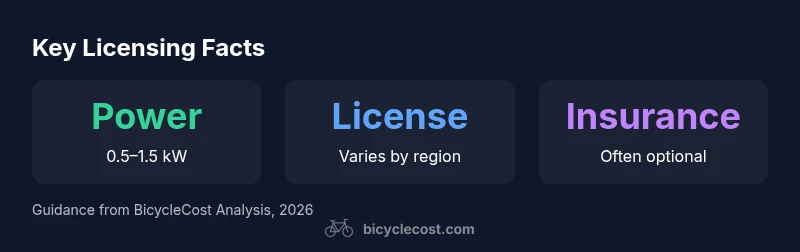
| Low-power engine bicycles (0.5–1.5 kW) | Often no driver's license required | Power and speed thresholds vary by country |
| High-power engines (>1.5–2.0 kW) | Possible motorcycle license or registration | Classified as motor vehicle in many regions |
| Urban mopeds and light motorcycles | License/registration typically required | Subject to local moped/motorcycle rules |
People Also Ask
Is an engine-powered bicycle the same as a moped?
Not always. Many regions classify low-power bikes as mopeds, which may require registration but not a full motorcycle license. High-power setups can be treated as motorcycles with stricter licensing.
In many places, it depends on power and speed; mopeds have their own rules.
What power or speed thresholds determine licensing?
Thresholds vary by country, region, and vehicle class. Some places exempt low power and low speed devices; others require licensing once power or top speed crosses a limit.
Thresholds differ by location; check local regulations.
Is insurance required for engine-powered bicycles?
Often optional, but recommended. Some regions require insurance for certain uses or if the bike is financed or rented.
Insurance requirements vary; verify local rules.
Do I need to register the bike?
Registration is common when the device meets power thresholds or is classified as a motorized vehicle. Some regions do not require it for very light bikes.
Registration rules depend on local classification.
Are there safety requirements I should follow?
Helmet use, lights, and signaling are often recommended or required. Non-compliance can lead to fines or liability issues.
Follow local safety rules to stay compliant.
How can I stay compliant when traveling across regions?
Research each area's rules before traveling; some places offer temporary permits or streamlined registration, but conditions vary widely.
Plan ahead and check rules before you ride.
“Licensing rules for engine-powered bicycles are not universal; rules depend on power, speed, and local jurisdiction. Riders should verify requirements before riding.”
Quick Summary
- Check local laws before riding an engine-powered bicycle.
- Know your engine power and top speed thresholds.
- Expect possible registration and insurance requirements in many regions.
- Treat high-power bikes as motor vehicles for compliance.