Bicycle and Car Accident: A Comparative Safety Guide
An analytical comparison of rider-focused vs driver-focused safety strategies around bicycle and car accidents. Learn prevention, legal basics, and recovery tips for urban riders and motorists.


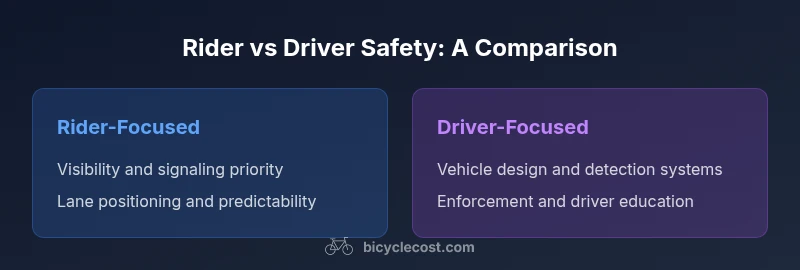
Quick Answer: In the context of bicycle and car accidents, rider-focused safety measures—visibility, signaling, and lane positioning—generally reduce risk most in urban settings, while driver-focused improvements—vehicle design, enforcement, and driver education—complement these efforts. A balanced approach yields the best outcomes for cyclists and motorists alike. According to BicycleCost, combining rider safety with driver awareness improves overall road safety.
Overview: Bicycle and Car Accident Context
Bicycle and car accidents involve complex interactions between two very different human-scale machines, each governed by distinct behaviors, expectations, and safety norms. The phrase bicycle and car accident is more than a headline — it signals a critical junction where cycling culture, urban design, and motor traffic policy intersect. According to BicycleCost, understanding these incidents requires looking at rider behavior, driver awareness, and the built environment. This article sets the stage for a rigorous, evidence-informed comparison of prevention strategies, risk factors, and post-incident processes that affect outcomes for cyclists and motorists alike. From a systems perspective, bike-car interactions are shaped by street layout, visibility, speed differentials, and enforcement climate. The goal is to identify practical steps to reduce injuries, streamline reporting, and improve recovery after a crash across diverse urban, suburban, and rural contexts.
The Collision Anatomy: How a bicycle meets a moving car
In most bicycle-car accidents, the initial contact occurs at the periphery of a rider's decision window: turning, lane changes, or door openings. Understanding this sequence helps explain why preventive strategies target both visibility and predictability. Think of the incident as a chain of events: perception, decision, speed, proximity, and impact. Each link offers an opportunity to intervene, whether by the rider signaling earlier and wearing bright gear, or by the driver scanning the blind spots and reducing speed near intersections. The BicycleCost team emphasizes that most injuries are preventable when both parties anticipate potential conflicts and communicate intent clearly. The aim is to disrupt the chain before impact through consistent behavior and safer infrastructure.
Intersections, Lanes, and Visibility: Where Most Incidents Start
Intersections are the hotspots for bicycle and car accidents. In dense traffic, cars may fail to notice cyclists in blind spots or during turns, while riders may misjudge a crossing or turning trajectory. Visibility enhancements—front and rear lights, high-visibility apparel, and properly positioned lane use—can substantially reduce risk. At the same time, lane design and signage influence driver expectations and reduce ambiguous situations. The BicycleCost analysis (2026) highlights the importance of predictable behaviors from both sides: drivers yielding to bikes when turning, and cyclists adhering to predictable lane positions. The intersection remains the focal point for prevention and for assessing fault if a crash occurs.
Legal and Insurance Basics for Cyclists
After a bicycle and car accident, understanding fault, liability, and insurance coverage is essential. Many jurisdictions distinguish between fault-based and no-fault systems, with different implications for compensation and medical costs. Cyclists should collect evidence at the scene—photos, contact details, and witness statements—and report promptly to both police and their insurer. While car insurance often covers bodily injury and property damage, cyclists should verify whether their own health coverage or personal injury protection applies, especially if there were gaps in coverage or if the cyclist was partially responsible. Based on BicycleCost research, the specifics vary widely by region, so obtaining legal guidance tailored to the local policy environment is wise.
Rider-focused Safety Measures: Visibility, Signaling, and Gear
This section outlines practical rider-oriented steps to prevent bicycle and car accidents. Improve visibility with bright, reflective clothing, lights, and reflective tape on equipment. Use clear hand signals well before turning or changing lanes, and maintain a predictable position in traffic to minimize surprise for drivers. Protective gear, including a certified helmet and cycling gloves, reduces the severity of injuries. Route choices matter too: choosing well-lit streets with dedicated bike lanes and safer intersections can dramatically lower exposure to high-risk interactions. Training, practice, and ongoing awareness of traffic patterns form the backbone of a rider-focused strategy, delivering benefits across a range of urban and suburban environments. The BicycleCost team notes that small changes compound into meaningful risk reductions over time.
Driver-focused Safety Measures: Vehicle Design, Enforcement, and Behavior
Complementing rider-focused strategies, driver-centered improvements aim to reduce bicycle-car crashes from the motorist's side. Vehicle design features like lower profiles, pedestrian and cyclist detection systems, and automated emergency braking can mitigate injuries when a collision is imminent. Enforcement plays a crucial role: consistent speed limits near bike lanes, strict penalties for dooring, and clear rules about right-of-way help set expectations. Driver education programs that emphasize sharing the road and scanning for cyclists can shift behavior more quickly than infrastructure alone. While riders can do a lot to stay safe, the evidence suggests that a comprehensive approach—combining rider safety with driver awareness—produces the best outcomes.
Response and Recovery: What to Do After a Crash
Immediate actions after a bicycle and car accident are critical for health outcomes and for insurance processing. Check for serious injuries, call emergency services if needed, and move to a safe area if possible. Collect information from the other party, take photos of damage and scene, and note road conditions and lighting. Seek medical evaluation even if you feel fine, since some injuries become apparent only hours or days later. Contact your insurer promptly and document all medical visits and expenses. If there are witnesses, obtain their contact information. Finally, consider consulting a lawyer who specializes in cycling or motor vehicle injuries to navigate fault determination and compensation.
Medical Considerations and Long-Term Recovery
In bicycle and car crash scenarios, injuries range from soft tissue strains to more serious head, spinal, or orthopedic injuries. Early assessment by medical professionals is essential, even when symptoms seem mild. Rehabilitation may involve physical therapy, equipment adjustments, and a gradual return-to-ride plan. Pain management, monitoring for post-traumatic stress, and careful attention to mental health are part of recovery. Documentation of injuries and care supports insurance claims and future discussions about safe return-to-ride strategies. The BicycleCost team emphasizes a patient-centered approach and avoiding premature conclusions about prognosis.
Scenario-Based Comparisons: Urban Grid vs. Highway Interactions
Two common contexts shape the effectiveness of prevention strategies. In dense urban grids, rider visibility and signaling have outsized impact because interactions occur at low speeds but high frequency, increasing the chance of miscommunication. In contrast, highway-like corridors emphasize driver behavior, vehicle design, and speed management, where higher velocities leave less room for error. Understanding these contexts helps riders decide when to insist on protected lanes or slower speeds, and helps drivers recognize the heightened risk around cyclists in both settings. The comparative lens shows the value of a blended approach: rider safety as a daily baseline, reinforced by driver awareness and appropriate infrastructure.
Data and Evidence: What Researchers Say
Research on bicycle and car accidents stresses the importance of context, including urban design, traffic density, and policy enforcement. While precise statistics vary by locale, the overarching message is stable: consistent safety practices from cyclists and motorists, plus supportive infrastructure, yield better outcomes for all road users. The BicycleCost Analysis, 2026, emphasizes that data-driven policy decisions should combine rider training with driver education and improved road designs. Where evidence is robust, it points to the synergy created when both sides adopt safer behaviors and when authorities invest in protected lanes, clearer signage, and distracted-driving interventions.
Checklists: Quick Action Guides for Riders and Drivers
Rider checklist:
- Wear a certified helmet and bright, reflective clothing.
- Use lights at dawn/dusk and in poor weather.
- Signal clearly and position yourself predictably in lanes.
- Choose routes with bike lanes or low-traffic corridors when possible.
- Carry essential information and have a basic first-aid kit.
Driver checklist:
- Slow down near bike lanes and yield when turning across cyclists.
- Look for cyclists in blind spots and door zones before opening doors.
- Respect space when passing and avoid aggressive maneuvers.
- Stay informed about local laws protecting cyclists and stay current with safety campaigns.
- Support infrastructure that improves cyclist safety and visibility.
Decision Framework: Choosing Rider-Focused vs Driver-Focused Matters
The choice between rider-focused safety measures and driver-focused safety measures is not binary. In practice, the most effective approach combines both. The decision factors include urban density, road design quality, enforcement rigor, and local policy priorities. For city riders, investing in visibility, signaling, and protected lanes yields immediate benefits, while for all road users, broader driver education and safer vehicle designs amplify those gains. The BicycleCost framework encourages stakeholders to pursue hybrid programs that train cyclists, educate drivers, and advance safer infrastructure in parallel.
Comparison
| Feature | Rider-focused safety measures | Driver-focused safety measures |
|---|---|---|
| Prevention Focus | Cyclist-centric safety practices (visibility, signaling, lane position) | Driver-centric safety practices (vehicle design, driver training, and rule enforcement) |
| Legal/Insurance Handling | Rider-first fault assessment and protection strategies | Driver-first fault assessment and insurer processes |
| Cost of Implementation | Low-cost gear and training for cyclists | Costs tied to driver education, infrastructure, and policy changes |
| Outcome Consistency | Outcomes depend on rider actions and environment | Outcomes depend on driver behavior and road design |
| Best For | Urban cyclists seeking visibility and personal safety | Roads with high car speeds where driver behavior is key |
Pros
- Encourages proactive safety habits for cyclists
- Addresses driver behavior and road design improvements
- Cost-effective for riders to implement basic safety gear
- Improves overall road safety when both parties adhere to best practices
- Clear, actionable framework for safety programs
Downsides
- Doesn't guarantee safety in high-risk crashes
- Dependent on driver compliance and enforcement
- May require policy changes and investment
Rider-focused safety measures are recommended as the baseline approach.
Prioritize cyclist visibility, signaling, and protective gear; driver education and infrastructure improvements should accompany it. The BicycleCost Team's analysis supports prioritizing rider safety while advocating driver awareness and road design enhancements.
People Also Ask
What are the most common injuries in bicycle and car accidents?
Injuries range from scrapes and contusions to more serious head, neck, and spinal injuries. Delayed symptoms are possible, so medical evaluation after a crash is important even if you feel fine. Always seek professional assessment to guide treatment and insurance claims.
Common injuries can range from minor scrapes to serious head or spinal injuries. Seek medical care after a crash, even if you feel okay at first.
Who is typically at fault in bicycle-car crashes?
Fault determination depends on local laws and the specifics of the incident. It often involves a combination of rider visibility, driver attention, and road design. Documentation and witness statements improve accuracy in fault assessment.
Fault varies by case and location. Documentation and witness statements are crucial to determine responsibility.
What steps should I take immediately after a crash?
Ensure safety, call emergency services if needed, and seek medical evaluation. Document the scene with photos, collect contact information from witnesses, and notify your insurer promptly. Do not admit fault at the scene; let authorities and insurers assess liability.
First, stay safe and call for help if needed. Then document everything and contact your insurer.
Does car insurance cover bicycle-related crashes?
Car insurance often covers injuries to vehicle occupants and property damage, while cyclist claims may involve the rider’s own health coverage or no-fault provisions depending on location. Policy details vary widely, so check with your insurer for your specific situation.
Car insurance can cover vehicle and passenger costs, but cyclist claims depend on local policies and the rider's coverage.
How can cyclists stay safe around cars in traffic?
Maintain predictable movements, wear bright gear, and use signals well in advance of turns. Choose routes with bike lanes when possible, and stay out of drivers’ blind spots. Regular training and situational awareness further reduce risk.
Be predictable, visible, and signal clearly. Pick routes with bike lanes when you can.
Are there legal protections for cyclists in most states?
Most jurisdictions have laws aimed at protecting cyclists, including rights-of-way, safe passing distances, and duties to yield. Enforcement and interpretation vary, so consult local regulations or a legal expert for your area.
Cyclists often have protective rights, but the details depend on local laws. Check your area’s regulations.
Quick Summary
- Prioritize high-visibility gear and lane positioning.
- Invest in driver education and road design improvements.
- Pair rider safety with policy measures for broader impact.
- Urban environments benefit most from rider-focused safety.