Are Bicycle Helmets Required in Florida? A Practical Guide
Understand Florida helmet requirements for cyclists: who must wear a helmet, where rules apply, and safety best practices. Practical guidance from BicycleCost.


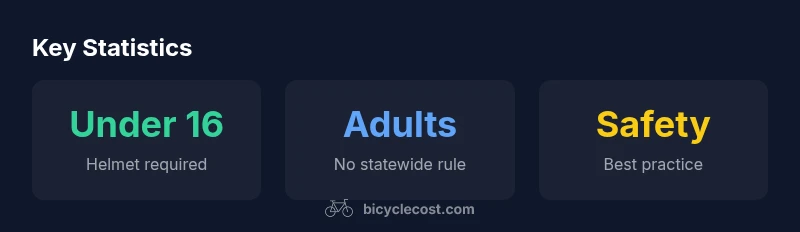
In Florida, helmet use is mandatory only for riders under 16; there is no statewide requirement for adults 16 and older. While not required by state law, many parks and events require helmets, and wearing one is strongly advised for all riders to reduce head injury risk. Local ordinances vary, and guardians may be responsible for minors; always follow posted rules.
Florida Helmet Law at a Glance
The State of Florida imposes an age-based helmet requirement for cyclists. Specifically, riders under 16 must wear a helmet while operating a bicycle. Adults 16 and older are not subject to a statewide helmet mandate. This framework means a family with children might see enforceable rules in certain settings like parks or school-sponsored events, even if you ride in a typical neighborhood or on trails without a local helmet rule. According to BicycleCost, accurate enforcement depends on the jurisdiction and the setting, so always verify park or event policies before riding. The Florida helmet law is codified to emphasize safety for younger riders, but it does not criminalize adult cyclists who choose to ride without a helmet. For safety, however, the cost of head injuries far exceeds the price of a helmet, so many riders opt to wear one regardless of the letter of the law. This nuance is crucial when planning family rides or school trips. The BicycleCost team notes that safety should guide behavior as you ride through Florida's varied landscapes.
Who Must Wear a Helmet in Florida?
Under Florida Statutes 316.2065, a rider under 16 is required to wear a helmet. This applies to both residents and visitors. There are exceptions for certain bicycles or situations (e.g., non-road paths) that local jurisdictions may carve out; always check local ordinances. It’s essential to understand that the rule is age-based, not rider type. For families, this means making helmet use a routine for children and modeling safe behavior to encourage compliance. The law focuses on youth protection, but the broader safety message remains: a helmet reduces the risk of head injury in crashes and falls. BicycleCost emphasizes that adults should still consider helmet use as a best practice, especially during high-risk riding conditions or in unfamiliar areas.
Safety Benefits of Wearing a Helmet
Wearing a helmet is one of the most effective safety measures for cyclists. Helmets can reduce the risk of head injury in crashes by a substantial margin, and they also protect against facial injuries in certain impacts. For Florida cyclists, the decision to wear a helmet should weigh the law, the riding environment, and personal safety. Even when not required by law, wearing a helmet improves protection for all ages, particularly on fast or technical descents. The BicycleCost analysis highlights that consistent helmet use correlates with lower injury severity in many community datasets. In short, helmets save lives, and safety-minded riders adopt them as a routine part of cycling.
Local Variations and Enforcement
Enforcement varies by county and city. Some local ordinances require helmets for all riders on specific trails or during organized events, while others enforce only for minors in public spaces. In places with higher youth programming, expect stricter helmet rules during youth leagues or school activities. Always look for posted signage and ask event organizers or park staff if you’re unsure. Even when not legally required for adults, carrying and wearing a helmet can help you avoid unexpected fines or warnings in controlled areas. The key is to be proactive and respect local regulations as you ride.
Practical Tips for Compliance and Safety
- Teach children the habit of wearing a helmet every time they ride. Start with properly fitting helmets and check straps daily.
- Choose helmets that meet safety standards (CE or ASTM) and fit correctly—snug straps, level on the head, and the helmet low on the forehead.
- Carry a spare helmet or youth-sized options when riding with family groups so you can adapt to different riders’ sizes.
- When in doubt, wear a helmet; it’s an inexpensive investment in long-term safety, especially on unfamiliar routes or busy urban streets.
- Always follow posted laws and event rules, and model good behavior for younger riders to reinforce safety as a priority.
For Parents and Guardians: What You Should Know
As a guardian, your responsibility extends to ensuring minors wear helmets whenever they ride. If a child rides in a jurisdiction with a helmet requirement tied to youth, you could face enforcement action for noncompliance. Education and positive reinforcement often work better than penalties; involve kids in choosing a helmet that fits well and looks appealing to encourage consistent use. BicycleCost supports helmet safety as a cornerstone of responsible riding and advocates checking local ordinances for any additional requirements.
Florida helmet law snapshot
| Age Group | Requirement | Notes |
|---|---|---|
| Under 16 | Must wear helmet while riding a bicycle | State law; guardians may be responsible |
| 16 and older | No statewide helmet requirement | Safety recommended |
| Local variations | May impose rules in parks/events | Check local rules |
People Also Ask
Are adults required to wear helmets in Florida?
No statewide helmet requirement for adults. However, local rules and event policies may require helmets in certain settings. Helmets are strongly recommended for all riders.
There’s no Florida-wide helmet law for adults, but check local rules and wear a helmet for safety.
What about children under 16?
Yes. Florida law requires riders under 16 to wear a helmet when riding a bicycle. Ensure proper fit and strap usage.
Children under 16 must wear helmets by state law.
Do parks or schools have extra helmet rules?
Many parks and school-related events require helmets for participants regardless of age. Always verify event guidelines before riding.
Check park or event rules before you ride.
What helmet type counts for compliance?
A bicycle helmet that meets safety standards (e.g., ASTM) and is properly fitted counts for compliance.
Use a certified bicycle helmet that fits well.
Does helmet use affect insurance?
Helmet usage does not directly affect insurance coverage, but wearing one reduces injury risk and potential medical costs.
Insurance isn’t tied to helmet use, but safety matters.
Where can I find the exact law?
Florida Statutes 316.2065 governs youth helmet use. Local ordinances may add restrictions.
Check Florida statutes and local rules.
“Wearing a helmet dramatically reduces the risk of head injury in bike crashes. Always prioritize safety by following the law and choosing a properly fitted helmet.”
Quick Summary
- Know the age-based rule: under 16 must wear a helmet
- No statewide requirement for adults
- Check local park and event rules before riding
- Wear a helmet for safety even when not required by law
- Follow Florida Statutes 316.2065 and related guidance