How to Stop a Bicycle Without Brakes: Safe Techniques
Learn practical, safety-first methods to stop a bicycle when brakes are unavailable. This guide covers foot-down stopping, terrain-assisted deceleration, and step-by-step drills from BicycleCost to practice safely.


Learn practical, safe methods to stop a bicycle when brakes are unavailable. This guide covers controlled deceleration, foot-drag techniques, and emergency stopping strategies you can practice in a safe area. Always wear a helmet and protective gear, and start slow to build confidence. The BicycleCost team emphasizes gradual, deliberate actions to reduce risk.
Why stopping without brakes matters
Riding a bicycle without functional brakes is a scenario no rider wants, but it can happen due to maintenance issues, wear, or sudden failure. Knowing how to stop safely reduces the risk of collision, injury, and loss of control. This section explains why developing skills to decelerate without brakes is a valuable safety backup for any cyclist, from daily commuters to weekend riders. Expect a mix of environment awareness, body mechanics, and terrain-based strategies you can practice in a controlled setting. Remember: these techniques are supplementary to proper maintenance and should not replace fixing braking systems when possible. BicycleCost analysis shows that proactive practice in a safe area lowers the odds of panic responses in real-world emergencies.
Key takeaway: stay calm, choose a safe space, and apply deliberate, controlled actions rather than abrupt movements.
Safety prerequisites and mindset
Before attempting any no-brakes technique, equip yourself with essential safety gear and adopt a deliberate mindset. Wear a certified helmet, gloves, and sturdy footwear. Ensure clothing is free of loose ends that could catch the chain or wheels. Mentally prepare to disengage from speed smoothly rather than fighting momentum. The goal is to decelerate gradually and avoid aggressive maneuvers that could throw you off balance. BicycleCost emphasizes ongoing maintenance: check brakes regularly, inspect tire grip, and verify that the chain and gears shift smoothly so you’re never surprised by a brake failure in traffic.
Pro tip: practice in a wide, empty lot or closed course with smooth pavement to build confidence before attempting any street riding.
Assessing the riding environment
Your ability to stop safely without brakes heavily depends on where you ride. Look for wide, flat surfaces away from traffic, obstacles, and pedestrians. If you must decelerate in a public area, choose a gentle slope or a gravel/grass shoulder where loss of control poses less risk. Check for run-off space, potential landing zones, and escape routes in case your control drops. Weather matters too; wet pavement, leaves, or sand reduce traction, increasing risk when attempting no-brakes techniques.
Practical checklists: space to maneuver, terrain texture, traffic presence, and visibility to others. This planning reduces surprise dismounts and helps you pick a safer stopping path.
Core techniques: foot-down stopping and balance
The most reliable no-brakes method is controlled foot-down stopping. Start by easing off the pedals to reduce wheel speed, then shift your weight slightly back and lower your center of gravity. As you approach the stop, bend your knees and hips to absorb shock and keep your upper body relaxed. Extend one leg to contact the ground with the ball of the foot while preserving balance with the other foot on the pedal, keeping your eyes forward. Allow the tire to scrub against the surface, gradually reducing speed until you come to a halt. Avoid slamming the foot down or trying to stop with the toes, which can slip and cause a fall.
What to watch for: keep your hands light on the handlebars, don’t lock your elbows, and avoid sudden, jerky movements that can throw you off balance. Practice this on level ground first, then gradually introduce gentle inclines as you gain confidence.
Techniques using terrain to decelerate safely
Terrain tricks can help you shed speed without brakes, but only in safe environments. Soft grass, damp dirt, or gravel can provide extra friction that slows you down more quickly than pavement. Scan ahead for a clear line to a forgiving surface and avoid curbs, ditches, or traffic lanes. If you must switch to terrain, angle your bicycle toward the soft surface gradually to maintain control. Do not attempt to ride long distances on loose surfaces; use them only as deceleration aids and return to firmer ground as soon as possible.
Emergency stopping: avoiding obstacles and managing risk
In emergencies without brakes, your priority is to avoid collisions while maintaining balance. If an obstacle appears, steer away early to give yourself space to decelerate. Keep your body relaxed and center of gravity low; widen your arc to buy more space for stopping and to prevent turning into hazards. If a stop becomes unavoidable, transition to a foot-down stop as soon as safe, then pivot your body to avoid the obstacle while your other foot remains ready to plant if needed. If you’re running out of space, dismount deliberately in a safe area and walk the bike out of danger rather than attempting risky maneuvers at speed.
Handling obstacles and maintaining balance on the approach
Anticipation is your best ally when brakes aren’t available. Look well ahead to identify pebbles, cracks, and surface texture that might destabilize you. Keep your line steady and avoid sudden steering corrections that could throw off balance. If you must slow abruptly, use your body to absorb the impact: hips back, shoulders loose, and knees slightly bent. As you gain experience, you’ll improve your ability to read the surface and choose safer deceleration paths more quickly.
Returning to riding: checks, readiness, and prevention
Even after you’ve stopped safely, the ride isn’t over. If you suspect brake failure, pull over and inspect your brakes, cables, and calipers as soon as possible. Do not ride far with suspected brake issues. If brakes are completely inoperative, arrange transportation to a repair shop and avoid riding in traffic until fixed. In the meantime, practice no-brakes stopping in a controlled space to stay prepared for future incidents, but prioritize regular maintenance to ensure you won’t need these techniques in real traffic. BicycleCost recommends scheduling routine brake inspections and performing quick on-bike checks before rides.
Training plan and progression
Turn practice into a progressive training plan. Start in a flat, safe area with a clear stopping zone. Increase the complexity gradually by adding light slopes, varying surfaces, and modest traffic simulations in a controlled environment. Track your progress by noting how smoothly you decelerate, how quickly you can come to a stop, and how much space your no-brakes technique requires. Schedule weekly practice sessions to reinforce muscle memory, then revisit brake maintenance to minimize the need for no-brakes stopping in daily riding.
Tools & Materials
- Helmet(Certified, properly fitted; strap snug but comfortable)
- Gloves(Padded cycling gloves recommended for grip and hand protection)
- Closed-toe shoes(Flat-soled shoes with good grip; avoid sandals)
- Long pants or sturdy shorts(Avoid baggy fabric that can catch on chain)
- Clear training area(Choose an open, paved space free of traffic and pedestrians)
- Tape or chalk markers(Mark stopping zones for practice routes (optional))
Steps
Estimated time: 45-75 minutes
- 1
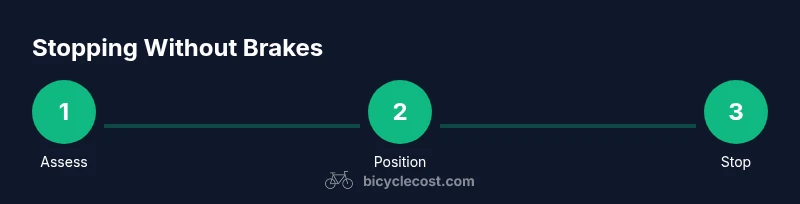
Assess environment and select space
Scan for hazards, choose a wide, flat area away from traffic, and plan an exit to safer ground if needed. This keeps you from making abrupt moves that could cause a fall.
Tip: Always pick a safe landing zone before you start practicing no-brakes techniques. - 2
Adopt a balanced, prepared stance
Stand with knees slightly bent, hips back, and eyes up. Keep your weight centered so you can react to terrain while decelerating.
Tip: Avoid locking elbows; a relaxed grip improves balance control. - 3
Begin a foot-down stop
Ease off pedals, shift weight to the back, and contact the ground with the ball of one foot while keeping the other foot on a pedal. Let the tire scrub against the surface and gradually slow.
Tip: Don’t plant your entire foot flat; use the ball of the foot for better grip. - 4
Use terrain to finish the stop
If space allows, steer toward grass, dirt, or gravel to increase friction and help dissipate speed safely.
Tip: Avoid abrupt steering that could destabilize you; make smooth, gradual adjustments. - 5
Handle emergencies and obstacles
If an obstacle appears, steer early and widen your turn to maintain space. Use a controlled foot-down stop if needed.
Tip: Keep your head up and scan ahead to anticipate hazards. - 6
Dismount and secure the bike if space runs out
When stopping space is insufficient, calmly dismount in a controlled manner and move the bike to safety on foot.
Tip: Always dismount away from traffic and pedestrians. - 7
Inspect brakes and plan next ride
After stopping, inspect brakes for wear and re-check components before riding again. Decide whether to ride to a shop or transport the bike for repair.
Tip: Prioritize maintenance to minimize future no-brakes scenarios. - 8
Progress gradually with a training plan
Repeat practice sessions, increasing difficulty slowly. Track your performance and adjust as you gain confidence.
Tip: Consistency beats intensity; practice weekly for reliable muscle memory.
People Also Ask
What should I do if my brakes fail while riding?
Stay calm, look for a safe stopping area, and use no-brakes techniques like controlled foot-down stopping if necessary. Move to the shoulder or grass and dismount when safe. Then assess the brake system and arrange repair.
Stay calm and find a safe place to stop. Use a foot-down stop if needed, move away from traffic, and get the bike checked for brake failure as soon as possible.
Is it safer to coast or dismount when brakes fail?
Coasting can be risky in traffic. If space allows and you can control speed, use a gradual no-brakes stop. If space is limited, dismount in a safe area and walk the bike to safety.
If you have space, try a controlled stop; otherwise, dismount somewhere safe and walk the bike to safety.
Can I ride long distances without brakes?
Riding at length without brakes is unsafe. Fix or replace brakes promptly. Use no-brakes techniques only as a last-resort backup in controlled environments.
No—don’t ride long distances without brakes. Fix them and practice no-brakes techniques only in safe areas.
What gear helps reduce speed without braking?
Shifting to a lower gear can slightly increase resistance on pedaling, aiding deceleration when combined with proper body position and terrain choice.
Downshifting can help you slow down, especially when used with foot-down stopping and terrain friction.
How should I practice these techniques safely?
Start in a closed, flat area with no traffic and gradually introduce slopes, varied surfaces, and simulated obstacles. Always wear PPE and inspect your bike before rides.
Practice in a safe, controlled space first; wear your helmet and keep bike in good condition.
Watch Video
Quick Summary
- Practice in a safe space before riding in traffic
- Foot-down stopping is the primary no-brakes method
- Use terrain to assist deceleration when safe
- Always check brakes after practicing no-brakes techniques
- Maintain your bike to minimize brake failure risk