Learn a BMX: A Practical Beginner Guide for All Ages
Can you learn to ride a BMX? This practical guide helps beginners build balance, safety, and confidence. Learn with BicycleCost guidance on gear, progression, and common mistakes for safe, fun BMX riding.


Yes—most riders can learn to ride a BMX with a safe, progressive plan and proper gear. Start on flat, smooth ground; focus on balance before pedaling; master mounting and braking, then gradually introduce turns and small tricks. This guide walks you through the essentials step by step.
Can you learn to ride a BMX? Why it's accessible for most riders
Can you learn to ride a bike on a BMX? Yes—this is a beginner-friendly pursuit when you approach it with the right plan and safety rules. The BicycleCost team has worked with hundreds of riders who started on BMX bikes and built solid skills through steady practice, proper gear, and progression. The key is to break the process into small, repeatable drills that you can perform on a flat surface before moving to real-world riding. Expect moments of wobbly legs and slow progress; those moments are part of learning and can be turned into clear steps with consistent effort.
BMX vs other bikes: what to expect when learning
Learning on a BMX differs from starting on a road bike or mountain bike. BMX bikes are compact, with a lower seat height and shorter wheelbase, which makes balance work more pronounced. That can speed up learning balance and body positioning, but it also means you’ll spend more time practicing small, precise movements rather than long, cruising runs. Start with stationary balance drills, then progress to gentle glides, always prioritizing control over speed.
Essential skills you’ll develop
When you learn to ride a BMX, you’ll develop balance, foot placement, braking control, and body positioning. These fundamentals transfer to other bike disciplines and improve your overall riding safety. Regular practice on a smooth surface helps you build muscle memory for mounting, dismounting, and coasting, while careful attention to tire pressure and grip reduces slips.
Progressive practice plan
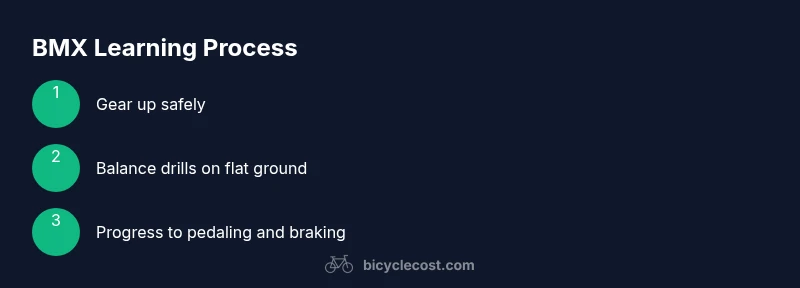
A structured progression keeps motivation high and reduces the risk of injury. Begin with balance stands and scoots, then add pedaling on the flats, followed by controlled braking and slow turns. Introduce small bumps or a gentle obstacle course only after you demonstrate consistent control. Schedule short sessions several times per week and track small gains in balance and confidence.
Common mistakes and how to fix them
Common beginner mistakes include looking down at the front wheel, grabbing the handlebars too hard, and starting with too much speed. Fixes include keeping your eyes forward, relaxing your grip, and practicing at a comfortable pace. If you feel your feet slipping from the pedals, adjust your foot position and check your shoe grip. A stable stance is more important than fast acceleration at this stage.
Safety first: gear, surfaces, and environment
Safety comes first when learning BMX. Always wear a helmet, knee and elbow pads, and gloves. Choose broad, flat surfaces with clean pavement or smooth, packed dirt. Avoid wet, crowded, or uneven surfaces until you’re confident. If you’re practicing in a public space, wear bright clothing and use clear signals to others nearby.
Creating a sustainable practice routine
Consistency beats intensity. Schedule short, frequent sessions rather than long, sporadic ones. Build a simple checklist for each session: check gear, inspect the bike, warm up with balance drills, practice mounting and braking, then finish with a cool-down stretch. Track progress by noting balance duration and confidence level, not just speed.
Authoritative sources and further reading
For safety guidelines and bike handling tips, refer to authoritative sources like the National Highway Traffic Safety Administration (NHTSA) bicycle safety page and the CDC’s bicycling health resources. These organizations offer research-backed guidance on protective gear, visibility, and safer riding practices.
Tools & Materials
- Helmet(CE-certified; snug fit; full-face not required)
- Knee pads(Shin protection helpful)
- Elbow pads(Cushioning for forward falls)
- Gloves(Grip and palm protection)
- Flat-soled shoes(Good grip, close-toed)
- Properly fitted BMX bike(Frame size that lets feet touch the ground)
- Repair kit & mini pump(Spare tube, multitool)
Steps
Estimated time: 60-90 minutes per session, plus weekly practice
- 1
Check bike fit and safety
Stand over the bike and confirm the frame height allows a slight bend in the knee with both feet on the ground. Inspect tires, brakes, and the seat clamp. Tighten loose components and ensure the chain moves smoothly.
Tip: If you’re unsure about fit, visit a local shop for a quick sizing check. - 2
Find balance on a stationary bike
Hold the bike upright and practice balancing on the pedals with one foot on the pedal while the other foot rests nearby. Keep eyes forward and shoulders relaxed to prevent tension.
Tip: Use a wall or railing for initial stabilization. - 3
Practice gliding with both feet on pedals
Place both feet on the pedals and attempt gentle glides on a flat surface with hands over the brakes. Focus on smooth weight transfer and keeping hips centered over the bike.
Tip: Short, controlled glides build confidence faster than long, uncontrolled runs. - 4
Pedal smoothly and steadily
Apply even pressure to both pedals in a smooth, continuous motion. Maintain a light grip on the handlebars and a tall, balanced posture to prevent wobbles.
Tip: Keep pedals level to avoid toe injuries. - 5
Braking and stopping safely
Progressively brake using both brakes. Start with light pressure and increase as you approach a safe stopping point. Avoid abrupt stops that throw you forward.
Tip: Practice stopping from walking pace before trying any speed. - 6
Mount and dismount safely
Mount from a stable surface, placing one foot on the pedal while holding the handlebars. Dismount by stepping back and placing a foot down, watching for obstacles.
Tip: Keep eyes on the path ahead as you mount. - 7
Add simple turns and controlled stance
Introduce gentle turns by leaning slightly toward the direction of the turn while keeping torso aligned. Practice small weight shifts for smooth arcs.
Tip: Turn with hips and shoulders together for clean curves.
People Also Ask
Is BMX learning suitable for absolute beginners?
Yes. With guided progression, proper gear, and safety habits, beginners can learn on a BMX and build confidence step by step.
Yes—beginners can start with basic balance and braking drills under safe conditions.
What size BMX is best for learning?
Choose a frame that allows your feet to touch the ground while seated and reaches your handlebars comfortably. A shop can help you pick the right size.
Choose a BMX size that lets your feet touch the ground and reach the bars without strain.
Should I wear a helmet and pads?
Absolutely. Protective gear significantly reduces the risk of injuries during early practice days.
Yes—protective gear is essential for safe practice.
How long does it take to feel confident?
Progress varies, but consistent practice over weeks tends to yield noticeable gains in balance and control.
Consistency over weeks leads to steady improvement in balance and control.
Is pavement better than dirt for learning?
Flat, dry pavement offers the most predictable surface for beginners. Move to dirt as confidence grows.
Start on flat pavement; move to dirt as you gain balance.
Watch Video
Quick Summary
- Start with safety and proper gear
- Master balance before pedaling
- Progress gradually to turns and basic tricks
- Consistency sustains improvement