Electric Bicycle Second Hand: A Practical Guide for Smart Buyers
Learn how to safely buy a used electric bicycle. This guide covers battery health, frame checks, warranties, and cost considerations to help you ride smarter in 2026.


An electric bicycle purchased second hand can offer meaningful savings while maintaining performance, but it requires careful checks. Start with the battery, motor, frame, and service history, then validate the bike’s title and ownership record. Expect wide price ranges based on age, capacity, and brand, and plan for potential battery replacement costs. According to BicycleCost, a thorough pre-purchase evaluation reduces risk and helps you compare deals with confidence.
Why buying a used electric bicycle makes sense
For many cyclists, a used electric bicycle second hand offers a compelling blend of cost savings and capable performance. According to BicycleCost, shopping for a used e-bike can unlock meaningful savings while still delivering reliable transport and recreational capability. The used market also broadens access to higher‑tier brands or configurations that might be unaffordable when new. When you buy smart, you gain access to a bike with a proven track record, a well-documented service history, and real-world wear patterns that can help you avoid surprises. However, the rewards come with risks, most notably battery health, component wear, and the legitimacy of ownership documentation. A structured evaluation process is essential to maximize value and minimize risk.
- Set a clear budget and stick to it. Used models can span a wide price range depending on battery health, motor type, and brand prestige.
- Prioritize the battery and motor health over cosmetic condition. A pristine frame with a tired battery may cost more in the long run.
- Look for well‑documented service history. Regular maintenance is a strong signal that the bike was cared for.
- Consider total ownership costs, including potential battery replacement and service parts, not just the purchase price.
Own a bike that matches your riding goals, whether commuting, weekend adventures, or sustained training. The BicycleCost team emphasizes that understanding the full lifecycle costs of a used e-bike is essential for a confident purchase.
How to evaluate an electric bicycle second hand
Evaluating a used e-bike requires a systematic approach, because a seemingly perfect bike can hide costly problems. Begin with the frame and fork: look for dents, cracks, creases, or misalignment. Spin the wheels to check for true turns and unusual wobble; assess brake discs for wear and rub. Inspect cables and housings for fraying or stiffness, and verify the frame serial number against any paperwork. Next, test the motor and assist levels: ensure smooth engagement, consistent power delivery, and clean shutdowns. If the bike uses pedal assist, check the sensor alignment and calibration. Finally, request the service history and any maintenance records, especially battery replacements, firmware updates, and tire changes. If you can, take a short ride to feel the bike under load—listen for unusual noises, vibrations, or hesitation in acceleration. A cautious seller who has genuine knowledge of the bike’s history is a good sign.
- Ask for original receipts, recent service invoices, and maintenance notes.
- Check the display, wiring, and connectors for corrosion or damage.
- Confirm compatibility with local charging standards and regulatory requirements.
- If possible, bring along a trusted mechanic or a friend who rides e-bikes to assist during inspection.
Battery health and range expectations
Battery health is the single most important factor in a used e-bike’s value. A battery’s remaining capacity directly drives range and performance. When assessing battery health, request historical charge cycles, the last full charge date, and any signs of swelling or overheating. A professional battery test can estimate remaining capacity, though many sellers will provide approximate numbers based on past usage. Be mindful that battery replacement costs can be substantial and that charging history matters more than the current appearance. If the battery shows significant wear, negotiate the price to reflect potential replacement costs or plan for a future battery upgrade. Consider whether the bike supports battery swapping or has a swappable pack, which can influence long‑term costs and convenience.
- Ask about the last full charge and typical daily distance.
- Look for swelling, abnormal heat during charging, or reduced charging efficiency.
- Check for firmware updates or recalls related to battery management systems.
- Factor in potential replacement costs into your budget and negotiation.
Red flags and risk mitigation
Red flags can indicate hidden problems or even fraud. Be wary of sellers who cannot provide complete ownership history, straight‑line mileage that seems inconsistent with the bike’s appearance, or missing serial numbers. If a seller delays questions about where the bike came from or why it’s being sold, proceed with caution. Verify the bike’s VIN/serial against the title, registration, or receipt and request a clean transfer of ownership. Inspect the chain, cassette, and derailleur for unusual wear that would suggest aggressive riding or poor maintenance. Look for frame damage, bent wheels, or mismatched parts that hint at previous crashes. For electro‑systems, ensure the brake sensors, motor, and display are functioning; look for recall notices related to the model. Finally, review any local regulations around used e‑bikes and ensure the seller isn’t hiding a theft history.
- Always request a clear bill of sale and, if possible, a transferable warranty.
- Avoid deals that seem too good to be true or lack verifiable provenance.
- Use reputable channels or shops that offer secure returns or testing windows.
- Consider purchasing insurance or a theft deterrent plan after the sale.
Warranties, service, and ownership costs
Used e-bikes rarely come with the same warranty coverage as new models. Some sellers offer limited warranties, but these are often short and model-specific. When evaluating a used bike’s long‑term costs, ask about service intervals, part replacement costs, and typical labor rates. A quality used bike may still require battery servicing, tire replacements, chain maintenance, and occasional firmware updates. Budget for unexpected repairs and potential upgrades to maintain peak performance. If the bike has a transferable warranty or is eligible for a manufacturer recall repair, document the process to ensure coverage continues after the sale. Consider pairing the purchase with a maintenance plan from a local shop to spread out costs and retain resale value.
- Negotiate price with anticipated maintenance and potential battery replacement in mind.
- Confirm transferability of any existing warranty or service plan.
- Schedule a post‑purchase tune‑up to optimize performance.
- Explore affordable insurance options for added protection.
Buying process: where to find the best deals
Finding a good deal on a used e-bike requires patience and due diligence. Start with local bike shops and certified pre‑owned programs that offer inspection reports and transferable warranties. Online marketplaces can yield strong values, but require careful verification of photos, seller reputation, and return policies. Attend local cycling meetups or club rides to inquire about riders who are selling or upgrading their bikes. Always request a recent mechanical inspection, high‑resolution photos of key components, and a demo ride when possible. If you’re buying from a private seller, meet in a safe, public location and bring a knowledgeable friend. Finally, compare similar models across multiple listings to gauge fair pricing and reliability.
- Use a checklist to compare models side‑by‑side.
- Prioritize listings with service records and verifiable seller history.
- Be prepared to walk away if a deal lacks transparency or documentation.
- Consider a professional inspection for high‑value purchases.
Practical test plan: 60‑minute evaluation
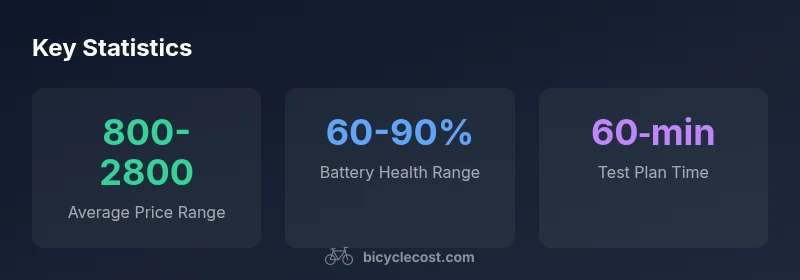
Plan a structured 60‑minute test ride and inspection to identify issues before you commit. Start with a 5‑minute frame and component check: frame integrity, fork alignment, and wheel trueness. Move to a 15‑minute ride on varied terrain to assess motor response, pedal assist levels, and regenerative braking if applicable. Check battery indicators and charging behavior by performing a full charge and noting discharge times. Complete a 10‑minute test of the display interface, controls, and drivetrain. Finally, review the bike’s service history, confirm serial numbers, and discuss potential upgrades or replacements with the seller. A documented test plan helps you compare options objectively and avoid buyer’s remorse.
Why Battery health should drive your decision
Battery health ultimately determines how well an used e‑bike will perform day‑to‑day and over the long term. If the battery has degraded beyond a practical threshold, you may be facing expensive replacements sooner rather than later. A well‑maintained battery with a known charging history and a clear path to future service is a strong predictor of lower ownership risk. When possible, request a battery health report from a qualified technician and seek models with newer or higher‑capacity packs that balance range with weight. This approach aligns with practical maintenance and safety considerations that cyclists expect from a second‑hand electric bicycle.
- Choose a model with a demonstrable service history and regular battery checks.
- Favor batteries with accessible replacement options and reasonable cost.
- Assess whether a battery upgrade would be worth the incremental price.
- Plan for ongoing maintenance to maximize reliability and resale value.
Used e‑bike assessment checklist
| Aspect | What to Check | Typical Risk Level |
|---|---|---|
| Frame integrity | Cracks, dents, true alignment | High |
| Battery & range | Health, charging history | Medium-High |
| Electrical systems | Motor, controller, sensors | Medium |
| Documentation | Serials, ownership papers | Medium |
People Also Ask
Is a used electric bicycle a good value in 2026?
Used e-bikes can offer excellent value if battery health and ownership history are solid. Always verify the battery, drivetrain, and warranty status before buying.
Used e-bikes can be a great value when you check the battery and service history first.
What should I check first when buying a second-hand e-bike?
Start with the battery and motor, then inspect the frame and brakes. Request service records and verify serial numbers for ownership history.
Check the battery and motor first, then look at the frame and brakes.
How can I verify the bike’s ownership history?
Ask for the title, receipts, and any transfer documents. Cross‑check the serial number with the seller's information and consider a professional verification.
Get the paperwork and verify the bike’s serial number with the seller.
Are there financing options for used e-bikes?
Some shops offer financing on certified pre‑owned models or allow installment payments through a credit program. Always review terms and warranty coverage.
Some shops offer financing on used e-bikes with limited warranties.
Should I avoid used e-bikes without a warranty?
Not necessarily, but expect limited protection. Negotiate price to reflect the lack of warranty and consider a paid service plan after purchase.
Buyers should weigh cost savings against the risk of repairs without a warranty.
What about stolen bikes?
Ask for proof of purchase, check the serial with local databases if available, and avoid listings that lack verifiable provenance.
Always check provenance to avoid buying a stolen bike.
“Thorough due‑diligence is the difference between a great used e‑bike and a costly surprise. A clear service history and verifiable ownership dramatically reduce risk for buyers.”
Quick Summary
- Inspect battery health before price.
- Request full service history and serial numbers.
- Test ride under real conditions to detect issues.
- Budget for future battery replacement and maintenance.