Buy E-Bicycle: A Practical Guide to Choosing and Purchasing
A practical guide to buying an e-bike: compare motors, fit, range, safety, and budget to confidently choose the right electric bicycle for daily rides and weekend adventures.


With this quick answer, you’ll learn how to choose and buy an e-bike that fits your riding style, budget, and safety needs. Compare motor types (pedal assist vs throttle), estimate range, verify frame size, assess battery life, and review warranties. You’ll also plan a smart test ride and budget for accessories to ensure a confident, lasting purchase.
Why buy e bicycle — benefits for daily riding and exploration
If you’re considering how to buy e bicycle, you’re about to unlock a new level of riding ease, range, and versatility. According to BicycleCost, buyers who map their routes and priorities early tend to choose models that fit their daily usage rather than chasing the flashiest tech. In this section we’ll cover the core benefits, common trade-offs, and how to build a decision rubric around your needs. An electric bicycle can make commuting smoother, extend weekend rides, and help you conquer hills that once felt impossible. The trick is to separate your needs into four dimensions: range, weight, power delivery, and long-term cost. E-bike drives come in several configurations—front hub, mid-drive, and rear hub—each with distinct pros and cons depending on terrain, maintenance, and price. Battery capacity and charging options also shape how far you can ride between charges. By setting a clear framework at the start, you’ll avoid buyer’s remorse and keep the process manageable. If you want a concise answer now, you can start by asking: which motor type best suits my usual routes, and what is my realistic daily distance? The best approach blends practicality with a dash of curiosity.
Understanding motor and drive options
Electric bikes use one of three drive configurations: front hub motors, mid-drive motors, or rear hub motors. Pedal assist (often labeled as PAS) and throttle control affect how the power arrives at the wheels. Front hub motors tend to be lighter and easier to service, but mid-drive systems generally offer better efficiency and climbing ability because they leverage the bike’s gears. Throttle control can help you move away from a stop without pedaling, but many regions regulate throttle-enabled e-bikes differently. When you’re learning how to buy e bicycle, you’ll want to map your terrain: flat commutes favor efficient PAS and lighter weight; hilly routes reward mid-drive power and smooth torque curves. Consider the bike’s weight, motor placement, and how that affects handling when the battery is full or near empty. Also compare maintenance needs: hub motors are often simpler to repair, while mid-drive units may require trained technicians for service. Finally, verify compatibility with local regulations and warranties, since some models have restrictions on pedal-assist speed or throttle usage in certain jurisdictions. This, too, affects long-term satisfaction.
Battery, range, and charging realities
Battery capacity and management determine how far you can ride between charges. Real-world range depends on rider weight, terrain, assist level, wind, tire pressure, and overall bike weight. BicycleCost analysis, 2026 shows that riders who optimize their riding style toward efficient pedal assistance typically maximize range without sacrificing enjoyment. Plan for charging between rides, and consider where you will recharge: at home, work, or public charging stations. Decide on a charging routine that fits your habits: some riders top up daily, while others complete a full charge every few days. Take note of charging times: smaller packs recharge faster but provide less total range, while larger packs take longer but endure longer rides. Also examine battery warranty length, replacement costs, and the ease of swapping batteries for extended trips. Remember to keep the battery cool in heat and out of direct sun, and avoid letting it fully discharge repeatedly, which can shorten life. With thoughtful planning, you’ll reduce the risk of unexpectedly stranded miles from home.
Frame size, geometry, and rider fit
Selecting the right frame size and geometry ensures comfort, safety, and efficient power transfer. Start with your inseam measurement and consider stand-over height, reach, stack, and overall stack-to-reach ratio. If you’re new to this, a trusted sizing chart from a reputable retailer or a local bike shop is invaluable. A well-fitted e-bike remains stable at speed and feels effortless on climbs. Test different frame sizes when possible; a slightly smaller frame with a high precision fit can feel quicker and more responsive than a too-large model. Factor in accessory compatibility: racks, fenders, and bottle cages add weight and can affect handling. Remember that women-specific or unisex frames may alter geometry and saddle height. If you’re between sizes, choosing a frame with adjustable stem and seat post length can prolong the bike’s usefulness as you grow more comfortable.
Test rides: the best signal
Plan several test rides on varying terrain: flats, gentle hills, and perhaps a light headwind section. On the ride, focus on how power is delivered, how smoothly the brakes respond, and how the handlebars feel for long distances. Bring a checklist: check seat height, reach, and pedal position; test different assist levels; verify that the display and controls are intuitive; and assess the weight distribution when the battery is mounted. Consider drag and wind resistance by riding at different speeds; notice how the bike accelerates and how easily you can come to a stop. If you’re undecided between two models, a short side-by-side ride can reveal subtle differences in comfort and handling. Don’t rush the process—your chosen bike should feel natural within a few minutes of riding, not after weeks of adaptation.
Budgeting and where to buy
Prices for e-bikes span a wide range, and you should expect to balance upfront cost with ongoing maintenance and battery life. Entry-level models may be affordable, while mid-range and premium models offer advanced motors, bigger batteries, and lighter frames. When budgeting, count the cost of required accessories: helmet, lock, maintenance tools, and potentially a second battery for longer trips. Also plan for maintenance costs, service intervals, and local repair options. Shop around across reputable retailers, local bike shops, and factory-direct brands; compare warranties, service networks, and return policies. If you plan to buy online, check return windows and the availability of local assembly services. Remember to verify that your purchase includes safety gear and a valid warranty; this helps protect your investment and ensures you’re covered for the long term.
Maintenance basics after purchase
Keep your e-bike in good health with regular checks: inspect the chain and drivetrain for wear, test your brakes, and monitor the battery and charging hardware. Clean the bike after rides in damp weather and store it in a dry place. Keep tires properly inflated to maximize range and efficiency; check tread wear and replace tires as needed. Software updates for the motor and display should be performed when available, typically through the manufacturer’s app or dealership. Schedule periodic professional inspections to catch issues with the motor, battery, or wiring before they become costly repairs. Track your miles and ride data to anticipate maintenance needs and adapt your charging and storage habits accordingly.
Safety and responsible riding
Riding safely on an electric bicycle means wearing a certified helmet, using lights after dusk, and obeying local traffic laws. Respect the bike’s capabilities: avoid sudden accelerations in crowded areas, use appropriate assist levels, and keep a safe distance from pedestrians and vehicles. Regularly check that the battery is secure and the frame is free of cracks or corrosion. Carry a basic repair kit and know the basics of fixing a loose chain or punctured tire. If you ride in challenging weather, adjust your speed and tire pressure to maintain grip. By adopting responsible riding habits and maintaining your bike, you’ll maximize safety and enjoyment.
Tools & Materials
- Measuring tape or ruler(For inseam, stand-over height, and reach measurements)
- Notebook and pen(To capture model notes, ride impressions, and fit measurements)
- Smartphone with internet access(Research, pricing, dealer locations, and apps)
- Budget and payment method(Credit card or financing options)
- Helmet and basic safety gear(For test rides in a controlled environment)
- Local dealer contact or test-ride booking(Arrange a real-world test ride)
Steps
Estimated time: 2-6 hours
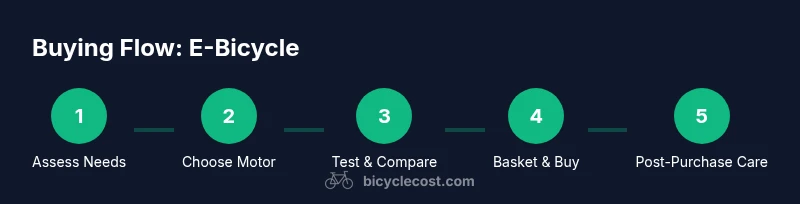
- 1
Assess your riding needs
Identify your daily distance, typical terrain, cargo needs, and the riding frequency. Create a rider profile to guide motor power and battery expectations. This helps you avoid overspending on features you won’t use.
Tip: Document your top three use cases and highest-priority features. - 2
Set a budget and choose motor type
Decide how much you’re willing to spend up front and for ongoing maintenance. Choose a motor type (front hub, mid-drive, or rear hub) based on terrain, weight, and preferred feel.
Tip: Balance power needs with expected battery life and weight. - 3
Check frame size and fit
Measure your inseam and consult sizing charts. Assess reach, saddle height, and handlebar position to ensure comfort and control.
Tip: If between sizes, opt for adjustable components to extend fit range. - 4
Evaluate battery range and charging options
Review battery capacity, charging time, and whether you’ll need a second battery for longer trips. Consider where you’ll recharge (home, work, or public spots).
Tip: Ask about battery warranty and replacement availability. - 5
Plan a test ride and compare models
Test at least two models on varied terrain. Check acceleration, braking, and ride feel at different assist levels.
Tip: Bring your measuring tape and notes to compare real-world fit and comfort. - 6
Review warranties and after-sales support
Understand motor, battery, and frame warranties; verify service networks and parts availability.
Tip: Prefer brands with local dealer support for easier service. - 7
Finalize purchase and plan maintenance
Choose accessories (helmet, lock, lights) and a maintenance schedule. Schedule a post-purchase check with a local shop.
Tip: Set calendar reminders for maintenance intervals.
People Also Ask
What is the difference between pedal-assist and throttle on an e-bike?
Pedal-assist provides power as you pedal, while throttle can engage power without pedaling. PAS tends to conserve battery and feels more like a traditional bike, whereas throttles allow instant acceleration but are regulated differently in some regions.
Pedal assist activates as you pedal; throttle provides power on demand, which can be handy starting from a stop but may have regional restrictions.
How do I determine the right motor power for my needs?
Assess terrain, desired speed, and rider weight. More power helps climbing and acceleration but increases battery use and weight.
Think about hills, speed targets, and how much weight you carry to choose the right motor power.
What is a typical e-bike range?
Range depends on battery capacity, assist level, terrain, and rider weight. Manufacturers provide estimates; real-world results vary with riding style.
Range varies with how you ride, the terrain, and how you use the assist.
Are there legal restrictions on e-bikes in my area?
Yes, some regions limit motor power or pedal-assist speed and may require helmet or registration. Check local rules before buying.
Local laws differ; always verify class, speed limits, and helmet requirements where you ride.
Do I need a special license to ride an e-bike?
Most places do not require a special license for standard e-bikes; classification rules may affect where you can ride.
Usually no license is needed, but rules vary by location.
What should I budget for maintenance and safety gear?
Plan for ongoing maintenance costs, safety gear, and basic tools. Battery care and professional service add to the total cost of ownership.
Budget for regular maintenance and safety gear to protect your investment.
Watch Video
Quick Summary
- Define riding needs before shopping.
- Prioritize motor type, range, and frame fit.
- Test ride multiple models for comfort and handling.
- Factor in warranty and service options.
- Budget for essential safety gear and maintenance.