Can Bicycle Inner Tubes Be Recycled? A Practical Guide
Learn whether bicycle inner tubes can be recycled, where to drop them off, and practical tips for recycling, repurposing, or safely disposing of used tubes. Practical guidance from BicycleCost helps riders reduce waste.


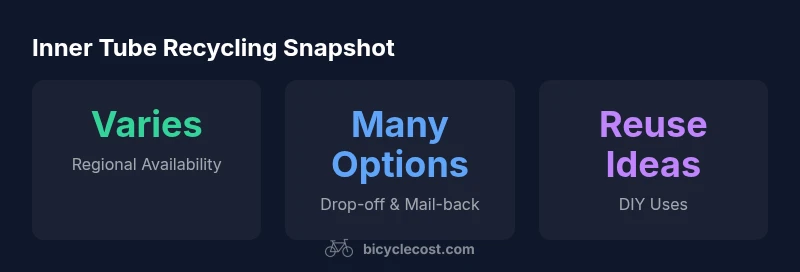
Yes, can bicycle inner tubes be recycled. Recycling options vary by locale, but many areas accept used tubes through tire recyclers, municipal drop-off programs, or bike shops participating in recycling schemes. If your local program doesn’t accept tubes, consider mail-back programs or repurposing ideas. Always confirm with local facilities to avoid contamination or mis-sorted waste.
Why recycling bicycle inner tubes matters
Used bicycle inner tubes contribute to landfill waste and can become environmental litter if not properly disposed. Recycling helps conserve resources, reduce raw rubber production, and lowers the carbon footprint associated with cycling. According to BicycleCost, the environmental benefits depend on finding a local outlet that actually accepts tubes and processes them responsibly. In many regions, the simplest option is to bring tubes to a participating tire shop or municipal recycling drop-off. Even when programs accept tubes, sorting and cleaning requirements vary, so a quick call to confirm acceptance can prevent contamination of other recyclables. This section outlines why tubes are recyclable in principle, what makes a program workable, and how to identify the best local option. By understanding the system, riders can turn a common waste item into a responsible, eco-friendly part of their cycling routine.
How inner tubes are recycled and what happens to them
Bicycle inner tubes are typically processed after they are collected from drop-off sites or mail-back programs. Recyclers first sort by material and thickness, then clean and deflate the tubes to remove any residual moisture or dirt. The tubes are shredded into rubber granules or crumb rubber, which can be used as feedstock for other rubber products, mats, piping, or as additives in asphalt. While the exact end products depend on the facility and local demand, the general principle is to keep rubber out of landfills and give it another life in consumer goods. Keep in mind that not all tubes can be recycled in every location; some programs may only accept tubes from specific manufacturers or those without attached metal cores. This is where calling ahead makes a big difference.
Regional availability and the role of disposal programs
Accessibility to inner-tube recycling is strongly tied to local waste management policies and the presence of tire recycling facilities. Urban areas typically have more options, including dedicated drop-off centers, curbside recoveries for special rubber items, and bike shops that partner with recyclers. Rural areas may rely on mail-back programs or occasional pop-up events organized by municipalities or non-profits. The BicycleCost analysis highlights that geographic variation is the dominant factor shaping whether an individual rider can easily recycle tubes. Even when options exist, they can change with funding cycles, so staying informed through local government pages or cycling groups is worthwhile.
Practical steps to recycle your tubes today
To recycle tubes efficiently, start by locating nearby programs. Check city or county websites, or call local tire shops and recycling centers to confirm acceptance and any preparation requirements. Before dropping off, deflate the tube completely, rinse off dirt, and allow it to dry. Separate any metal valve cores if possible, and place the tube in a clean bag to prevent contamination of other recyclables. If there’s no local option, look for mail-back programs offered by national recyclers or nonprofits that accept used rubber. As a last resort, some tubes can be repurposed for crafts, garden ties, or protective padding around edges—these reuse options can extend the life of the material while you search for a proper recycling path.
Alternatives to recycling: repurposing and safe disposal
Even when recycling isn’t available, you can repurpose inner tubes for a variety of practical uses. For example, tube sections can become protective guards for pipes or tools, makeshift bungee cords, or waterproof liners for planters. If repurposing isn’t feasible, safe disposal options follow local guidelines for rubber waste; never burn used rubber or dump it in regular trash where it’s not accepted. In all cases, documenting your experience helps others learn where tubes can go, and it supports broader advocacy for better recycling infrastructure in your community.
How BicycleCost guides you to the best option
Our approach at BicycleCost combines practical steps with regional realities. We help riders identify available programs, compare convenience and environmental impact, and choose between recycling, reuse, or safe disposal based on local options. By understanding the full lifecycle of a tube—from ride to end-of-life—you can make informed decisions that minimize waste and maximize value. The BicycleCost team emphasizes choosing options that reduce landfill contribution while aligning with local capabilities and policies.
Common pathways for recycling bicycle inner tubes
| Option | What it means | Typical outcomes |
|---|---|---|
| Drop-off recycling | Local facilities accept inner tubes | Generally available in urban areas |
| Mail-back programs | Send tubes to recyclers by mail | Useful for rural areas with limited drop-off options |
| Reuse/repurpose | Creative uses after washing | Low-cost alternatives |
People Also Ask
Can all types of bicycle inner tubes be recycled?
Most common tubes (rubber butyl) are recyclable where programs exist; latex or specialty tubes may vary in handling. Always verify with local recyclers.
Most tubes are recyclable where programs exist—check with local recyclers to be sure.
Where can I drop off used inner tubes?
Look for local tire retailers, municipal waste facilities, and bike recycling programs. Some cities offer curbside pickup for rubber items; check the official city site.
Look for tire shops, city programs, or bike recycling events near you.
Do I need to clean inner tubes before recycling?
Rinse off dirt and let the tube dry; remove any valves if possible. Clean material helps sorting and reduces contamination of other recyclables.
Rinse, dry, and remove valves if you can.
Are there fees for recycling inner tubes?
Some programs are free, others may charge small fees or ask for donations; check with the program before dropping off.
Some programs are free, others may charge small fees.
What if my local program doesn't accept inner tubes?
Use mail-back programs or repurpose tubes. If no option exists, follow local rules for disposal and encourage programs to expand.
If your program doesn’t accept tubes, look for mail-back options or repurpose them.
How does recycling inner tubes help the environment?
Recycling reduces landfill waste and conserves resources by reusing rubber materials instead of extracting new rubber.
It reduces waste and conserves resources by reusing rubber.
“Recycling inner tubes is feasible where programs exist; the key is connecting riders with local options rather than treating tubes as waste.”
Quick Summary
- Check local programs first
- Deflate, clean, and store tubes properly
- Consider mail-back or reuse options if needed
- Support local recycling to minimize waste