Why Are Recumbent Bikes Better? An Analytical Guide
Explore why are recumbent bikes better for comfort, endurance, and long rides. This BicycleCost guide analyzes ergonomics, performance, safety, and practical trade-offs for informed cycling decisions.


Recumbent bikes excel in comfort, joint safety, and long-ride efficiency thanks to a reclined seating position that reduces back and neck strain, and improved weight distribution. They also often offer lower aerodynamic drag at steady speeds, which can boost efficiency for endurance riders. However, dynamic handling, mounting/dismounting, and upfront cost can be trade-offs to consider.
The Core Ergonomic Advantage
The central appeal of recumbent bikes lies in ergonomics. For many riders, the question of why are recumbent bikes better centers on comfort and biomechanical health. In a reclined seating position, the spine rests in a natural, supported alignment, reducing pressure on the wrists, shoulders, and neck. This configuration often makes long-distance rides more comfortable, enabling cyclists to maintain an efficient cadence without nonessential muscle strain. Additionally, the laid-back posture distributes weight across the buttocks and back rather than concentrating it on the hands and wrists, which can lessen numbness during extended sessions. For riders with back issues or limited trunk mobility, the posture can be a game changer, and for others it simply reduces fatigue on multi-hour routes. Of course, the answer to 'why are recumbent bikes better' is not universal; it depends on rider goals, flexibility, terrain, and experience, but the ergonomic foundation is a strong, recurring theme throughout real-world use.
Comfort, Posture, and Long-Ride Feasibility
Beyond notes on general comfort, recumbent bikes redefine posture expectations. The seating system supports the pelvis and back, limiting spinal twist and neck strain during long efforts. This translates into fewer hot spots and less overall fatigue in extended events such as endurance rides or grand tours. Riders who suffer from wrist numbness or carpal tunnel symptoms often report relief because hands are not bearing the rider's full weight. The BicycleCost team notes that the long-ride feasibility of recumbents is a practical advantage for commuters and hobbyists who ride several hours at a time. However, setup matters: seat angle, saddle choice, and leg extension all influence comfort, so fine-tuning fit remains essential for real benefits to emerge on the road.
Aerodynamics and Efficiency at Steady Pace
A key dimension of the recumbent advantage is aerodynamics. A reclining torso and reduced frontal area can lower drag in steady-speed riding, which translates into less energy spent on the same distance. This is especially noticeable on flat sections and long loops where small drag reductions compound into real-time efficiency gains. While many recumbents are designed with foils or streamlined frames, performance depends on model geometry, body size, and clothing. For riders who value endurance and speed at moderate to low grades, the aerodynamic edge matters. Still, the efficiency is not universal; ground conditions, posture, and the rider’s weight influence actual results.
Safety, Stability, and Handling Considerations
Center of gravity, steering geometry, and brake setup differentiate recumbents from upright bikes. The reclined position lowers upper-body fatigue, but it can alter balance cues, especially at starts, stops, and tight corners. Visibility can also change: some drivers may not anticipate a recumbent rider as readily as a traditional cyclist. Many riders find that stability at speed is excellent due to distributed weight; however, mounting and dismounting can require extra space and practice. For all riders, proper helmet use, reflective gear, and lane positioning remain crucial. The key is matching model choice to riding context—road tours, sheltered bike trails, or open highways—so safety remains a priority even as comfort dominates.
Maintenance, Repairs, and Spare Parts Accessibility
Maintenance requirements for recumbent bikes can differ from upright bicycles. Some components—like the crankset orientation and chainline—align with specialized frames; others use standard parts. Parts availability depends on the model, geographic region, and service network. Routine tasks such as derailleur tuning, brake adjustment, and wheel truing still apply, but owners should be prepared for occasional component compatibility checks and potential fit-specific accessories. Purchasing from established dealers or clubs reduces the risk of missing parts. A thoughtful maintenance plan, including a basic toolkit and know-how for seat and frame checks, helps ensure reliability on long tours.
Setup, Sizing, and Accessory Compatibility
Sizing a recumbent involves more than seat height; leg extension, seat angle, and back support all influence comfort and efficiency. A correct setup requires careful measurement of leg length, torso length, and hip angle. Accessory compatibility—such as racks, fenders, and lights—depends on frame geometry and mounting points. Some riders appreciate modular seating systems; others prefer fixed setups with straightforward adjustments. For riders with mobility limitations, consult a professional fitter to optimize alignment, saddle choice, and handlebar placement. The result is a personalized ergonomic baseline that supports long rides and reduces travel fatigue.
Real-World Scenarios: Who Benefits Most
There is no universal answer, but certain rider profiles commonly benefit from recumbent geometry. Endurance athletes, riders with back or neck pain, and tall riders seeking comfortable leg extension often gain meaningful improvements. Cyclists recovering from injuries sometimes find recumbents easier to adapt to while maintaining aerobic training. Commuters who value all-day comfort and stable cruising may also prefer recumbents, provided they have access to safe riding routes and parking. The BicycleCost team notes that the best choice depends on daily routes, terrain mix, and personal fit; tests and trial rides are crucial to validate benefits in realistic conditions.
Trade-Offs to Weigh Before Switching
This section outlines the key caveats. While comfort and efficiency are strong positives, recumbent bikes can present a learning curve, higher upfront costs, and weight penalties. Some models require longer to mount and dismount, and storage space may be more constrained by the frame geometry. Gear range and accessibility can vary, so ensure the chosen model offers adequate gearing for hills and acceleration. Finally, think about transportation and storage at home or within the vehicle—recumbents can demand extra space or specialized racks. If you ride frequently in mixed traffic, compare visibility and user familiarity with upright bikes to determine the best fit for your situation.
How to Test-Ride a Recumbent Bike
A practical guide to try-before-you-buy. Start with a dedicated cycling shop or club fit session that allows a guided test ride on flat ground, then progress to gentle slopes to assess climbing and steering response. Pay attention to saddle comfort, leg extension, and visibility. Bring your own shoes and pedals when possible to ensure consistent fit. If available, try different seat angles and crank lengths to experience how small adjustments influence fatigue and power transfer. A structured test ride helps you translate general claims into personal comfort and performance.
Buying Guide: Costs, Models, and Where to Start
This block should provide general guidance on price ranges and categories. Recumbent bikes span entry-level to premium models; costs vary by frame material, component quality, and brand. Budget for essential accessories such as lighting and reflective gear. Consider the availability of local service and community groups, which can influence total ownership cost. When choosing a model, assess ride type (road, upright, long-distance) and the seat system. Reading user reviews and consulting from local recumbent clubs improves decision-making. The right model aligns with your riding goals and budget, providing practical value for years of use.
Myths and Realities: Debunking Common Misconceptions
Debunk common myths like "recumbents are slower," "they are unsuitable for urban commuting," or "they are unsafe." In reality, recumbents can deliver competitive times in flat terrain and endurance races; with proper safety practices, they are as safe as upright bikes. Debunking helps: test-rides dispel the idea that recumbents eliminate technique; you still need balance, road awareness, and traffic comprehension. Truths about maintenance and accessibility, including the availability of parts and clubs, are also clarified.
Quick-start Checklist for Your First Recumbent Ride
A concise, action-ready list to begin riding confidently. Confirm seat fit and leg extension, verify brake and shifter operation, and practice mounting in a safe space. Schedule a short ride on forgiving terrain to evaluate comfort and balance. Dress for comfort and visibility; bring essential tools for minor adjustments and a plan for returning home if you encounter issues. This checklist provides a practical path from curiosity to confident, comfortable riding.
Comparison
| Feature | Recumbent bike | Upright bike |
|---|---|---|
| Weight distribution | Even, supported by back/buttocks | Primarily through hands, saddle, and pedals |
| Comfort on long rides | High comfort for back/neck; reduced numbness | Good comfort, standard posture |
| Aerodynamics | Lower frontal area; potential drag reductions | Higher frontal area; standard aero profile |
| Handling and mounting | Different steering geometry; adaptation needed | Familiar handling; easier mounting for many |
| Maintenance/parts | Some models use specialized components; parts availability varies | Widely available components; broader service networks |
| Cost/Value | Higher upfront cost; value depends on fit/use | Lower upfront cost; resale value varies |
Pros
- Enhanced comfort on long rides
- Reduced wrist, neck, and back strain
- Potential for higher endurance performance
- Stable weight distribution reduces fatigue in hours of riding
Downsides
- Higher upfront purchase price
- Heavier frame; requires more space for storage
- Steep learning curve for mounting and handling
- Limited availability of some models or service networks
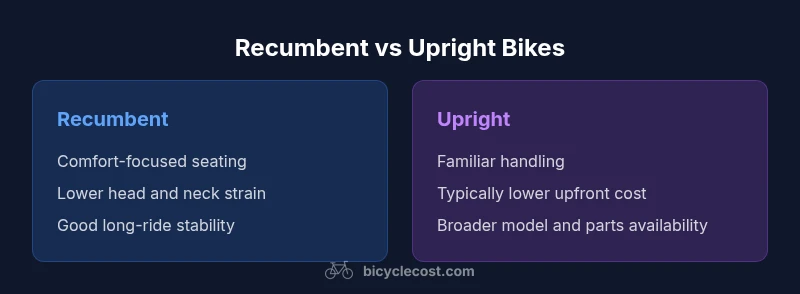
Recumbent bikes are recommended for riders who prioritize comfort and endurance; upright bikes remain better for beginners and steep climbs.
If comfort and long-distance efficiency are your main goals, recumbents offer clear advantages. They demand careful fit and a willingness to adapt to different handling and mounting. For new riders or mixed-terrain commuting, upright bikes may still be the more practical starting point.
People Also Ask
Why are recumbent bikes better for long rides?
Recumbent bikes distribute weight more evenly across the body, reducing pressure points on the wrists, neck, and back. This often results in greater comfort and less fatigue over hours of riding. For many riders, this ergonomic advantage is a primary reason to choose a recumbent over an upright bike.
They’re better for long rides because the seat and back support ease pressure and fatigue.
Are recumbent bikes harder to learn to ride?
Yes, there is a learning curve due to different balance cues and steering dynamics. Start in a safe area, progress gradually, and consider a fit session to accelerate adaptation.
There’s a learning curve, but with practice you can become proficient.
Can recumbent bikes climb hills effectively?
Recumbents can climb well, especially with appropriate gearing and rider technique. Performance on hills varies by model and rider weight, so test climbs during a trial ride.
They can climb hills well with the right gearing and fit.
Are recumbent bikes costlier than upright bikes?
In many cases, recumbents have a higher upfront price due to specialized components and frame designs. Long-term value depends on comfort, usage, and maintenance costs.
Prices can be higher upfront, but value depends on how you ride.
Quick Summary
- Prioritize a professional fit to unlock ergonomic benefits
- Evaluate long-ride comfort vs. learning curve and storage needs
- Test across flat and hilly terrain to gauge real-world efficiency
- Consider maintenance access and local service networks before switching