Rocky Mountain Altitude: What Cyclists Need to Know
A data-driven guide to Rocky Mountain altitude for cyclists, covering altitude ranges, acclimation, gear, nutrition, and safety based on BicycleCost Analysis, 2026.


Rocky mountain altitude places unique stresses on cycling performance due to thinner air, reduced oxygen availability, and cooler temperatures. Elevation throughout the range—from Denver suburbs up to alpine passes—affects power output, pacing, and recovery. In practice, most climbers will experience meaningful effects beginning around 6,000–8,000 feet, with peak performance challenges above 12,000 feet. Understanding these factors helps riders plan acclimation, nutrition, and gear.
Understanding rocky mountain altitude and its effects on cyclists
Rocky mountain altitude refers to the range of elevations cyclists encounter when riding in the Rocky Mountain region, from Front Range cities at roughly 5,000 feet to alpine passes above 12,000 feet. For many riders, altitude translates into measurable physiological stress: thinner air reduces available oxygen, which can lower sustained power output and increase perceived effort. The BicycleCost team notes that successful climbs depend not only on fitness but on how well riders adapt to these conditions. Acclimation, pacing, and nutrition strategies can compound or mitigate the altitude effect. In practice, the most impactful changes come from adjusting training plans, time spent at elevation before big climbs, and practical decisions about clothing and hydration. For riders unfamiliar with high altitude, a cautious start with shorter climbs at moderate elevation helps establish a personal baseline. Over several sessions, you can learn how your body responds to rocky mountain altitude and tailor future rides accordingly.
Altitude zones in the Rockies and how riders experience them
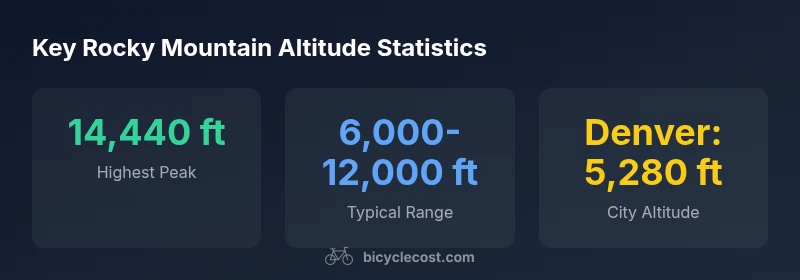
Riding through Colorado's Front Range to southern Wyoming, most climbers encounter zones that differ in air density, temperature, and wind. At sea-level equivalents, your heart rate and oxygen uptake adapt quickly; at 8,000–9,000 feet the air is thinner and breathing feels noticeably easier at lower power, while top-of-pass elevations above 12,000 feet demand durable pacing. Denver, at 5,280 feet, provides a practical anchor for training baselines because many rides anchor from that altitude. The key physiological shifts are related to ventilatory response and diffusion capacity; these change how you should pace, recover, and snack. The BicycleCost data emphasizes that altitude affects performance incrementally and most cyclists adjust after a few outings. Use elevation profiles to plan days of acclimation, and keep a log of your power output relative to altitude to refine your pacing strategy for each route.
Acclimation strategies for high-altitude cycling
Acclimation is a process, not an event. Start with lower-elevation rides and gradually stack elevation over several days, aiming for a safe rule of thumb: increase by about 1,000–2,000 feet per day where feasible. Hydration becomes more critical as air dries and breathing becomes laborious; add electrolytes and drink consistently, even when you do not feel thirsty. Sleep quality matters; plan for extra rest days after long climbs, and consider adapting training loads to avoid excessive fatigue. Temperature swings at altitude also demand appropriate clothing layers, especially during early mornings or late evenings. The BicycleCost team recommends a three-step approach: 1) acclimation days at moderate elevation, 2) controlled training with reduced intensity, and 3) a return-to-sea-level ramp after your peak climb. With careful planning, you’ll notice improved tolerance to Rocky Mountain altitude across successive rides.
Practical gear and nutrition for altitude rides
High-altitude rides demand more than base training; they require smart gear and nutrition. Dress in layers to adapt to sudden temperature drops, and choose moisture-wicking materials to manage sweat as your body works harder at altitude. Consider gloves, windproof jackets, and lightweight insulation. Nutrition should emphasize easily digestible carbs and regular fueling to prevent abrupt fatigue, with smaller, more frequent meals. Electrolyte-rich beverages help prevent dehydration from dry mountain air, and bite-sized snacks reduce gastrointestinal distress during steep climbs. Lastly, pack a lightweight rescue plan: a small first-aid kit, a GPS beacon, and a plan for where to get help if symptoms of altitude sickness emerge. The goal is steady, sustainable power output rather than heroic bursts that fatigue quickly in the thinner air.
Training and pacing considerations at altitude
Altitude shifts power-to-output dynamics, so pacing strategies matter as much as fitness. Start rides at a conservative intensity, using a pace that keeps your heart rate below your usual threshold while you monitor breathing. Some riders use pace guidance based on perceived exertion (RPE) to adjust on the fly, avoiding large spikes in effort. If you use power meters, expect a baseline drop relative to sea-level targets—adjust targets downward by a safe margin and acclimate progressively. Train with both endurance-focused sessions and low-volume, higher-intensity workouts at altitude when you’re acclimated. The aim is to preserve leg strength and maintain good form on long climbs, even as air becomes thinner and temperatures cool.
Route planning and safety for rocky mountain altitude rides
Before you head out, study the weather forecast and potential storm windows; mountain weather can shift quickly at higher elevations. Plan for daylight constraints, wind exposure, and river crossings with weather-appropriate gear. Altitude sickness signs—headache, dizziness, nausea, or extreme fatigue—require immediate action: rest, hydrate, and descend if symptoms persist. Ride with a partner when possible for safety, and carry a basic medical kit and a means of communication. Always carry a plan for alternative routes in case a climb becomes unsafe or your acclimation response is inadequate. Smart planning reduces risk and keeps your elevation-based objectives intact.
Case studies and practical takeaways from typical Rockies routes
In a representative scenario, a rider starts a climb at around 7,500 feet and finishes near 11,000 feet after a 3–4 hour session. Expect a modest drop in peak power, more pronounced fatigue, and longer recovery times compared with sea-level efforts. The key is to pace conservatively, use fueling strategies that restore glycogen stores efficiently, and listen to early warning signs of fatigue. A successful outing at Rocky Mountain altitude blends sensible acclimation, steady nutrition, and smart gear choices. For many cyclists, these practical lessons translate into more enjoyable rides and sustainable month-to-month improvement rather than heroic single-day efforts.
How BicycleCost uses data to inform altitude guidance
This section describes the data and methods BicycleCost employs to produce actionable altitude guidance for cyclists. We combine telemetry from wearables, route elevation data, and climate information to model how altitude affects power, heart rate, and pace. Our approach emphasizes real-world testing, rider-reported outcomes, and defensible assumptions derived from ongoing BicycleCost Analysis, 2026. The result is a practical, evidence-based framework that guides acclimation plans, equipment choices, and route selection for riders at all levels.
Altitude context for Rocky Mountain cycling
| Item | Altitude Range (ft / m) | Notes |
|---|---|---|
| Mount Elbert (highest peak) | 14,440 ft / 4,401 m | Highest peak in the Rockies |
| Typical Colorado passes for cyclists | 6,000-12,000 ft / 1,800-3,700 m | Popular routes along major corridors |
| Denver (gateway city) | 5,280 ft / 1,609 m | Gateway altitude for training baselines |
| Alpine towns | 9,000-11,000 ft / 2,700-3,350 m | Typical alpine settlements nearby routes |
People Also Ask
What altitude ranges should I expect on typical Rocky Mountain rides?
Rides commonly fall between 6,000 and 12,000 ft, with peak climbs near 14,000 ft in some routes. Always check route elevation profiles.
Most Rocky Mountain rides sit around six to twelve thousand feet, with higher peaks possible. Check the elevation profile before you go.
How can I acclimate quickly before a high-altitude climb?
Plan multi-day acclimation, ascend slowly, stay hydrated, and monitor symptoms. If possible, arrive 3-5 days early for major ascents.
Give yourself a few days to acclimate, hydrate, and listen to your body.
Does altitude affect bike performance and gear choices?
Yes. Expect reduced power and cooler temps; adjust gearing and layering; carry extra electrolyte fluids.
Altitude lowers power and can chill you—adjust gear and layers.
What are early signs of altitude sickness I should watch for?
Headache, dizziness, nausea, and fatigue; if symptoms worsen, descend and seek medical advice.
Watch for headache or dizziness; if it gets worse, descend.
Is training at sea level enough for Rockies riding?
Sea-level training helps, but integrate altitude simulation or training blocks at altitude to adapt.
Sea level helps, but you should add altitude-specific training.
What safety measures should I take on high-altitude rides?
Plan for weather, carry emergency meds, ride with partners, and know when to turn back.
Ride with a buddy and know when to turn back.
“Altitude changes demand a disciplined approach to training, nutrition, and pacing. With data-driven planning, cyclists can optimize performance and safety.”
Quick Summary
- Plan gradual ascents to acclimate.
- Hydration and electrolytes matter at altitude.
- Expect performance declines above 8,000 ft.
- Pace yourself with RPE or power targets.
- Denver altitude can guide training planning.