Do You Wear Bicycle Shorts with Underwear? Practical Comfort Guide
Explore whether to wear underwear with bicycle shorts, plus fabric tips, fit guidance, hygiene, and real-world scenarios to maximize comfort on rides.


Do you wear bicycle shorts with underwear? The short answer is: it depends. Most riders skip underwear because the shorts’ built-in chamois is designed to reduce friction. If you choose underwear, opt for seamless, moisture-wicking fabric and a lightweight, snug fit to minimize chafing. Cotton is a no-go for active riding; synthetic blends keep you drier longer.
Understanding the do-you-wear-underwear question
If you’re asking do you wear bicycle shorts with underwear, you’re not alone. The decision hinges on comfort, hygiene, and the design of modern cycling shorts. Bicycle shorts with a built-in chamois are specifically engineered to manage moisture, reduce friction, and cushion sit bones during long rides. That integrated pad often makes extra underwear unnecessary. According to BicycleCost, moisture management and seam placement play pivotal roles in comfort on extended rides. For many riders, the simplest answer is to ride with just the shorts and the pad; for others, underwear can add a layer of protection when the shorts are worn in non-padded configurations or during recovery rides. The key is to avoid materials that trap heat or irritate skin.
Fabric science: how shorts and underwear interact
Modern bike shorts are usually made from a blend of nylon, polyester, and elastane. The fabric is designed to wick moisture away from the skin, provide stretch, and minimize chafing. Underwear, if worn, should complement this system, not disrupt it. Cotton underwear soaks up sweat and stays damp, increasing friction and discomfort. In contrast, seamless, moisture-wicking underwear made from synthetic fibers lowers the risk of hotspots. The best pairing depends on your activity (commuting vs. racing), climate, and sensitivity. The Bike Comfort Index used in BicycleCost Analysis, 2026 emphasizes fabric performance over fashion in ride comfort.
Choosing underwear if you wear it
If you decide to wear underwear with bike shorts, choose pieces that minimize seams and edges that could irritate. Look for: seamless designs, flatlock stitching, moisture-wicking fibers, and a snug fit without bunching. Avoid cotton and bulky materials that trap heat. For women, a well-fitted liner can reduce friction without doubling the pad; for men, consider a lightweight, mesh-backed option to improve airflow. A practical test on a short ride helps you judge comfort across different textures and temperatures.
Fit and sizing: getting the right balance
The fit of both shorts and underwear matters more than the color or brand. If the underwear is too tight, it can press against the chamois and cause discomfort. If it’s too loose, it can shift and create chafing. When pairing with chamois shorts, ensure the waistband sits flat and doesn’t roll. For those with sensitive skin or longer rides, consider bib shorts with a compression leg to reduce movement and friction. Sizing can vary by brand, so always check the rise, inseam, and waistband design.
Women vs men: differences in comfort and chafing risk
Anatomical differences affect how underwear interacts with shorts. Women may benefit from a liner designed specifically for female anatomy, which reduces fabric bunching and seam irritation. Men should look for soft-front options with minimal seam irritation around the groin area. Regardless of gender, ergonomics matter: a short that sits correctly and a liner that follows your body reduce folds that can rub and irritate skin during long rides.
Practical product pairings: fabrics that work well together
The most reliable pairing is bike shorts with a built-in pad worn without underwear for most riders. If underwear is desired, pick a seamless, moisture-wicking option in a fabric blend like nylon-spandex or polyester-spandex. Avoid cotton entirely for cycling because it dries slowly and can trap heat. For climate control, consider lightweight, breathable underwear during hot days and a slightly denser, but still seamless, option for cooler rides. Keep laundry simple: wash delicates separately and air-dry to preserve elasticity.
Clothing layering and discipline-specific tips
Road cyclists, casual commuters, and mountain bikers each have different comfort needs. For endurance rides, fewer layers often mean less friction; for winter rides, a breathable base layer with a moisture-wicking underwear option can maintain core comfort. Bib shorts offer an alternative: they eliminate a waistband seam and reduce movement that causes chafing. This can be a better option for riders who want peak comfort without underwear. If you ride frequently in damp conditions, moisture management becomes even more critical.
Hygiene and care: keeping it clean and fresh
Hygiene is essential when wearing any undergarment under cycling shorts. Sweat and heat can breed bacteria, leading to irritation. Change and wash after every ride, especially after long or sweaty sessions. Use a gentle detergent on fabrics that contact skin, and avoid fabric softeners that can reduce wicking performance. If you experience itching or redness, switch to different underwear fabrics, ensure a proper wash routine, and allow skin to recover before longer rides.
How to test and adjust for comfort on the bike
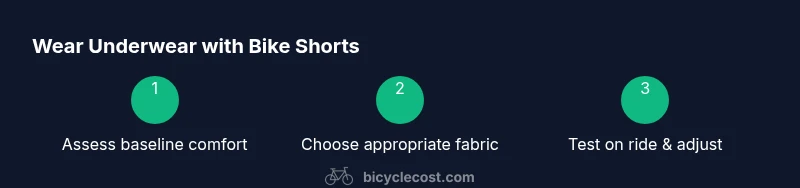
The only way to know if you should wear underwear with your shorts is to test under real riding conditions. Start with a short ride, then assess skin warmth, moisture, and friction. If you notice chafing, adjust the seam layout by choosing underwear with flat seams or switching to a pair with no seams at all. Document your findings: ride duration, temperature, and fabric combo. This will help you tune your setup for future rides and make gear decisions easier.
Tools & Materials
- Moisture-wicking underwear (seamless recommended)(Prefer synthetic blends; avoid cotton; look for flat seams to minimize irritation)
- Bicycle shorts with built-in chamois(Choose a size that fits snugly yet allows full range of motion; bibs are optional)
- Lightweight, breathable socks(Cotton socks trap moisture; choose synthetic or wool blends for comfort)
- Laundry setup for quick turnarounds(Wash after long rides; air dry to preserve elasticity)
Steps
Estimated time: 30-60 minutes
- 1
Assess baseline comfort
Begin with cycling shorts on their own for a short ride to establish baseline comfort. Note any hotspots or irritation and how the pad feels against the skin. This helps determine whether underwear is needed.
Tip: Record temperatures and ride duration to compare comfort across conditions. - 2
Choose underwear with care
If you decide to try underwear, pick seamless, moisture-wicking options with flatlock seams to minimize friction. Avoid cotton as it traps moisture and can irritate skin.
Tip: Test at home first to ensure the underwear doesn’t bunch under the pad. - 3
Try a short test ride
Wear the shorts plus underwear for a 15–20 minute ride on flat terrain. Check for chafing, heat, and comfort of the waistband and seams.
Tip: Keep a small towel handy to wipe away sweat and observe any changes in skin feel. - 4
Evaluate and adjust
If you notice rubbing or dampness in any spot, stop wearing underwear or switch to a different fabric. You may also adjust the position of the chamois by pulling the shorts slightly higher or lower.
Tip: Move seams away from sensitive areas to reduce friction. - 5
Consider alternative gear
If comfort remains an issue, explore bib shorts or different pad shapes. Bib models eliminate waistband irritation and can improve overall fit.
Tip: Try a different pad thickness if you ride long distances. - 6
Document your results
Keep notes on ride duration, weather, and fabric combinations to build a personal comfort profile for future rides.
Tip: A simple checklist helps you scale testing across multiple rides.
People Also Ask
Do bicycle shorts require underwear?
No, most riders do not require underwear because the built-in chamois is designed to reduce friction. Underwear is optional and may add comfort for some people.
Most riders don’t need underwear under bike shorts, but some people find seamless, moisture-wicking underwear comfortable for longer rides.
What fabrics are best for underwear under bike shorts?
Choose seamless, moisture-wicking fabrics like synthetic blends. Avoid cotton, which traps moisture and increases chafing.
Go with seamless, moisture-wicking underwear and avoid cotton for cycling.
Are there risks to wearing underwear with cycling shorts?
Potential friction from seams or waistband, plus heat buildup on long rides. If you feel irritation, adjust your setup or switch fabrics.
Potential friction from seams; if it irritates you, change fabrics or remove underwear.
How should women choose underwear with cycling shorts?
Consider gender-specific liners or a smooth, seam-free option to reduce irritation around the anatomy while ensuring a comfortable ride.
Women may prefer liners designed for female anatomy to reduce rubbing.
Can I wear regular underwear under non-pad shorts?
If you’re wearing non-padded shorts, underwear can help protect sensitive areas, but expect more friction without a chamois. A padded short is often better.
Under non-padded shorts, underwear may help, but a padded short is usually a better option.
How can I test comfort effectively?
Do a controlled test ride, vary fabric and seam placement, and note any hotspots. Use a short ride initially before longer sessions.
Test on a short ride and compare the impact of fabrics and seams.
Watch Video
Quick Summary
- Test both options to find comfort on your rides
- Prioritize moisture management over fashion
- Choose seamless, moisture-wicking underwear if you wear it
- Avoid cotton-based undergarments for cycling
- Bib shorts can reduce waistband irritation