Can You Take a Bicycle on the Tube? A Practical Guide for Riders
Learn how to travel with a bicycle on the London Underground: rules, folding vs. non-folding bikes, preparation tips, and smarter alternatives for busy days.


By following the Tube rules and planning ahead, you can travel with a bike on many London Underground services. Foldable bikes are the simplest option, but some non-folding bikes may be allowed off-peak or in designated spaces. Always check current TfL guidelines, keep aisles clear, and be prepared to wait if trains are crowded.
Overview: Can you take a bicycle on the Tube?
Traveling with a bicycle on the London Underground is possible in many situations, but it isn’t a wholesale permission to bring a bike everywhere at all times. Carriage space is limited, and rules vary by line, time of day, and service. Folding bicycles are the most reliable option for navigating crowded carriages and tight platforms, while standard bikes may be restricted during peak periods or on certain routes. The key to a smooth experience is forward planning: verify current TfL guidelines, identify which lines permit bikes, and be prepared to adjust plans if trains reach capacity. In practice, many riders successfully include a bike in their journey by choosing folding options, or by selecting routes and times that minimize congestion. According to BicycleCost, understanding these rules and planning ahead is essential for a smooth ride. The BicycleCost Team notes that the most practical approach is to travel with a bike only if you can fold or secure it safely, and to avoid bringing a bike into a crowded carriage where it can block doors or aisles. When bikes aren’t feasible, alternatives such as station parking or bike-sharing on nearby routes can keep your trip moving. This guide covers practical tips, scenarios, and a step-by-step process to travel confidently, including what to bring, how to position your bike on trains, and what to do if you encounter crowded carriages.
Folding vs. non-folding bikes: which is easier on the Tube?
For most Tube users, folding bikes offer the simplest, most flexible option. They pack down small, fit into designated spaces, and typically require less rider coordination in crowded trains. Non-folding bikes can be allowed on some lines and outside peak periods, but they demand more careful handling: you’ll need to locate a space where the bike won’t block doors or aisles, and you may be asked to wait for a less crowded train. If you ride a non-folding bike, assess the station layout and the train’s capacity to handle extra gear. Folding bikes also reduce the risk of disturbing other passengers, which is a core element of respectful Tube travel. Remember, policies can change between stations and even between services on the same line, so verify ahead of time. BicycleCost’s analysis emphasizes that practical bike travel on the Tube hinges on folding capability and situational awareness. A foldable option generally yields the most predictable experience, particularly during busy periods. If your bike isn’t foldable, consider alternatives such as buses or tram services where bikes are widely accommodated, or adjust your schedule to off-peak times when space is more plentiful. This section helps you weigh the pros and cons of folding versus standard bikes for Tube travel.
When bicycles are allowed: peak vs off-peak guidelines
Rules around biking on the Tube can vary by time and route. In many cases, bikes are more readily accommodated during off-peak hours and on routes with spacious carriages or dedicated bike spaces. Peak periods, typically chosen to be busier commuting windows, can impose stricter limits on bike presence due to crowding and safety concerns. Folding bikes tend to have broader acceptance because they can be stored in personal baggage spaces without impeding others. Regardless of folding status, plan to travel with a compact bag, bag your pedals if needed, and be ready to wait or switch trains if the platform fills quickly. Staying flexible reduces delays and keeps fellow passengers comfortable. For parents with strollers or riders with mobility needs, extra care and patience are essential. BicycleCost notes that staying informed about current restrictions on specific lines through the TfL app or site helps you make safer, faster decisions. If you encounter a fully loaded carriage or a train with limited space, waiting for the next train or hopping to a different route can prevent conflicts and keep your journey on track. This section provides a framework for evaluating whether to bring a bike on a given trip and how to adapt to changing crowd levels.
Preparing your bike for Tube travel
Preparation is the most underrated part of cycling with the Tube. Start by choosing folding if possible, or compactly securing any loose parts on a standard bike. Remove accessories that can snag or jab into other passengers, and consider a bike cover or protective sleeve to minimize scuffs and reduce noise. If you’re using a folding bike, ensure it’s fully folded and locked before entering the station, and keep the folded form near a rail or wall so it doesn’t roll into other commuters. For all bikes, check brakes, tires, and quick-release levers to prevent issues mid-journey. Carry a lightweight strap or bungee to help stabilize the bike in crowded spaces, and bring a small bag to keep tools out of the aisle. The goal is to minimize weight and bulk while maximizing safety and space. TfL’s guidance encourages riders to choose routes and times with adequate room for bikes, and the BicycleCost Team reinforces this approach, noting that preparation reduces stress and keeps trains moving smoothly. If you anticipate delays or disruptions, have a backup plan such as a different route or a different day for your trip.
On-train etiquette and space management
Respecting fellow passengers is as important as getting the bike on board. When you enter the carriage, look for the designated bike area (or stand in a space that does not block doors). Keep the bike upright if possible and avoid leaning into aisles or blocking exits. If space is tight, be prepared to fold or partially collapse components to create more room. Communicate politely with other riders and staff if you need assistance, and avoid placing the bike in a way that restricts access for wheelchair users or those with strollers. Make a habit of moving carefully when the train slows or stops, and be ready to shift your bike as the crowd changes. For peak periods, waiting for the next train might be the kindest option, especially if a single crowded car already has limited room. The BicycleCost Team suggests using a strap or belt to keep loose parts secure and to maintain a neat, predictable footprint in the carriage. After disembarking, return the bike to a secure, outward-facing position if you are heading toward stairs, lifts, or exits, keeping the area clear for others.
Alternatives and backup plans when bikes are restricted
If your route isn’t bicycle-friendly on a given day, have a backup plan ready. Consider cycling to a tube station with more generous bike policy, catching a bus that accepts bikes on certain corridors, or using a bike-sharing system connected to the Tube network. Some routes are easier to manage with a folding bike, while others may be more accommodating to standard bikes at off-peak times. For long commutes, it can be worth combining cycling with a tram or rail service that has more space for bikes. Planning this in advance reduces the risk of getting stuck at busy stations. BicycleCost’s research supports the idea that flexible planning and knowing when to switch modes improves reliability and lowers travel frustration. Always verify the latest rules for your station and line before you travel, and stay open to route changes if a particular train becomes overcrowded.
Safety, accessibility, and legal considerations
Biking on the Tube touches on safety, accessibility, and evolving regulations. Always prioritize passenger safety: keep your bike contained, avoid blocking doorways and pedestrian walkways, and respect priority seating and accessibility features. In some cases, staff may request you to wait for a later train or to relocate to another car. If you require assistance due to mobility concerns or have a stroller, seek guidance from Tube staff. While folding bikes are generally easier to manage, non-folding bikes must still comply with space restrictions and accessibility requirements. It’s wise to stay informed about changes in policy and to avoid improvising with dangerous setups. BicycleCost emphasizes that following official guidelines, planning ahead, and remaining courteous are the most reliable ways to travel with a bicycle on the Tube. For more authoritative guidance, consult TfL’s travel guidelines and local accessibility resources, and keep your travel plans adaptable to changing conditions on the network.
Practical scenarios and common questions
Below are real-world examples and quick-checks to help you decide when to bring a bike and how to travel comfortably. If you’re traveling during off-peak hours on a bike-friendly route, a folding bicycle is typically the smoothest option. If you must use a standard bike on a busy line, identify carriage areas with extra space and be ready to wait for a train with adequate capacity. Always check service updates the day of travel, and have a contingency plan if the train you planned to board becomes overcrowded. This section helps you apply the guidelines to typical commuting patterns, school runs, weekend shopping trips, or post-work workouts, with practical tips for messaging staff, requesting assistance, and adjusting your route to minimize delays.
Tools & Materials
- Folding bicycle or standard bicycle prepared for Tube travel(Folding bikes are most practical for Tube travel. If using a standard bike, verify line-specific rules and potential peak-time restrictions.)
- Bike bag or protective cover(Protect the bike and passengers; helps to reduce noise and scuffs.)
- Bike strap or bungee cord(Secure loose parts and stabilize the bike in crowded spaces.)
- Personal identification or travel pass(Helpful if staff need to verify travel arrangements or if you’re handling issues at stations.)
- Smartphone with TfL app or route planner(Check live service updates and bike-specific guidance before and during travel.)
Steps
Estimated time: 15-30 minutes
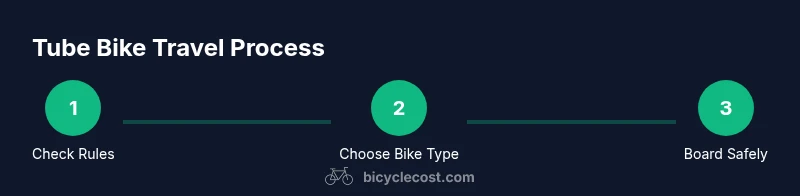
- 1
Check latest Tube bike rules
Open TfL’s travel pages or app to confirm whether bikes are allowed on your intended lines and times. Note any line-specific restrictions and be prepared to adjust plans if trains are crowded.
Tip: If you’re unsure, plan a backup route or a later departure with more space available. - 2
Choose folding or prepare your bike
If possible, select a folding bike to maximize space and reduce friction with other passengers. If you’re bringing a standard bike, secure loose parts and pre-stage in a designated area near doors.
Tip: Practice folding/unfolding before your trip to speed up the process. - 3
Head to the platform and identify space
On arrival, locate a carriage area with space for bikes and people. If spaces are scarce, consider waiting for a less crowded train or switching lines.
Tip: Speak with staff if you’re unsure where to position your bike. - 4
Board calmly and secure your bike
Enter slowly, place the bike in the designated zone, and keep it upright. If space is tight, use a strap to stabilize the bike and avoid blocking doors.
Tip: Keep a friendly distance from other passengers to prevent accidental contact. - 5
Disembark and exit safely
When leaving the train, move the bike away from doors and allow other passengers to pass. If you must carry parts up stairs, assess the safest route or request assistance.
Tip: Watch for ramps or elevators if you have mobility concerns. - 6
Plan for crowds and disruptions
If a train is overcrowded, be prepared to wait for the next service or switch to a different route. Don’t force your bike into an already full car.
Tip: Always have a backup plan and stay patient with staff and fellow riders.
People Also Ask
Can I take a bicycle on the Tube at all times, or are there restrictions?
Bikes are generally allowed, but space is limited and some peak-time restrictions apply by line. Always verify current TfL guidelines before travel.
Bikes are usually allowed, but rules vary by time and line. Check TfL before you travel.
Are folding bikes easier to travel with on the Tube?
Yes. Folding bikes are typically easier to fit into carriages and are accepted more broadly. They reduce the risk of blocking aisles and make boarding quicker.
Yes. Folding bikes are easier to fit into carriages and are preferred in busy periods.
Do I need a separate ticket for my bike?
Policies vary. In many cases a separate bike ticket is not required, but some services may have rules about spaces or fares. Check TfL guidance for your route.
Bike tickets vary; check TfL for your route.
What should I do if the train is crowded and there’s no space for my bike?
Wait for the next train or switch to a different route if possible. Do not force your bike into crowded carriages.
If crowded, wait for another train or choose a different route.
Are there safety rules I should follow with a bike on the Tube?
Always keep the bike under control, avoid blocking doors, and use designated spaces when available. Be courteous to other passengers.
Keep control, don’t block doors, and follow space rules.
How can I prepare my bike for Tube travel to minimize issues?
Remove loose parts, secure with straps, and consider a protective cover. Practice folding if you own a folding bike.
Secure loose parts, fold if possible, and be prepared.
Watch Video
Quick Summary
- Plan ahead with current Tube bike rules
- Folding bikes are the most practical option
- Keep aisles clear and be courteous to others
- Have backup routes or times if space is limited