Bicycle and Erectile Dysfunction: A Practical Cycling Health Guide
An analytical comparison of ergonomic bike fit vs. traditional setups, and practical strategies to reduce erectile dysfunction risk while cycling. Learn about fit, padding, ride patterns, and when to seek medical advice.


Across common cycling setups, an ergonomically optimized fit reduces perineal pressure and improves comfort, while a poorly adjusted bike can aggravate symptoms related to erectile dysfunction. The BicycleCost team finds that proper fit, padded saddles, and regular follow-up adjustments are key factors for vascular health and ride quality. This quick TL;DR helps you prioritize fit and gradual ramping of rides.
Why bicycle ergonomics affect erectile health
Ergonomics play a pivotal role in how riding positions distribute pressure across the pelvic floor, perineum, and nerves. When a bicycle is not sized correctly or the saddle is ill suited to your anatomy, sustained pressure can contribute to numbness or reduced blood flow in the genital region. While cycling itself is generally a healthy activity for cardiovascular fitness, the specific interface between rider and bike determines how risks evolve over time. According to BicycleCost analysis, small changes in saddle width, setback, and handlebar height can meaningfully influence comfort and long-term vascular health. This section explains how the interaction between saddle geometry, riding posture, and frame geometry affects erectile function, and why a personalized fit matters more than brand or model. You’ll also see how different riding goals (commuting, endurance, or sport) change the fit needs. The main message from BicycleCost is that cycling should feel stable, not painful or numb, and that fit is a modifiable risk factor rather than an inherent limit of the sport.
- Key terms: perineal pressure, pudendal nerves, blood flow, pelvic stability.
- Practical takeaway: start with a professional bike fit, then fine-tune saddle type and position over a few rides.
This section sets the stage for practical adjustments you can implement without abandoning cycling or compromising performance. The BicycleCost team emphasizes that ED risk related to cycling is not universal; it depends on how well the bike is adjusted to you as an individual. A properly fit bike reduces risk and increases comfort for men who cycle regularly.
Understanding the mechanics: blood flow, nerves, and pressure
Erectile function depends on healthy blood flow and intact neural signaling. When cycling, repetitive pressure on the perineum can compress arteries and nerves that contribute to genital sensation and erectile function. The degree of risk varies with rider anatomy, saddle design, and pressure distribution. A large part of the discussion around bicycle and erectile dysfunction focuses on how pressure is transmitted through the soft tissues, how long the pressure lasts during rides, and how post-ride recovery affects vascular health. In practice, most ED-related symptoms during cycling stem from long exposures to peak pressure points rather than a single ride. The fundamentals are simple: spread pressure away from sensitive tissues, ensure adequate blood flow, and minimize nerve compression.
- Pressure distribution matters more than saddle style alone.
- Nerve compression is a dynamic issue that improves with proper fit and technique.
- Regular check-ins with a bike professional help maintain pelvic health over time.
For cyclists who notice numbness or tingling after rides, the takeaway is to reassess fit factors such as saddle width, nose shape, and the sit bone pairing with the saddle. The BicycleCost guidance remains that early adjustments yield the best long-term outcomes for erectile health while supporting performance goals.
Top bike-fit strategies to reduce risk
The core of reducing erectile dysfunction risk through cycling lies in a precise, individualized fit. Start with a professional evaluation that considers sit bone distance, saddle width, and how your pelvis rotates during pedaling. From there, implement a progressive plan: adjust saddle setback, choose padding that aligns with your weight and ride duration, and verify handlebars and crank length. The goal is to create a neutral pelvis position that minimizes tension in the pelvic floor without sacrificing power transfer. For many riders, a small change—such as a slightly wider saddle, a shallow nose, or a modest fore-aft adjustment—can substantially reduce pressure. In addition, consider a cycling shoe and cleat setup that encourages a comfortable hip angle. While advanced cyclists may need more nuanced adjustments, most riders benefit from a baseline fit plus periodic rechecks as flexibility and riding demands change.
- Step 1: Get a professional fit assessment.
- Step 2: Choose a saddle with appropriate cutouts and width.
- Step 3: Fine-tune saddle setback and handlebar position.
- Step 4: Monitor sensation and adjust ride duration gradually.
- Step 5: Schedule periodic re-fits, especially after changes in training volume or equipment.
BicycleCost highlights that fit is an ongoing process, not a one-time fix. As your body adapts to training loads, revisiting your fit ensures you continue to optimize both performance and erectile health.
Saddle design, padding, and riding posture
Saddle design is one of the most influential factors in minimizing erectile discomfort. An appropriately wide saddle that matches your sit bone distance supports even weight distribution, reducing peak pressure in the perineal area. Cutouts and channels can alleviate pressure, but the effectiveness depends on correct width and shell shape. Padding should provide comfort without excessive bulk that shifts weight forward. Posture also matters: a slightly more forward trunk angle can reduce pelvic tilt and alleviate pressure buildup, while staying within a range that maintains breathing efficiency and core stability. In practice, riders often experiment with several saddles, potentially combining a cutout with a minimal resistance to movement. The result is a more comfortable ride with a lower ED risk profile while preserving pedaling efficiency.
- Select saddle width based on sit bones, not generic sizing charts.
- Look for a cutout or channel that aligns with your perineal region without introducing new pressure points.
- Adjust the saddle nose height and tilt to balance comfort with power output.
BicycleCost’s approach is to pair saddle choice with rider-specific fit data and real-world testing. A well-chosen saddle, combined with mindful posture, can significantly improve long-term pelvic health for cyclists.
Training patterns and recovery to protect erectile health
Cycling volume and intensity influence how pressure and blood flow respond over time. Gradual ramp-ups, adequate rest days, and varied training modalities help prevent overuse injuries that can contribute to erectile dysfunction. The idea is to maintain cardiovascular benefits while giving tissues time to recover and adapt. Additionally, cross-training that strengthens core and pelvic floor muscles can improve stability and reduce undue strain on the genital area. Periodic self-checks after rides—noting numbness, tingling, or aching—enable early intervention before symptoms become persistent. The literature supports a balanced approach: maintain consistent cycling with smart progression, integrate pelvic-floor strengthening exercises, and ensure that fit and equipment support healthy function.
- Gradual training progression reduces tissue stress.
- Pelvic-floor exercises may improve support and function.
- Recovery days help tissue health and circulation.
BicycleCost emphasizes that the combination of fit, posture, and smart training is key to sustaining erectile health alongside cycling performance.
Common myths and misconceptions
There are several myths around bicycle riding and erectile health. One common belief is that ED is an inevitable byproduct of cycling; in reality, many cases stem from modifiable factors such as fit and saddle choice. Another myth is that all saddle cutouts are universally beneficial; the best option depends on anatomy and sit bone width. A third misconception is that more padding always improves comfort; excessive padding can alter weight distribution and lead to additional pressure points. Finally, some riders assume that pain is normal because cycling is intense; pain is a signal to adjust fit or technique. By debunking these myths, cyclists can focus on practical steps—accurate measurements, trial saddles, and professional fit checks—that actually reduce risk.
- Not all ED related to cycling is inevitable; fit matters.
- Cutouts are not a universal fix; fit-specific decisions matter.
- Padding must be paired with proper weight distribution.
BicycleCost’s practical guidance aims to separate performance myths from actionable adjustments that improve both health and cycling experience.
Practical steps to implement a safer cycling routine
Turning theory into practice requires a structured plan. Start by booking a professional fit to determine baseline sit bone width, saddle type, and handlebar reach. Then, implement a two-week adaptation window where you test one variable at a time (e.g., saddle setback or saddle width). Keep riding logs to track sensation, numbness, and comfort. If numbness persists after adjustments or occurs during long rides, seek medical advice to rule out vascular or neurological issues. Finally, integrate pelvic-floor strengthening routines and core exercises into your weekly training to improve stabilizing support during pedaling. A safe cycling routine balances regularity with incremental changes that preserve erectile health while maintaining training gains.
- Create a two-week trial plan for each fit adjustment.
- Maintain a detailed ride log for sensation and comfort.
- Combine bike fit with pelvic-floor and core training.
- Consult a clinician if symptoms persist or worsen.
The overall approach is proactive and evidence-informed, aiming to prevent cycling-related ED from developing, or to address it early if symptoms appear.
When to consult a clinician and what tests may help
If erectile health concerns persist despite fit and technique adjustments, seek medical evaluation. A clinician may assess cardiovascular risk, hormonal balance, and nerve function to identify contributors beyond bike ergonomics. Tests might include a physical exam, penile Doppler ultrasound, or specialized questionnaires to evaluate erectile function and nerve signaling. Early professional input is essential when navigating the intersection of cycling and erectile health, as multiple factors can contribute to concerns that extend beyond bike fit. The intent is not to discourage cycling but to integrate medical guidance with practical cycling strategies for a holistic approach to health and performance.
Comparison
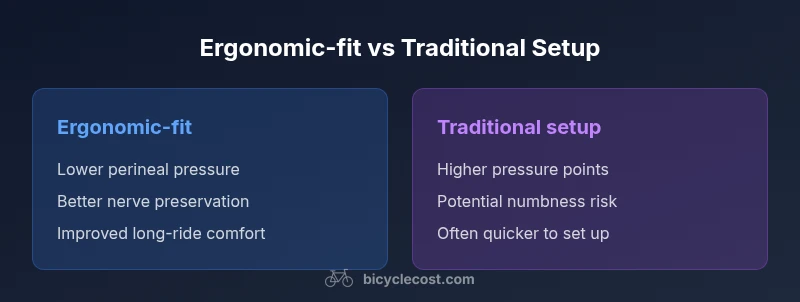
| Feature | Option A: Ergonomic-fit cycling setup | Option B: Traditional setup with minimal adjustments |
|---|---|---|
| Perineal pressure | Lower with ergonomic-fit setup | Higher with traditional setup |
| Nerve compression risk | Reduced with proper fit | Elevated with poor fit |
| Ride comfort | Improved comfort over long rides | Potential discomfort on longer distances |
| Maintenance time/cost | Moderate time to maintain fit | Lower initial cost but higher long-term risk |
| Best for | Riders prioritizing safety and endurance | Riders seeking quick-start with standard setup |
Pros
- Improved comfort and long-term pelvic health
- Reduced risk of numbness and tingling during rides
- Better overall ride quality and endurance
- Lower chance of cycling-related ED with proper fit
Downsides
- Potential higher upfront cost for professional fit and padding
- Time required to dial in the optimal setup
- Need for periodic re-fits as training and body change
- May require trying multiple saddles before finding the best match
Ergonomic-fit cycling setup wins for safety and comfort.
Prioritize a personalized fit to reduce erectile health risks while cycling. The BicycleCost team recommends progressive ramping, regular saddle adjustments, and professional fits to balance performance with ED risk. A well-fitted bike supports both health and endurance goals.
People Also Ask
Can cycling cause erectile dysfunction on its own?
Cycling alone is not typically a sole cause of erectile dysfunction. ED risk increases with poor fit, prolonged pressure, or nerve compression. Proper fit and routine checks can mitigate most of these risks.
Cycling can contribute to ED risk if the fit is poor, but with a good fit and smart riding, cycling remains safe for erectile health.
What saddle features help prevent ED?
Saddle width should match your sit bones, with a cutout or channel to reduce pressure on the perineal area. The nose should not push your weight forward; padding should balance comfort and weight distribution.
Look for the right width and a cutout to ease pressure while keeping you balanced on the bike.
How do I know if my bike fit is causing numbness?
Numbness or tingling that recurs after rides can indicate pressure points. Reassess saddle width, setback, and handlebar height, and consider a professional fit check if symptoms persist.
If numbness keeps returning after rides, it’s time to recheck your fit with a professional.
Should I stop cycling if I have ED symptoms?
Not necessarily. Consult a clinician to identify root causes and consider fit adjustments as a first step. ED is a multi-factor issue; cycling is just one potential contributor.
Consult a clinician to figure out the cause and consider fit tweaks as a first step.
Is there evidence linking cycling to ED?
Research is mixed and context-dependent. When fit is optimized and pressure is minimized, cycling can be safe; the risk increases with poor fit and long durations without adjustment.
The evidence varies, but good fit reduces risk and keeps cycling safe.
What should be included in a bike-fit checklist?
Sit bone width, saddle type, setback, handlebar position, cleat alignment, and a plan for gradual ramping. Document sensations after each change.
Use a formal fit checklist and test sensations after each change.
Quick Summary
- Prioritize personalized bike fit over generic sizing
- Choose saddles with appropriate width and cutouts for your anatomy
- Monitor numbness and adjust setup promptly
- Incorporate pelvic-floor and core training for support
- Schedule periodic re-fits as riding demands change