Electric Bicycles Under $500: A Practical Buyer's Guide
A practical buyer’s guide to electric bicycles under $500, covering battery life, safety, components, and test tips to help budget-minded riders choose confidently.


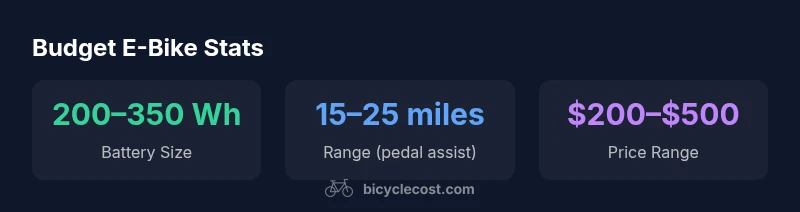
The cheapest electric bicycles under $500 typically use small batteries (about 200–350 Wh) and offer 15–25 miles of real-world range with pedal assist. Expect basic components and simpler controls, with higher maintenance needs and shorter lifespans than mid-range models. Performance varies by terrain, rider weight, and assist level. These bikes are best for short commutes, beginner riders, and those prioritizing affordability over advanced features.
Why price matters for safety and reliability
Budget electric bicycles under $500 generally cut corners on components that directly affect safety and reliability. According to BicycleCost, shoppers should view this price tier as a trade-off: essential pedal assist and basic frames, with more frequent maintenance and shorter component lifespans. In practice, this means you’ll likely encounter mechanical brakes or low-end hydraulic equivalents, lighter frames, and smaller batteries. The upside is affordability and the ability to evaluate basic riding experience before investing in a higher-end model. But price-focused marketing can be misleading; a cheap frame is not inherently dangerous, yet a weak braking system or a fragile stem can compromise safety. When evaluating options, examine build quality, battery connection reliability, and whether the display and controls feel sturdy and intuitive. The goal is to find a model with a simple, robust design that can withstand daily use without frequent failures.
Key takeaway: prioritize a safe braking system, reliable battery connection, and durable controls even at this price point.
Battery and motor basics on a tight budget
In the under-$500 space, most bikes use smaller-capacity lithium-ion cells in the 200–350 Wh range and hub or mid-drive motors around 250–350 watts. Real-world range is highly variable; riders should expect roughly 15–25 miles with pedal assist on flat terrain and moderate effort, less on hills or with heavier riders. Charging habits matter: frequent top-ups are easier on the battery than deep discharges, but lower-cost cells may show faster capacity fade over years of use. Look for a simple battery management system, accessible connectors, and clear charging indicators. Maintenance needs are typically straightforward: keep the chain clean, check tire pressure, and ensure the assist switch responds smoothly. To maximize longevity on a budget bike, store the bicycle in a dry place, avoid extreme temperatures, and schedule periodic professional inspections if feasible. Always ride within local e-bike power and speed regulations.
Practical tip: manage expectations—lower price often means smaller battery packs and modest motor systems.
Components to expect and what to upgrade later
Low-cost e-bikes often ship with entry-level components: mechanical disc brakes or V-brakes, basic derailleurs, and rigid forks. Drivetrain wear is a major factor in long-term performance; expect quicker gear skipping or chain wear than on premium models. Upgrades that make the biggest difference for budget riders include a more durable brake system, a larger-capacity battery if feasible, and a more reliable display with easy-to-use controls. For those who value ride quality, consider upgrading tires to lower rolling resistance and better puncture protection, and assess the value of a suspension fork if you frequently ride rough city streets. Investing in routine maintenance—lubricating chains, inspecting cables, and checking spoke tension—pays back your confidence on the road. If unsure where to prioritize upgrades, start with brakes and tires, then consider the battery’s ability to hold charge over time.
Note: Upgrading beyond the stock setup can improve safety and reliability, but compatibility matters.
Sizing, fit, and rider comfort on budget models
A budget e-bike can feel cramped if frame geometry doesn’t match rider height and inseam length. When shopping, evaluate standover clearance, seat height adjustability, and handlebar reach. Wheel size commonly falls around 26–27.5 inches in older or compact designs, with newer compact frames sometimes using 27.5+ or 29ers. Check saddle comfort, grip ergonomics, and the ease of adjusting assist levels on the display. For longer rides, consider accessories such as a comfortable saddle, ergonomic grips, and a reliable rear rack that doesn’t strain the frame. If you plan to carry cargo or mount a child seat, verify the bike’s rated payload and the compatibility of mounting points. A well-sized bike is more than a number; it translates to safer handling and reduced fatigue during city commutes or weekend rides.
Actionable test: in-store, have the salesperson confirm proper reach and saddle height for your longest planned ride.
Typical specs for common price-point models
| Model Type | Estimated Range (miles) | Battery Capacity (Wh) | Price Range |
|---|---|---|---|
| Budget commuter | 15-25 | 200-350 | $200-$500 |
| Entry-level city e-bike | 20-28 | 250-400 | $300-$500 |
| Light-duty folding/compact | 12-20 | 200-300 | $250-$480 |
People Also Ask
What exactly qualifies as an electric bicycle under $500?
Bikes in this segment typically rely on a small lithium-ion battery and a basic pedal-assist system, with lower top speeds and simpler electronics. Always verify local e-bike regulations and ensure the model’s power and assist meet your needs.
Budget e-bikes under $500 usually have basic pedal assist and limited top speed; check local laws before riding.
Are these bikes safe for daily commuting?
Safety depends on the brakes, tires, lights, and rider behavior. Choose models with reliable stopping power, proper reflectors or lights, and use a helmet. Regular maintenance also boosts safety.
Yes, if you pick a model with solid brakes and lights and you ride responsibly.
What maintenance should I expect?
Expect regular chain lubrication, brake pad checks, tire inflation monitoring, and battery health checks. Budget bikes often require more frequent tune-ups than premium models, so set a regular maintenance schedule.
Keep up with chains, brakes, tires, and battery checks for safety and longevity.
Can I upgrade components later?
Some budget bikes support upgrades to brakes or tires; battery upgrades depend on compatibility and frame design. Verify upgrade paths with the seller or a shop technician before purchase.
Upgrades are possible but depend on model compatibility; ask about upgrade paths before buying.
How does price affect range and performance?
Lower price generally means smaller batteries and simpler motors, resulting in shorter range and slower acceleration. Expect more compromise on hills and payload.
Lower price usually means shorter range and less power; manage expectations accordingly.
Where should I buy budget e-bikes safely?
Buy from reputable shops with clear return policies and service options. Avoid shady marketplaces, and check warranty coverage and parts availability before purchase.
Shop at trusted retailers with good return policies and service plans.
“Budget e-bikes can be surprisingly practical when you choose models with robust brakes, reliable batteries, and straightforward maintenance.”
Quick Summary
- Test battery health and braking first: reliability matters more than speed.
- Expect basic components; plan for upgrades where safety and reliability improve.
- Factor total cost of ownership, including maintenance, parts, and service.
- Always test ride, check fit, and verify warranty coverage before buying.