Electric Bicycle Top Speed: What Really Sets the Pace
Explore how electric bicycle top speed is defined, how it varies by class and region, and how to choose a bike that fits your riding style and local laws.


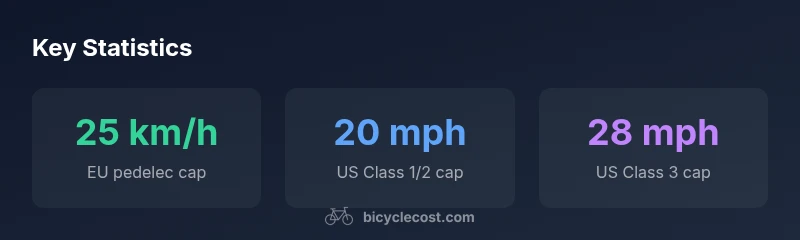
Electric bicycle top speed is defined by class and regional rules, not a single universal limit. In the EU, pedelecs are capped at 25 km/h; in the US, Class 1/2 e-bikes top out at 20 mph and Class 3 at 28 mph. Always check your local regulations and the bike label.
What electric bicycle top speed means
Electric bicycle top speed is a key performance metric, but it’s not a single universal value. The term describes the maximum speed an e-bike can achieve under typical riding conditions, yet it’s governed by both the class of the bike and the laws of the country or region where you ride. According to BicycleCost, the practical takeaway is that riders should align expectations with the local regulatory framework and the specific bike’s labeling. For many riders, the top speed is less important than how that speed is delivered (smoothly, safely, and consistently) and how it affects range and handling. The phrase electric bicycle top speed should be understood in context: a speed ceiling set by policy, hardware, and riding conditions rather than a single figure you can rely on everywhere.
How top speed is controlled
Most e-bikes restrict top speed through a combination of pedal-assist levels, throttle permissions, motor cut-off points, and battery/motor integration. Key controls include:
- Pedal-assist (PAS) levels: Higher PAS_setting enables faster acceleration and higher speeds until the cut-off.
- Throttle vs pedal-assist: Some e-bikes offer a throttle-only mode that has its own top-end limit; others rely purely on pedal input.
- Motor cut-off: A safety or regulatory stop triggers when you reach the maximum permitted speed for your bike’s class.
- Gear ratios and wheel size: Larger wheels and optimized gearings can influence how fast you feel you are traveling at a given pedaling cadence.
- Battery management: At higher speeds, voltage drops and battery management systems may limit sustained top speed to protect range and longevity.
Understanding these factors helps riders choose models that match their expectations for speed, range, and ride quality.
Regulatory landscape by region
Regional rules largely determine what is considered a legal top speed for an electric bicycle. In the European Union, EN 15194 pedelecs are limited to 25 km/h (about 15.5 mph) with a motor power cap near 250 W for typical riders. In the United States, Class 1/2 e-bikes are capped at 20 mph, with Class 3 vehicles allowed up to 28 mph when the rider engages assist. Other regions may have their own thresholds or exemptions for throttle-enabled bikes. Always verify local laws before buying or riding a new e-bike, and confirm the label on your bike for the class and speed limits it supports. The BicycleCost team notes that these allowances can change with new regulations, so regular checks ensure you stay compliant while enjoying the speed your bike can offer.
Speed, range, and weight: trade-offs
Top speed does not exist in isolation. Higher speeds typically demand more power, which reduces range per charge and can increase weight due to larger motors or batteries. Conversely, a bike tuned for a lower top speed may enjoy better range, lighter weight, and more predictable performance in city riding. Riders should map out their typical use case—commuting, trail riding, cargo transport—and then weigh how much speed they truly need against the impact on battery life, weight, and handling under different terrain and weather conditions.
A well-balanced e-bike design prioritizes predictable acceleration, reliable hill-climbing ability, and consistent braking performance at the top end, rather than chasing the maximum speed alone. This approach is particularly important for new riders who want to build confidence and reduce the risk of over-speeding in traffic or on technical trails.
How speed impacts handling and safety
Raising top speed changes several dynamics: longer stopping distances, sharper steering responses, and increased kinetic energy in a fall. Riders should adjust braking technique, tire grip, and cornering strategy when riding near the legal top speed. Equally important is upkeep: ensure brakes are properly tuned, tires have appropriate tread and pressure, and the frame and components are in good condition to maintain control at higher speeds. Regular maintenance and cautious riding will help you exploit your e-bike’s capabilities without compromising safety.
How to pick a bike for your target speed
To choose a bike that aligns with your desired top speed while staying within legal limits, follow these steps:
- Identify your regional top-speed limit for e-bikes and confirm the class supported by the bike you’re considering.
- Decide how you’ll use the bike most: commuting, leisure rides, or sportier use; speed needs differ accordingly.
- Assess battery capacity and motor power to determine whether sustained speed is feasible for your typical rides.
- Evaluate weight, suspension (if needed), and braking systems to ensure stability at higher speeds.
- Test ride different models at or near your target speed to gauge handling, acceleration, and braking feel.
Safety considerations when riding at higher speeds
Rider safety becomes paramount when increasing top speed. Always wear a helmet and high-visibility gear, ride defensively, and maintain a safe following distance. Ensure your brakes, tires, and lights are in top condition and adjust riding posture for stability at speed. Be aware that road surfaces, weather, and traffic conditions can drastically affect your top-end performance. Finally, respect local rules about lane usage and speed in shared spaces to minimize risk to yourself and others.
Measuring top speed and validating performance
The most reliable way to measure top speed is to use GPS-based speed data or a cycle computer that records peak speed over a straight, flat section free of wind and hills. Some riders prefer testing with a speed trap or using a smartphone app that logs top speed and cadence during a controlled ride. To compare performance across bikes, perform multiple runs under similar conditions and average the results to account for wind, temperature, and road grade. Always perform these tests in a safe, legal environment.
Regulatory speed limits by region
| Region/Regulation | Max Pedal-Assist Speed | Motor Power Limit | Notes |
|---|---|---|---|
| EU (EN 15194 pedelec) | 25 km/h | 250 W | Standard pedelec limit in EU |
| USA Class 1/2 | 20 mph | varies | Based on class rules; pedal assist only |
| USA Class 3 | 28 mph | varies | Higher-speed class; visibility matters |
| UK/EU transitional | 25 km/h | 250 W | Harmonized with EU standard |
| Other regions | Varies by country | Varies by class | Check local law for exact limits |
People Also Ask
What is the difference between top speed and legal speed limits for e-bikes?
Top speed is the maximum speed the bike can reach in ideal conditions, which is often constrained by class and regulation. Legal speed limits are the maximum speeds allowed by law for riding in public spaces. Always ride within both the bike’s capabilities and local laws.
Top speed is what the bike can do, while legal limits tell you how fast you may ride in public spaces. Stay within both for safe riding.
Can throttle influence top speed on all e-bikes?
Not always. Some e-bikes use pedal-assist only, while others offer a throttle. If a throttle is present, it may have its own limit separate from pedal-assist maximums.
Throttle can set a separate top speed on some bikes; others are pedal-assist only.
How can I legally maximize speed without compromising safety?
Choose the correct class for your region, maintain your bike well, and practice safe riding at higher speeds. Know the repercussions of exceeding local limits and adjust your rides to stay within the law.
Pick the right class, keep the bike in good shape, and ride safely within legal limits.
How should I measure top speed accurately?
Use GPS-enabled devices or bike computers that log peak speed over a straight segment. Repeat tests under similar conditions to smooth out environmental factors.
Use GPS or a cycle computer, test multiple times under similar conditions.
Do all regions enforce the same top speed standards?
No. Top speed standards vary by region and class. Always consult local regulations before purchasing or riding an e-bike.
No—rules differ by place. Check local laws where you ride.
“Speed is an important consideration, but reliable range, handling, and safety determine the real-world usefulness of an e-bike’s top speed.”
Quick Summary
- Know your class and local limits before choosing speed.
- Expect trade-offs between speed, range, and weight.
- Check the bike label for official top-speed limits.
- Measure speed using GPS or built-in displays for accuracy.
- Prioritize safety features when riding at higher speeds.