How to Put a Bike on a Train: A Practical Guide
Learn how to put a bike on a train with confidence. This BicycleCost guide covers policy checks, packing, loading, securing, and etiquette for a smooth, disruption-free ride.


By the end of this guide you’ll know how to put a bike in train service smoothly, whether you’re using a dedicated racks, a car rack, or folding your bike. You’ll learn required preparations, how to choose the right carriage, and the steps to load and secure your bike without delaying other passengers. This method works across most national networks.
Before You Board: Understand Train Rules, Bike Eligibility, and Sizing
From the moment you plan your trip, start with the basics: can you bring your bike on your specific train, what type of bike is allowed, and where it should go once you’re aboard. Rail operators vary widely in rules, space allocation, and fees. Some systems reserve a dedicated bicycle space or rack, while others rely on flexible areas in vestibules or coach cars. The BicycleCost team has found that knowing the policy before you reach the station saves time, reduces stress, and lowers the risk of blocking doors or delaying other passengers. If you ride a very large or unusual bike, size and weight considerations become more important, so check that your bike fits within the standard space and that any bulky accessories won’t obstruct seating or aisles. In many networks, you’ll need to confirm the bike policy online or via the operator’s app, and you may need a separate ticket or reservation. Proactive planning also means selecting the right time to travel to avoid peak crowds when bike space is scarce. For the rest of this guide, we’ll outline practical strategies that apply across networks, with caveats for regional rules.
BicycleCost’s analysis notes that riders who review carriage rules, check space availability, and arrive prepared experience fewer boarding delays. This is especially true on busy routes or during holiday periods when bike space is at a premium. If you’re unsure, you can always ask a conductor or station staff before you board.
Key takeaway: verify policy, size your bike for the space available, and bring any required bike-ticket or reservation confirmations. Align your plan with local rules and you’ll glide onto the train with confidence.
Tools & Materials
- Bike in good working condition(Check brakes, gears, wheels, and frame before travel.)
- Security straps or bike-specific bungee cords(At least two straps to secure frame and wheels; ensure quick-release levers are closed.)
- Protective cover or bike bag (optional)(Helps prevent scuffs and keeps other passengers clean.)
- Railway bike ticket or reservation (if required)(Check operator policy online or at the station; carry confirmation.)
- Foldable option or portable mini-tool (optional)(Useful if you need to reduce size or perform quick fixes on board.)
- Gloves and basic repair kit (optional)(Small kit for minor adjustments without delaying the train.)
Steps
Estimated time: 25-40 minutes
- 1
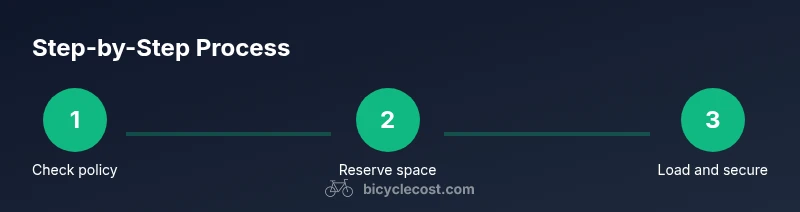
Check policy for bikes on your route
Before you head to the station, verify whether bikes are allowed on the specific train and which carriage you’ll use. Note any reservation requirements, fees, or size limits. This ensures you don’t arrive to a fully occupied rack or a restricted car.
Tip: Bookmark the operator’s bike policy page or call the station if rules aren’t clear. - 2
Book or secure a space if required
If space or a designated carriage is mandatory, complete the booking online or at the station ahead of time. Bring the booking confirmation and bike details (size, model) if needed. This step reduces the chance of being turned away at boarding.
Tip: If you don’t have a reservation and space is limited, ask staff at the platform about the best alternative route or time. - 3
Prepare the bike for loading
Remove loose accessories, close quick-release wheels, and attach a protective cover if you’re using one. Ensure pedals and handlebars won’t snag nearby passengers or doors. Keep essential tools compact and accessible.
Tip: Practice a quick pre-load check at home so you can do it in under a minute at the platform. - 4
Enter the train with your bike at the right time
Arrive early to board during the allowed window and follow staff directions to reach the designated bike area. If you’re in doubt, let staff guide you to the proper vestibule or rack. Respect other passengers who are boarding with luggage.
Tip: Stand aside to allow passengers to exit before you attempt to move your bike into position. - 5
Load the bike into the rack or designated space
Place your bike into the rack or secure section according to the operator’s guidance. If using a rack, align wheels and frame with the restraints; if in a vestibule, keep it stable and away from seatbacks. Use your straps to minimize movement during travel.
Tip: Ask for help if the space is tight; a second pair of hands can prevent damage. - 6
Secure the bike safely
Tighten straps around the frame and wheels, ensuring there is no wobble or risk of tipping. Double-check that doors, emergency equipment, and fellow passengers aren’t obstructed. Keep the wheel axles secure and verify movement is minimal.
Tip: Give the bike a gentle shake to confirm it won’t shift during the ride. - 7
Explain placement and respect fellow passengers
Briefly tell nearby travelers where the bike is stored and what to do if it moves slightly. Being proactive reduces misunderstandings and improves comfort for everyone on board.
Tip: Offer your contact info to the person next to you if you anticipate any potential issues. - 8
Monitor during the journey
Periodically check the bike’s position when doors open or the car changes. If something loosens, notify staff or re-secure it quickly to avoid delays for other passengers.
Tip: Keep a small cue to remind yourself to review security at regular intervals.
People Also Ask
What types of bikes are allowed on trains?
Most trains accept standard bicycles, but some services restrict oversized or non-folding bikes. Always check the operator policy for size limits, exceptions, and required reservations.
Most trains accept standard bikes, but always check the operator's policy for size limits and reservations.
Do I need a reservation to bring a bike on the train?
Reservation requirements vary by operator and route. Some services offer dedicated bike spaces without a reservation, while others require a ticket or space booking in advance.
Reservation rules vary by operator. Check in advance to know if you need to reserve space.
Can folding bikes be transported more easily than standard bikes?
Folding bikes generally offer more flexibility in crowded trains and smaller storage spaces. If you have a folding bike, you may still need to follow space rules and secure it properly.
Folding bikes are usually easier to manage in crowded trains, but always follow space rules and secure them well.
What should I do if the bike space is full or unavailable?
If space is unavailable, ask staff for alternatives, such as waiting for the next train, using a different carriage, or traveling with a packed bike if allowed. Do not force entry.
If space is full, ask staff for options and avoid forcing entry.
Are there safety penalties for not securing a bike properly?
Improperly secured bikes can delay trains and pose safety risks. Staff may require you to re-secure or move the bike, and repeated issues can lead to delays or warnings.
Not securing a bike properly can cause delays or safety issues; you may be asked to fix it.
Watch Video
Quick Summary
- Verify bike policy before boarding and bring any required tickets.
- Choose the loading method (rack, vestibule, folding) based on space and bike size.
- Prepare your bike and gear to minimize on-platform handling time.
- Secure your bike with multiple straps and test stability before travel.
- Be courteous to other passengers and communicate clearly about bike placement.