Can You Bicycle Everyday? A Practical Daily-Riding Guide
Discover how daily cycling can fit into your life safely and sustainably. This BicycleCost guide covers health benefits, safety essentials, planning, maintenance, and a four-week starter plan to help you ride every day with confidence.


Yes, you can bicycle everyday, but success hinges on gradual progression, safety, and listening to your body. Start with comfortable rides, plan recovery, and adjust intensity to match your schedule and fitness. This daily habit can boost mood, energy, and overall health when approached thoughtfully.
What daily cycling means for you
Daily cycling means weaving rides into your regular routine on most days of the week. For many people, this is a short, moderate effort session that fits between work, school, and family obligations. The goal isn't to max out performance every day, but to build consistency that improves mood, stamina, and overall health over time. According to BicycleCost, many riders who adopt a gentle, progressive approach report that cycling becomes an automatic part of their day rather than a chore. You can tailor frequency, duration, and intensity to your current fitness, schedule, and local conditions, ensuring safety and enjoyment come first. Start by framing rides as a non-negotiable appointment, then adapt as you learn what works best in your life. If you have any existing health concerns, consult a clinician before starting a daily cycling habit. The practical key is to begin with small, achievable goals and gradually expand as your body adapts. This approach reduces the risk of burnout while keeping motivation high.
Health and endurance implications
Regular daily cycling can improve aerobic fitness, mood, and daily energy. The habit itself matters: consistency trains your routine, which reduces the friction of finding time to ride. While intense training has its place, for most beginners and casual riders, a steady, moderate daily effort yields steadier progress. The BicycleCost Analysis, 2026 emphasizes that gradual progression, safe riding practices, and listening to your body are central to lasting benefits. Expect improved stamina for daily tasks, more reliable recovery between longer workouts, and a lower perceived effort as the days go by. It’s important to pair daily riding with adequate hydration, nutritious meals, and good sleep. If you have existing joint issues or chronic pain, adjust intensity and ride duration accordingly and seek medical advice if pain persists.
Safety essentials for daily riders
Safety is the foundation of daily riding. Always wear a certified helmet, use front and rear lights, and choose reflective clothing or gear for visibility. Before you ride, do a quick bike check: tires for wear and inflation, brakes for responsiveness, chain lubrication, and clean components. Plan routes that prioritize bike lanes and calm streets, and obey traffic laws as a responsible rider. Fit and comfort matter too: ensure your saddle height and handlebar position reduce strain. Weather conditions change, so pack appropriate gear and carry a lightweight repair kit. Finally, secure your bike with a reliable lock when parked and avoid leaving valuables unattended. These practices help you ride daily with confidence and safety.
Planning your daily ride: route, time, and intensity
Successful daily riding starts with a simple plan. Pick a consistent time window that fits your day, and choose routes with predictable traffic and safe bike facilities. Start with moderate intensity that allows conversation; you should be able to speak in full sentences without gasping. Gradually increase ride duration or frequency as your stamina improves, but build in rest or light days to prevent overuse injuries. Use a trusted map app to identify bike-friendly streets and lanes, and review weather forecasts to decide whether to ride, adjust, or switch to an indoor alternative like a stationary trainer when conditions are poor. Tracking your rides helps you stay motivated and notice patterns over weeks.
Weather, clothing, and gear for daily rides
Daily riding requires practical gear for various conditions. Layer clothing to adapt to temperature changes, and choose breathable fabrics that wick sweat. Invest in windproof jackets for cool days and rain gear for wet weather. Gloves, a good pair of shoes, and proper socks reduce friction and improve comfort on longer or repetitive rides. Lights, reflectors, and a flashing taillight are essential for visibility, especially at dawn, dusk, or in traffic. Consider sun protection for hot days and carry a packable rain cover for sudden showers. Proper gear keeps you comfortable, encourages consistency, and makes daily riding enjoyable across seasons.
Bike maintenance for daily use
Routinely maintenance is essential when you ride daily. Check tire pressure and tread weekly, inspect brakes for consistent bite, and clean the chain to prevent rust and wear. Lubricate the drivetrain as needed to keep shifting smooth and reduce friction. After rides, wipe down the frame to remove dirt that can cause corrosion, and inspect components for loose bolts. Carry a small repair kit with tire levers, patches, a spare tube, a multi-tool, and a portable pump. Regular maintenance reduces downtime, extends the bike’s life, and supports a reliable daily riding habit.
Building a sustainable routine for daily riding
To sustain daily cycling, pair riding with your existing routines. Use habit stacking—link a ride to a familiar cue, such as immediately after your morning coffee or before evening chores. Track your rides in a simple log or app to visualize progress, which reinforces motivation. Prioritize safety and comfort over speed; celebrate small wins, like completing a week of rides or extending distance gradually. If motivation dips, adjust the plan rather than quitting. A steady, enjoyable routine builds confidence and long-term adherence.
Special populations and exceptions
Daily riding can be adapted for various circumstances, including older adults, beginners with physical limitations, pregnancy considerations, or recovery from injury. Consult healthcare professionals when needed, especially if you experience persistent pain or new symptoms. Start with very short, comfortable sessions and gradually increase as tolerated. If daily riding isn’t feasible, consider alternative activities that promote similar benefits while preserving safety and enjoyment. The key remains consistency, listening to your body, and adapting to your personal context.
Getting started: a 4-week starter plan
A gentle, gradual approach can help you establish a daily riding habit. Week 1 focuses on 3 short rides at a comfortable pace, 15–25 minutes each. Week 2 adds a fourth ride and slightly longer duration, while Week 3 invites a fifth ride with a modest pace increase. Week 4 caps the plan with six rides, incorporating one longer ride per week. Throughout, prioritize recovery, hydration, and proper nutrition. If a day is missed, resume the next day without trying to
Tools & Materials
- Reliable bicycle in good working condition(Brakes, tires, chain checked; tires inflated to manufacturer pressure.)
- Certified helmet(Ensure proper fit and strap tension.)
- Front and rear lights(Visible to others; replace batteries as needed.)
- High-visibility clothing or reflective gear(Stand out in low light conditions.)
- Water bottle with cage(Hydration for daily rides.)
- Comfortable cycling clothes(Moisture-wicking fabrics improve comfort.)
- Repair kit (multi-tool, spare tube, tire levers)(Carry for on-the-go fixes.)
- Bike pump(Maintain proper tire pressure.)
- Lock for unattended bikes(Use when leaving bike in public spaces.)
- Phone with navigation/app(Optional for route planning.)
Steps
Estimated time: 4-6 weeks to build daily cycling habit
- 1
Inspect bike and safety gear
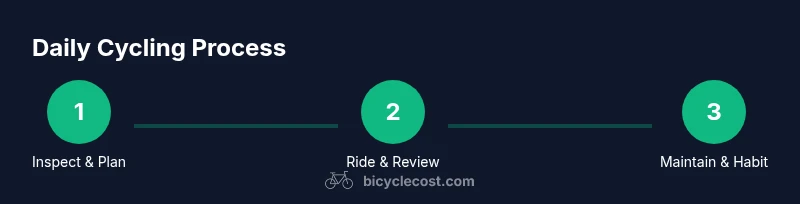
Before every ride, do a quick safety check. Inspect tires for wear and proper inflation, test brakes, ensure gears shift smoothly, and verify lights and visibility. A brief pre-ride check reduces the risk of flats or brake failure and keeps you riding safely every day.
Tip: Keep a compact mini-tool and patch kit in your saddle bag for flats. - 2
Plan your route and schedule
Choose routes with bike lanes or low-traffic streets. Schedule rides at times with lower congestion when possible, and set a consistent daily window to build the habit. Review weather and daylight and adjust plans if conditions are unsafe.
Tip: Save a preferred route in your mapping app for quick access. - 3
Warm up and start easy
Begin with a light spin for 5–10 minutes to warm up. Keep an easy to moderate pace in the first rides so you can talk without gasping. Gradually increase duration as your body adapts while avoiding overexertion.
Tip: Use a conversational pace to gauge effort. - 4
Progress gradually
Increase ride duration or distance by small increments—typically 5–10% per week. Respect body signals and add rest or lighter days if you notice fatigue, joint pain, or irritability.
Tip: Document how you feel after each ride to spot trends. - 5
Hydration and fueling
Hydrate before and after rides; a light snack after longer or hot rides helps recovery. For shorter sessions, water is usually enough. Adjust fueling to your activity level and climate.
Tip: Carry a water bottle for easy access during the ride. - 6
Post-ride bike care
Wipe down the frame, inspect tires for embedded debris, and lubricate the chain if it sounds dry. Address squeaks or unusual resistance promptly to prevent longer downtime.
Tip: Keep a small cloth and lube in your pack. - 7
Log and reflect
Record ride duration, route, and how you felt. Use a simple log to observe progress and stay motivated. Reflection helps you adjust goals and celebrate consistency.
Tip: Set a weekly review reminder to stay on track. - 8
Incorporate safety and comfort
Check saddle height and reach to reduce knee or back strain. Use proper footwear and consider padded shorts for longer rides. Revisit gear choices if discomfort emerges.
Tip: A proper bike fit can prevent long-term issues. - 9
Start your 4-week starter plan
Kick off with three short rides in Week 1, four in Week 2, five in Week 3, and six rides in Week 4, with one longer ride per week. Maintain safety and patient progression as you build a daily habit.
Tip: If you miss a day, resume promptly and keep going.
People Also Ask
Is daily cycling suitable for beginners?
Yes. Start with short rides at a comfortable pace and gradually increase duration. Build safety habits early and listen to your body as you gain experience.
Yes. Start with short, easy rides and gradually increase duration while listening to your body.
How do I avoid overuse injuries from daily rides?
Prevent overuse by varying intensity, taking rest days when needed, and ensuring proper bike fit. If pain persists, seek medical advice.
Prevent overuse by varying intensity, resting when needed, and getting a proper fit. See a professional if pain continues.
What if I miss a day of riding?
Don’t worry; resume the next day and continue with your planned progression. Consistency over perfection is the goal.
Missed a day? Pick up the next day and keep going. Consistency beats perfection.
How long should daily rides be for a beginner?
Begin with 15–30 minutes per ride and increase gradually as fitness improves. Adjust to comfort and safety.
Start with 15 to 30 minutes, then slowly lengthen as you feel comfortable.
Can I bike daily in bad weather?
Yes, with proper gear and caution. If conditions are unsafe, switch to an indoor workout or reschedule.
You can ride daily in bad weather if you wear proper gear or switch to indoor workouts when needed.
Watch Video
Quick Summary
- Start small, progress gradually, and stay consistent.
- Prioritize safety gear and bike maintenance.
- Plan routes and timing to fit your daily life.
- Track progress to stay motivated.