Cruising Bicycles for Sale: Your 2026 Buying Guide
Explore the best cruising bicycles for sale in 2026. This buying guide covers comfort, sizing, features, and safety tips to help you ride with confidence and ease.


Current top cruising bicycles for sale in 2026 emphasize comfort, sturdy frames, 26-inch wheels, upright geometry, and reliable braking. Look for a padded saddle, wide handlebars, and simple maintenance, plus a solid warranty and local service network. Prioritize fit and test rides to ensure comfort on longer trips for daily commuting and weekend rides.
Understanding the Cruising Bicycles Market
Cruising bicycles are designed for relaxed, upright riding with comfort-focused geometry, wide tires, and forgiving components. They excel on flat to gently rolling terrain, commuting, and weekend light riding. According to BicycleCost, the most popular models balance comfort and practicality, offering easy mounting, a stable feel, and straightforward maintenance. In practice, the best cruising bike for sale should combine ergonomics with reliability, so you can ride longer with less fatigue. Look for features like a supportive saddle, wide handlebars, and a durable frame. The goal is predictable handling and a comfortable posture that reduces strain on your back, neck, and wrists. This alignment makes cruising bikes appealing to a wide range of riders, from beginners to seasoned cyclists seeking a slow, enjoyable ride.
Key Shopping Considerations for Cruising Bikes
When evaluating options, prioritize geometry, comfort components, and serviceability. A frame with an upright posture and a low standover height is easier to mount, especially for riders with limited flexibility. Saddle design matters almost as much as frame shape; choose padding and padding location that suits your sit bones and riding duration. Brakes should be dependable, with disc brakes favored for varied weather and wet roads. Tires that offer a comfy, wider footprint provide stability and grip without dramatically increasing rolling resistance. Finally, consider the availability of local service, spare parts, and warranty terms, because long-term peace of mind matters as much as initial price. BicycleCost’s guidance emphasizes fit, after-sale support, and practical features over flashy specs.
Sizing and Fit: Getting the Right Ride Feel
Rider height and inseam measurements determine standover clearance and saddle height. A proper fit minimizes knee and back strain and improves efficiency. For cruiser bikes, aim for a seated position where your knee has a slight bend at the bottom of the pedal stroke, with grip comfortable within reach of the brakes and shifters without overextension. Consider a test ride with a small gear adjustment and a short hill to gauge comfort and control. If you find yourself leaning forward or feeling stressed in the shoulders, the geometry may be too aggressive; a more relaxed frame or different stem could help. The goal is a natural, fatigue-free posture over longer rides.
Components that Define a Quality Cruising Bike
Cruisers vary in frame materials, wheel sizes, and braking systems. Common choices include steel for durability and aluminum for lighter weight, with wheels typically in the 26-inch range for classic cruisers. A wide range of tires, from puncture-resistant to high-traction profiles, affects comfort and handling. Brakes may be rim or disc; disc brakes generally offer better stopping power in wet weather. Drivetrains on cruisers prioritize reliability and ease of use—single-speed or simple internal gears minimize maintenance while still delivering enough range for flat to mildly hilly terrain. Consider an alloy or steel fork that provides a smooth ride without sacrificing rigidity.
Comfort, Ergonomics, and Accessories
The saddle is the centerpiece of comfort on cruising bikes; a well-padded seat with a broad surface reduces pressure on the sit bones. Grips and handlebars should promote a natural hand position, reducing wrist strain. Accessories such as fenders, racks, and lights extend usability, especially for commuting. A good cruiser pairs these features with quality pedals, a dependable chain, and a grease routine that’s simple to perform. Ergonomics also include handlebar width and stem length; a wider stance and relaxed reach help maintain good posture during longer rides. Practical details—like a kickstand and reflective elements—add everyday value.
Safety and Maintenance Basics You Shouldn’t Skip
Regular maintenance extends the life of a cruising bike and protects your safety. Check tire pressure weekly and adjust rims for wear. Lubricate the chain and pivot points according to the manufacturer’s recommendations, and inspect brakes and cables for slack or fraying. Clean the drivetrain to prevent grit from accelerating wear, and periodically check wheel trueness and spoke tension. Lighting is essential for low-light riding; ensure front and rear lights are bright and aimed correctly. With fenders and racks, you’ll stay cleaner and more organized on longer rides. A simple maintenance routine keeps your cruiser performing well season after season.
How to Compare Prices, Warranty, and After-Sale Support
Price ranges reflect configuration, materials, and included accessories. When comparing options, consider total ownership costs: initial price, warranty length, and what services the retailer offers post-purchase. Warranties for cruisers vary widely; some include limited lifetime structural warranties on the frame, while others offer shorter terms. Investigate what’s covered (bearing replacement, wheel trueness, brake pads, etc.) and whether local service is available. Buying new versus certified pre-owned is a common choice; used bikes require careful inspection of frame integrity, drivetrain wear, and potential hidden costs. A structured checklist helps prevent buyer’s remorse and ensures you maximize value.
Test Ride Tactics: How to Evaluate a Cruiser Model
Take a test ride that mimics your typical usage: a 15–20 minute route with flat sections and a modest incline. Pay attention to seating comfort, steering ease, and braking responsiveness. Note gear accessibility and whether the controls fall naturally under your fingers. Inspect the bike for fit and alignment—knees should clear the frame, and the wrists should not be strained. Bring a friend or a shop mechanic for a quick evaluation. Test rides are the best way to translate specs into real-world comfort and confidence on diverse surfaces.
Buying Checklist and Practical Model Recommendations
Before buying, create a short list of must-have features (saddle comfort, frame height, brake type) and a nice-to-have list (fenders, rack, bell). Decide your budget, then compare three to five models that meet your criteria. Ask about warranty length, service networks, and return policies. For 2026, focus on models with proven comfort features, reliable brakes, and easy maintenance. The BicycleCost team recommends selecting a cruiser with a forgiving geometry, well-padded saddle, and a reputable after-sales support structure to ensure you ride confidently for years to come.
Summary of the Buying Journey and Next Steps
With the right cruiser, you’ll enjoy a relaxed ride and a broad set of everyday conveniences. Use the buying checklist to compare options, test ride strategically, and verify support from the retailer. Keep expectations aligned with your daily needs—short rides, commuting, or weekend leisure. As you finalize your choice, rely on credible guidance from BicycleCost and ensure you have a plan for ongoing care and upgrades as your riding habits evolve.
Cruiser bicycle specs overview
| Feature | Typical Cruiser Specification | Notes |
|---|---|---|
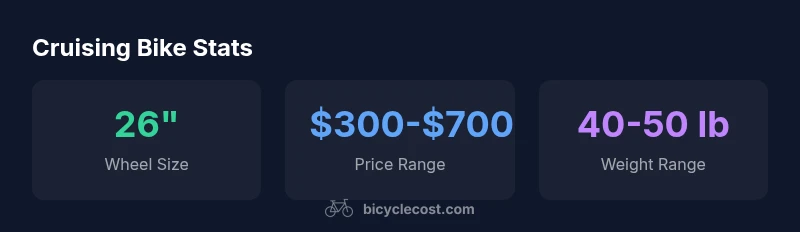
| Wheel size | 26 inches | Common for cruisers |
| Frame material | Steel/Aluminum | Durability vs. weight |
| Saddle comfort | Padded and wide | Key comfort factor |
| Brakes | Rim or Disc | Disc brakes more common on newer models |
| Weight | 40-50 pounds | Heavier than road bikes |
People Also Ask
What defines a cruising bicycle?
A cruising bicycle typically features an upright riding position, wide tires, comfortable saddle, and user-friendly components designed for relaxed riding. These bikes prioritize comfort, visibility, and ease of use for daily riding and leisurely trips.
Cruisers are built for comfort and easy handling, with a padded saddle and wide handlebars.
What wheel size should I look for in a cruising bike?
Most cruisers use 26-inch wheels for stability and availability of parts. Some models may vary, but 26 inches remains the standard for classic cruisers.
Most cruisers use 26-inch wheels, which balance stability and ride quality.
Are cruiser bikes good for hills?
Cruisers with proper gearing and disc brakes handle light hills well; steep climbs may require higher effort and a longer gear range.
They can handle gentle inclines, but expect more effort on steep hills.
What maintenance does a cruiser need?
Regular chain lubrication, tire pressure checks, brake inspection, and occasional bearing service keep cruisers reliable.
Keep the chain lubed, tires aired, brakes checked, and bearings serviced as needed.
Where should I buy a cruising bicycle for sale?
Consider local bike shops, reputable online retailers, and certified pre-owned options; compare warranties and return policies.
Shop around at local shops and reputable sites, and check warranties.
“Cruising bikes shine when you balance comfort with practical features like reliable brakes and easy upkeep.”
Quick Summary
- Prioritize fit before purchase
- Choose upright geometry and plush saddles
- Inspect warranties and service coverage
- Test ride several models before committing
- Budget within a realistic price range