BMX Bikes for Sale: A Practical Buyer’s Guide
Comprehensive buying guide for BMX bikes for sale, covering sizing, components, price bands, and maintenance. Learn how to choose the right BMX bike for your riding style with data-driven insights from BicycleCost.


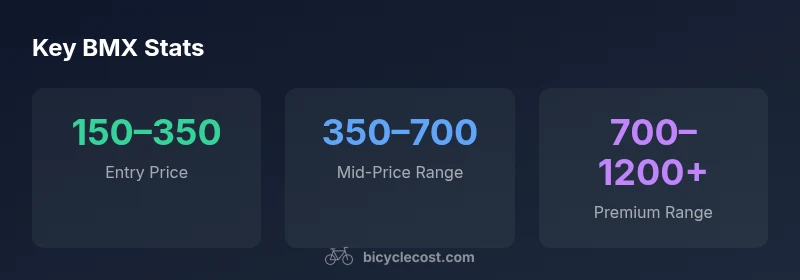
Choose BMX bikes for sale by riding style and budget: entry-level, mid-range, or premium. For most riders, a 20.5–21.0 inch top-tube frame with reliable bearings and brakes delivers value. Entry-level bikes generally cost $150–$350, mid-range $350–$700, and premium $700–$1,200. According to BicycleCost analysis, match features to your intended use and maintenance tolerance.
Understanding the BMX market today
According to BicycleCost, the BMX market today spans freestyle, street, park, and racing models, each with distinct design priorities. Freestyle and street bikes favor maneuverable geometry and rugged highlights, while race-oriented machines emphasize stiffness and aerodynamics. The decision matrix blends price, materials, weight, and parts availability. For first-time buyers, the goal is to secure a bike that feels balanced in weight and control without overextending the wallet. As the market shifts toward durable aluminum frames and updated braking systems, value—measured as longevity per dollar—depends on maintenance habits as much as initial purchase price. This guide focuses on BMX bikes for sale that offer dependable performance across typical park and street use, while acknowledging that specific needs—like aggressive grip or taller riders—may justify different configurations. Overall, the path to a satisfying purchase lies in aligning your riding goals with the bike’s intended role and the retailer’s after-sales support.
Size and Fit Essentials for BMX Bikes
Fit is the foundation of control on a BMX bike. Start with wheel size: most adults ride 20-inch wheels, while younger riders may fit smaller wheels. The top-tube length (often expressed in inches) should place the rider’s center of gravity over the crank with a comfortable reach to the handlebars. For many riders, a top-tube in the 20.5–21.0 inch range balances stability and agility. Check standover clearance when standing over the bike, especially if you’re between sizes. Adjust the saddle and handlebars to achieve a natural riding position that allows confident foot placement on pedals and easy foot clearance for tricks. If you’re between sizes, test ride both options and select the one that reduces knee strain during jumps or manuals. Proper sizing reduces fatigue and improves trick consistency over longer sessions.
Key Components to Evaluate When Buying
Component choice determines how responsive and durable a BMX bike feels on the ground and in the air. Look for a lightweight, durable frame material—aluminum is common and offers good stiffness-to-weight. The fork should be robust enough to handle landings, with a consistent ride feel. Brakes are a frequent point of debate in BMX; most riders opt for U-brakes or V-brakes with reliable leverage. Sealed bearings in the headset, crank, and hubs improve longevity and smoothness, particularly under dusty park conditions. Wheels should be strong with quality rims, and tires should provide grip appropriate to your riding surface. Inspect the bottom bracket, chain tension, and crankset for smooth rotation. Finally, ensure the bike has compatible pegs and a drivetrain that matches your intended out-of-bounds tricks or speed runs.
Price Bands and Value by Tier
The market typically segments BMX bikes for sale into three tiers: entry-level, mid-range, and premium. Entry-level bikes prioritize affordability and straightforward reliability, often suitable for beginners and casual riders. Mid-range bikes balance weight, durability, and component quality, offering better performance without prohibitive costs. Premium models maximize stiffness, precision, and longevity, frequently featuring higher-grade aluminum, advanced braking options, and upgraded sealed bearings. BicycleCost analysis shows how features align with price bands, helping buyers avoid overpaying for unnecessary sophistication or underbuying essential reliability. When evaluating value, consider ongoing maintenance costs, availability of spare parts, and the retailer’s support network. In practice, many riders find the sweet spot in the mid-range, particularly for park or street use, while progressing to premium models as skills grow.
How to Test a BMX Before You Buy
Testing a BMX bike before purchase reveals hidden issues and confirms fit. Inspect the frame for cracks or dents, especially around the head tube and bottom bracket area. Spin the front and rear wheels to check for true and wobble; listen for unusual noises from the headset or bottom bracket. Test the brakes and ensure the levers engage smoothly with consistent response. Look at chain tension and check for play in the crankset. If possible, perform a light ride to feel the bike’s weight distribution and handling, focusing on balance in air tricks and landing stability. Don’t hesitate to compare several models side by side to appreciate subtle differences in stiffness, weight, and ride quality.
Where to Buy BMX Bikes for Sale Safely
Buying from reputable retailers, official brand stores, or established online cycling shops reduces the risk of counterfeit frames or dubious components. Verify warranty terms, return policies, and the availability of spare parts like chains, bearings, and brake pads in your region. For used BMX bikes, insist on a thorough inspection by a knowledgeable rider or mechanic, request a test ride, and verify the bike’s alignment and pedal chain integrity before exchanging money. If you have friends or local clubs, seek recommendations on trusted sellers and shop mechanics. A careful buying process pays off in longer-term satisfaction and fewer maintenance headaches.
Maintenance Tips to Extend BMX Life
Maintenance extends a BMX bike’s life and performance. Clean the bike after rides in muddy or sandy environments to prevent grit from settling in bearings and chains. Regularly lubricate the chain and pivot points, and check bearings for smooth rotation. True wheels periodically and inspect rims for dents that could affect tire seating. Keep bolts tightened to the manufacturer’s torque specs, and replace worn brake pads or rims before performance degrades. Proper storage away from moisture also helps prevent corrosion. By following a simple routine, you’ll maximize safety, consistency, and enjoyment for many seasons.
BMX bike model categories and pricing
| Model Type | Top Tube (in) | Wheel Size | Typical Price Range | Notes |
|---|---|---|---|---|
| Entry-level Street BMX | 20.5–21.0 | 20 inches | 150–350 | Solid choice for beginners and casual riders |
| Mid-range Park/Freestyle BMX | 20.5–21.0 | 20 inches | 350–700 | Balanced weight and components |
| Premium Pro-Grade BMX | 20.5–21.0 | 20 inches | 700–1200+ | High-end components, specialized builds |
People Also Ask
What is a good BMX bike for a beginner?
For beginners, choose a lightweight, affordable BMX with a 20-inch wheel and a 20.5–21.0 inch top-tube. Look for simple components, solid brakes, and a reputable warranty. This helps you learn basic tricks safely while keeping maintenance manageable.
A good beginner BMX is light, affordable, and easy to repair. It should have a 20-inch wheel and a frame size around 20.5 to 21 inches so you can grow with it.
Are 20-inch BMX bikes suitable for adults?
Yes. Many adults ride 20-inch BMX bikes, especially for park and street riding. Ensure the frame size fits your height and reach, and that the bike feels balanced during tricks and light jumps.
Absolutely. A 20-inch BMX can work well for adults if the frame fits you and feels balanced for tricks.
What should I look for in BMX components?
Prioritize frame material, sealed bearings, durable brakes, and strong wheels. Check drivetrain simplicity and the availability of spare parts in your region. These choices influence performance and maintenance needs over time.
Look for a sturdy frame, sealed bearings, good brakes, and wheels that you can easily repair or replace parts for.
How long do BMX bikes last with proper care?
With routine maintenance—cleaning, lubrication, and timely part replacements—a BMX bike can provide years of reliable service. The exact lifespan depends on riding style and care. Prioritize parts that you can service or replace locally.
If you take good care of it, a BMX bike can last many years; stay on top of lubrication and part replacements.
What is the difference between freestyle and race BMX?
Freestyle BMX focuses on tricks and park or street riding, with emphasis on maneuverability and durability. Race BMX prioritizes stiffness and acceleration, often with specific geometry for speed and control on tracks.
Freestyle is about tricks; race is about speed. The bikes differ mainly in geometry and components.
Where should I buy BMX bikes for sale safely?
Purchase from reputable retailers or brand stores with clear warranties and return policies. Inspect used bikes carefully, checking for frame cracks, pedal wear, and bearing play before buying.
Buy from trusted shops or brand outlets and inspect any used bike thoroughly before buying.
“Rider fit and component quality should drive your BMX purchase, not just price. A well-sized bike with reliable bearings and brakes improves safety and performance.”
Quick Summary
- Define riding style and budget before shopping.
- Aim for a 20.5–21.0 inch top-tube frame for versatility.
- Prioritize sealed bearings and reliable brakes for longevity.
- Price bands: entry $150–$350, mid-range $350–$700, premium $700–$1,200+.
- Verify fit with professional sizing if possible.