Bicycle 32 Inch Wheels: Size, Fit, and Safety
A data-driven guide to bicycle 32 inch wheels, covering sizing, compatibility, tire options, gearing, braking, and safe setup for taller riders.


32-inch bicycle wheels are a less common but legitimate sizing option used by tall riders and specialized frames. They require careful checks for frame clearance, brake compatibility, and tire availability. This guide explains when they make sense, how to verify fit, and what to expect in performance and maintenance.
What 32-inch wheels really are for bicycles
The term 32-inch wheels refers to a bicycle wheel diameter that sits outside the most common mountain and road sizes (26", 27.5", 29"). It is encountered on taller riders’ setups, some vintage frames, and a few specialized utility bikes. When you hear about bicycle 32 inch wheels, you should first consider whether the frame and fork have enough clearance, whether the brakes can accommodate a larger rim, and whether tire availability supports safe, reliable ride quality. This size can offer distinct advantages in roll-over comfort and visual presence, but it also introduces unique fit challenges that must be addressed before committing to a swap. BicycleCost analysis shows that riders who fit into these wheels are typically in the taller end of the spectrum, or they ride specific frame geometries designed around larger diameters.
In practice, you’ll want to verify that your rider position, seat tube angle, and stem length can preserve proper reach and pedal efficiency after a wheel upgrade.
Sizing, frame geometry, and compatibility basics
Diameter alone does not determine performance; the surrounding geometry matters just as much. With 32-inch wheels, frame reach, head tube angle, chainstay length, and bottom bracket drop all influence handling, center of gravity, and steering feel. If you are upgrading from a standard size, expect slight changes in steering responsiveness and cornering behavior. Check factory specifications for tire clearances, fork crown, and brake mounting points. If your bike uses disc brakes, ensure rotor size compatibility with the caliper mounting, and confirm that spoke counts align with your wheel build. For riders transitioning from 29ers or 700c wheels, plan a gradual test ride to judge how the larger diameter affects your rhythm and cadence.
Frame and fork clearance: how to verify before swapping
Before committing, measure available clearance around the tire in three critical zones: seat stay clearance, chainstay clearance, and fork crown clearance. Use a caliper or ruler to assess the maximum allowed tire width and height in your frame’s anticipated posture. A small amount of vertical tolerance (about 2–6 mm) is ideal to accommodate tire flex under load. Take into account mudguards or fenders if you ride in wet conditions. If unclear, consult the frame manufacturer or a professional shop. They can confirm compatibility and warn about potential rubbing at full compression or steep cornering.
Tire options and width considerations for 32-inch wheels
Tire availability for 32-inch wheels is more limited than mainstream sizes, so you’ll often encounter 2–4 viable widths from a few brands. When selecting tires, prioritize tall sidewall support and appropriate tread for your riding surface. Inflate to recommended ranges per tire sidewall and factor in rider weight and terrain. Tubeless setups may offer better pinch-flat resistance, but require compatible rims and sealant. If you plan to run higher pressure for efficiency, verify that your rim bed and bead seat diameter are designed to accommodate the chosen tire and allow safe bead seating.
Gearing, rolling resistance, and speed implications
Larger wheels change gearing feel because a given gear ratio translates to a different actual speed. In practical terms, 32-inch wheels can deliver higher rolling resistance on soft surfaces but improved momentum on long climbs and descents. Expect potential changes in cadence for the same shifter position; you may need to adjust chainring size, cog choices, or front derailleur setup to maintain your preferred gear range. If you ride regularly on mixed terrain, test multiple gear configurations to find the balance between acceleration, stamina, and top speed. The overall effect often depends more on tire width and tread than diameter alone.
Braking systems and compatibility considerations
Braking response on larger wheels can feel different due to changes in rotational inertia. Most 32-inch wheel setups rely on disc brakes because of their wide compatibility with various rims and hubs. Confirm rotor sizing, brake caliper reach, and clearances with the fork and frame. If you still use rim brakes, ensure the rim bed is true and has adequate width to accommodate the new tire diameter. Inspect brake pad alignment and rotor runout during installation. Properly torqued bolts and correct hub bearings are essential to maintain reliable, consistent stopping power.
Maintenance, installation, and common issues
Plan a thorough maintenance check after installation: tighten axle nuts or quick releases, inspect spoke tension, and retrue the wheel to eliminate wobbles. Check hub bearings for smooth operation and listen for rubbing or scraping noises that indicate brake or frame contact. Be prepared for caliper alignment adjustments, brake rotor trueing, and potential spoke changes if the wheel build diverges from standard standards. Regularly inspect tire sidewalls for wear, inspect valve stems for leaks, and replace worn components before they fail on the road. A cautious, staged approach helps you avoid surprises after a swap.
Real-world scenarios: who benefits from 32-inch wheels
Tall riders with longer torsos often seek a more comfortable knee and hip position, especially on long commutes. Specialty frames built around larger diameters can improve ride quality on rough roads by smoothing out small irregularities. If you ride in hilly terrain or frequently traverse long stretches, the momentum offered by larger wheels can help maintain steady speed between climbs. However, if your riding environment is primarily urban with tight turns, the handling changes may not be beneficial. Consider your typical routes, riding style, and comfort with altered geometry when evaluating this option.
Key considerations when evaluating 32-inch wheel upgrades
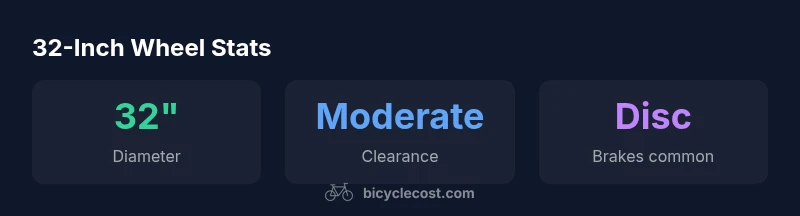
| Aspect | 32-inch wheels | Notes |
|---|---|---|
| Diameter | 32 inches | Common labels may include 32" or 813 mm |
| Frame clearance | Moderate to high | Check fork, frame, and fender clearance |
| Tire availability | Limited | Brand labeling varies by market |
| Gearing impact | Moderate change | Adjust gears for cadence shift |
| Braking compatibility | Disc brakes common | Discs widely supported |
People Also Ask
Are 32-inch wheels compatible with most adult bicycles?
Compatibility depends on frame clearance, fork design, and braking system. Most bikes are not shipped to accommodate this size out of the box, so a professional assessment is recommended before purchase.
Most bikes won’t directly fit 32-inch wheels without checks. A pro should verify clearance, brakes, and compatibility.
Where can I source tires for 32-inch wheels?
Tires labeled as 32-inch or 29er-compatible are available from a few brands. Availability varies by region, and some tires may be marketed under different diameter labels.
Look for tires labeled 32-inch or 29er, and check regional catalogs or bike shops for availability.
Do 32-inch wheels affect braking performance?
Yes, larger diameter alters rotational inertia and contact geometry. Disc brakes are typically more adaptable; ensure rotor size and caliper reach are appropriate for the new setup.
Braking can feel different; disc brakes are usually best for 32-inch wheels.
Is upgrading to 32-inch wheels legal for road use?
Legality varies by jurisdiction. In many places, there’s no blanket restriction, but you should confirm local regulations and ensure the bike remains safe and road-ready.
Check local rules, but generally road use is permitted if the bike is safe and compliant.
What bikes come with 32-inch wheels from the factory?
Factory models with 32-inch wheels are uncommon and often limited to specific brands or vintage lines. Most riders opt for custom builds or frame adaptations.
Very few bikes come stock with 32-inch wheels; many are custom builds.
What maintenance considerations are unique to 32-inch wheels?
Expect closer inspection of bearings, hubs, and rim integrity due to larger rims. Regular trueing and brake alignment checks are essential after installation.
Regular checks on bearings, hubs, and brakes are extra important with these wheels.
“32-inch wheels can unlock unique performance for tall riders, but compatibility challenges mean careful verification of frame geometry and braking systems is essential.”
Quick Summary
- Verify frame clearance before upgrading
- Expect limited tire options; plan ahead
- Test ride to evaluate handling changes
- Check braking system compatibility first
- Follow manufacturer guidelines for the upgrade