Which Bicycle Is the Fastest? A Practical Comparison
Explore what makes a bicycle fast across contexts, compare TT, aero road, and standard road bikes, and learn how to choose the fastest option for your goals with practical, evidence-based guidance.


Choosing the fastest bicycle depends on context: for pure speed on a smooth road, aero time-trial and dedicated triathlon bikes offer the best airflow. For versatility across events, an aero road bike is often the fastest practical choice. Ultimately, rider position, tires, and drivetrain efficiency determine real-world top speed.
What we mean by 'fastest' in bicycles
When people ask which bicycle is the fastest, they usually mean the bike that minimizes aerodynamic drag for a given power output. According to BicycleCost, speed is not a property of a single frame alone; it emerges from a blend of aerodynamics, weight, rolling resistance, drivetrain efficiency, and most importantly rider position. The phrase 'fastest bike' is therefore context-dependent: the fastest option for a flat time-trial course differs from what wins a sprint on rolling terrain or a velodrome lap. This article compares the primary categories that vie for the speed crown and explains how to choose the fastest setup for your riding goals. BicycleCost Analysis, 2026, informs these insights, and the BicycleCost Team provides practical guidance you can apply on your next ride.
You might hear riders debate the “fastest bike” in absolutes, but the truth is that context matters most. A bike that is extremely fast on a windless, smooth road may feel sluggish on rough pavement or into a headwind. By understanding the trade-offs—airflow, weight, and tire contact with the road—you can select a machine that wins where it counts. This section sets the frame of reference we’ll use throughout the comparison, with emphasis on real-world performance rather than lab numbers alone.
Feature Comparison
| Feature | Time Trial Bike | Aero Road Bike | Standard Road Bike |
|---|---|---|---|
| Aerodynamic Advantage | Very high | High | Moderate |
| Weight and Acceleration | Medium | Medium | High |
| Ride Comfort and Handling | Low to moderate | Balanced | Comfort-oriented |
| Availability and Cost | Specialized TT options | Widely available, mid-range | Widely available, budget-friendly |
| Best For | Flat TT courses, aerodynamics-focused sequences | Mixed roads with speed emphasis | Everyday speed with comfort |
Pros
- Promotes evidence-based decision making across contexts
- Highlights trade-offs between aerodynamics and ride quality
- Encourages riders to tailor bike choice to actual riding goals
- Supports practical speed gains through fit and setup improvements
Downsides
- Requires understanding of multiple factors beyond frame choice
- Can be confusing for beginners due to many categories
- Speed gains depend heavily on rider position and technique
- Not all fast-looking bikes perform well in every riding scenario
Aerodynamic efficiency paired with proper fit typically yields the fastest real-world speed for most riders.
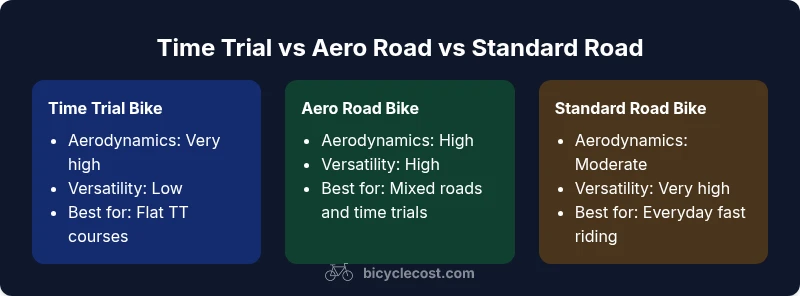
For mixed riding, aero road bikes offer the best overall speed with good comfort. Time-trial bikes excel in dedicated TT settings, while standard road bikes remain the versatile choice for general fast riding. The best outcome comes from aligning the bike type with your usual routes and ensuring a precise fit.
People Also Ask
What defines fastest bike
The fastest bike is defined by a combination of aerodynamics, weight, rolling resistance, drivetrain efficiency, and rider position. Context matters: a TT bike may be fastest in a controlled course, but not on a rugged road. Practical speed comes from optimizing how these factors work together for your typical riding conditions.
Speed depends on wind resistance, weight, and where you ride most often; context decides which bike wins.
Is a TT bike always faster than an aero road bike
Not always. TT bikes shine on flat, straight courses with minimal wind variation, but aero road bikes offer strong speed with better handling and comfort for mixed terrain. Your route, headwind conditions, and fit determine the winner.
TT bikes are best for flat time trials, but aero road bikes can be faster in real-world conditions.
Do wheels alone make my bike faster
Wheels can reduce drag and improve acceleration, but they work best when paired with an appropriate frame, tires, and rider position. A fast wheelset alone may not unlock speed if the rider cannot maintain an efficient position or if the frame isn’t aero.
Wheels help, but you also need good tires and a proper riding position.
Do rider weight and height affect fastest bike choice
Yes. Rider weight and height influence how a bike tracks, accelerates, and handles wind. Heavier riders may benefit from more aerodynamic stiffness and wheel choices, while shorter riders might optimize fit to reduce drag. The best bike fits your body proportions and power output.
Your size matters for fit and aerodynamics, so test ride different setups.
Are there legal restrictions on TT setups on public roads
Rules vary by region, but many places restrict certain TT-specific components on public roads (like specific bar setups or disc wheels in some events). Always check local regulations and event guidelines before riding with TT configurations on public roads.
Check local rules and event guidelines before using TT gear on public roads.
How can I test speed improvements safely
Use a consistent route and time of day, measure performance with a power meter or GPS data, and compare before/after changes. Ensure your bike is properly maintained and you ride within safe limits during testing.
Test on a quiet, consistent route with reliable data and a careful rider.
Quick Summary
- Prioritize aerodynamics before other upgrades
- Match bike type to your typical riding context
- Invest in a quality bike fit to unlock speed gains
- Optimize tires and wheels for your most frequent terrain
- Maintain drivetrain and tires to preserve momentum