Is It OK to Pressure Wash a Bicycle? A Safe Guide
Learn if it's OK to pressure wash a bicycle and how to do it safely. Practical steps, tools, safety tips, and maintenance guidance from BicycleCost.


Is it ok to pressure wash a bicycle? According to BicycleCost, yes—when done with care. A broad, low-pressure spray kept at a safe distance minimizes risk to bearings, seals, and sensitive components. Use bike-safe soap, avoid the cockpit and drivetrain joints, and rinse from top to bottom. This controlled approach cleans efficiently while protecting longevity and performance.
Is pressure washing safe for bicycles?
Is it ok to pressure wash a bicycle? According to BicycleCost, the answer is generally yes, but only when you apply it with care and discipline. A harsh jet can push water past seals, loosen paint edges, and drive grime into bearings if sprayed too close or directly at sensitive areas. By using a broad, low-pressure spray and bike-specific soap, you reduce risk while improving cleaning efficiency. Keeping the nozzle at a safe distance and avoiding the cockpit, hubs, suspension seals, and bottom bracket protects vulnerable components. The BicycleCost team emphasizes a cautious, component-aware approach: you want a clean bike, not a flooded one. In this guide you’ll learn when to press the trigger, how to shield bearings and seals, and how to finish with drying and lubrication to keep your ride quiet and reliable.
How pressure interacts with bike materials and finishes
Different frame materials react differently to water and cleaners. Aluminum frames tend to tolerate rinsing better than carbon, which can scratch if dirt is hammered into the surface. Steel frames resist moisture poorly if left damp, especially in welded joints. Painted finishes may chip if jets are too strong or sprayed too close. Grease and lubrication on moving parts should be preserved; water can wash away protective coatings if you apply excessive force. For carbon components, avoid direct, close-range jets that can dislodge surface resin. In short, a careful, material-aware approach protects the frame while still achieving a clean bike. This aligns with BicycleCost’s practical maintenance philosophy: prioritize prevention by using the right tools and technique to minimize water intrusion and surface damage.
- Brush or sponge care improves results on textured finishes.
- Avoid spraying into headset gaps or seals.
- After cleaning, inspect for soap residues that can attract dirt.
BicycleCost’s method emphasizes control, not force; the goal is a clean, well-maintained bike, not a dry-brained rinse.
Tools and prep: what you need before you start
Before you begin, gather your tools and prep the area. A dedicated washing space, such as a driveway or utility area, reduces splash onto floors and plants. Have your soap, water, brushes, and rags ready so you don’t rush to fetch supplies mid-clean. Remove loose items like water bottles, lights, and any accessories that could be damaged by water. If you use a stand, ensure it is secure and won’t tip during cleaning. Protect sensitive components by covering cables and rotors with a lightweight cloth or plastic wrap, and keep the spray away from the cockpit to prevent water intrusion into the handlebars, brake levers, and shifters. Finally, set up a second bucket with clean water for quick rinses and a separate one for soapy washing to avoid cross-contamination. The prep phase reduces chaos and helps you stay composed through the process, which is essential for consistent results and equipment safety.
- Tools: hose with a broad spray nozzle, bike soap, two buckets, sponge or microfiber cloth, soft-bristled brush, toothbrush for tight spots, degreaser, chain lubricant, drying towel.
- Workspace: level ground, stable stand (optional), and a dry area to finish.
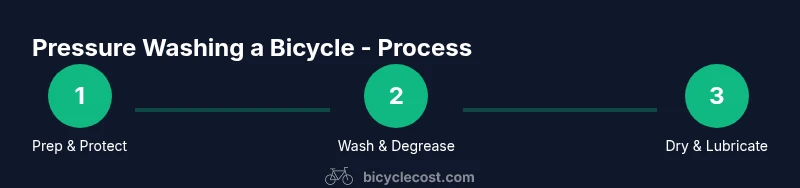
Step-by-step safe approach to pressure washing a bicycle
-
Prepare the bike and workspace: Remove accessories, secure the bike, and cover sensitive parts. Start with a gentle evaluation of where the water will go and what needs protection. This sets the stage for a controlled clean. Tip: take photos of critical components before cleaning in case you need to reassemble.
-
Lightly rinse the frame: Use a broad spray to loosen surface dirt without forcing water into bearings. Keep the nozzle at arm’s length and avoid directed jets at bearings or seals. This step loosens grime and makes subsequent scrubbing easier. Tip: avoid spraying directly into the bottom bracket and headset.
-
Apply degreaser to drivetrain: Apply bike-safe degreaser to chain, jockey wheels, chainrings, and derailleur pulleys. Let it dwell briefly (as per product instructions) to break down grease. Rinse away with a broad spray, not a concentrated jet. Tip: use a brush to scrub crevices after degreasing.
-
Scrub the frame and components: Use a soft sponge or microfiber cloth on the frame and non-drivetrain components. For stubborn spots, a soft-bristled brush works well. Avoid aggressive scrubbing that could dull paint. Tip: work in sections and maintain consistent pressure to avoid water pooling near seams.
-
Rinse from top to bottom: Rinse the entire bike starting at the top and moving downward, ensuring no dirt runs into drivetrain components. If needed, re-wet the drivetrain area to wash away remaining degreaser. Tip: keep water away from bearings and sealed areas.
-
Dry thoroughly and inspect: After rinsing, dry with a microfiber towel and air dry in a shaded, ventilated area. Check for water in hubs, bottom bracket, and crankset; dryness reduces corrosion risk. Tip: wipe along cables and seals to remove residual moisture.
-
Lubricate and reassemble: Apply chain lubricant to the drivetrain after the bike is dry. Reattach any removed accessories and check brake and shifting performance. A light lubrication ensures smooth operation and minimizes future wear. Tip: wipe excess lubricant to prevent attracting dirt.
Estimated time: about 30-45 minutes, depending on bike complexity and dirt level.
- If you ride in wet conditions or off-road, you may want to repeat this process more frequently, but avoid over-washing sensitive components. This step-by-step approach is designed to maximize cleaning efficiency while protecting critical hardware. The key is consistent, measured steps rather than blasting water at the wrong angles.
What to avoid: bearings, seals, and electronics
Water intrusion into bearings, seals, and electronic components is a primary risk when pressure washing a bicycle. Direct jets into hubs, bottom bracket seals, disc brake calipers, or an electronic shifter can push water past seals and accelerate wear or corrosion. Avoid spraying into the headset crown race and bottom bracket shell; cover these areas if needed. Wipers, gaskets, and grease can be displaced by aggressive jets, leading to noise, rough operation, or component failure. For bicycles with electronic shifting or power meters, always follow manufacturer recommendations and consider hand-washing sensitive sections. By understanding these hazards, you’ll apply the right technique and protect your investment.
Alternatives to pressure washing and when to choose them
If your bike has delicate finishes or sensitive components, consider a thorough hand wash instead of pressure washing. A sponge and bucket wash allows you to target grime with controlled pressure and reduce risk. For off-road bikes or muddy trails, a pre-rinse with a gentle stream, followed by hand cleaning, can minimize abrasive contact. Some riders prefer a damp cloth or spray bottle for quick touch-ups between major cleanings. For highly dirty frames, a two-step approach—spot clean with degreaser and rinse only the areas that need it—can be safer than blasting the whole bike. The goal is maintain cleanliness without compromising seals or finishes.
Aftercare: drying, lubrication, and inspection
After washing, dry the bike thoroughly to prevent water spots and rust. Quick-drying towels or microfiber cloths are ideal. Inspect the bike for any loosened components, water trapped in seals, or corrosion signs. Re-lubricate the chain and any other moving parts that require lubrication after drying. Replace or tighten any loose bolts and ensure disc brakes or rim brakes return to full function. Regular inspection after cleaning reinforces safety and longevity. If you notice unusual noises or resistance, consult a professional instead of forcing the bike back into service.
Maintenance rhythm and common mistakes
A disciplined maintenance rhythm reduces the need for intensive cleanups. Schedule a wash every few weeks or after muddy rides, but always adjust to riding conditions. Common mistakes include spraying directly into bearings, using household cleaners that can strip protective coatings, and over-wetting components that rely on grease for protection. Always use bike-specific cleaners and lubricants, and avoid solvent-based products that can degrade rubber seals. Finally, never rush; a methodical approach yields better long-term durability and better ride quality.
Tools & Materials
- Garden hose with spray nozzle(Broad, fan-shaped spray; keep a safe distance.)
- Mild bike-specific soap(Avoid household detergents.)
- Two buckets(One for soapy wash, one for rinse.)
- Soft sponge or microfiber cloth(Non-abrasive to prevent scratches.)
- Soft-bristled brush(For drivetrain and tight spots.)
- Toothbrush or small brush(Detail cleaning in crevices.)
- Bike-safe degreaser(Limit to drivetrain areas.)
- Chain lubricant(Apply after drying.)
- Drying towels or microfiber cloths(Absorb moisture quickly.)
- Covering materials (optional)(Protect sensitive parts if needed.)
Steps
Estimated time: 30-45 minutes
- 1
Prepare bike and workspace
Remove accessories, secure the bike, and cover sensitive components. Check that your cleaning area is stable and free of trip hazards. This initial setup reduces spill risk and makes the rest of the process smoother.
Tip: Take a quick photo of critical components before cleaning in case you need to reassemble. - 2
Rinse frame lightly
Rinse with a broad spray to loosen dirt. Keep the nozzle several inches away from the frame and avoid pointing at bearings and seal interfaces.
Tip: Use a top-to-bottom sweep to prevent dirty water from moving toward the cockpit. - 3
Apply drivetrain degreaser
Spray degreaser on the chain, chainrings, jockey wheels, and derailleurs. Let it sit for a moment, then scrub with a brush. Rinse away with a broad spray.
Tip: Avoid spraying degreaser directly into bearings. - 4
Scrub frame and components
Use a soft sponge on the frame and a brush for stubborn spots. Work in sections to prevent dirt from spreading. Rinse as you go to keep grime manageable.
Tip: Refrain from aggressive scrubbing that could damage paint or finishes. - 5
Rinse from top to bottom
Complete a downward rinse to push dirt away from critical joints. Focus on drivetrain areas last to prevent recontamination.
Tip: Keep the spray angle broad and avoid focusing on bearings. - 6
Dry and inspect
Dry with a microfiber towel and air-dry in shade. Check hubs, bottom bracket, headset seals for moisture and signs of wear.
Tip: If you see moisture, wipe and dry again before lubrication. - 7
Lubricate and finalize
Apply chain lube to the chain after drying. Wipe off excess to prevent dirt adhesion. Reattach removed components and test brakes and gears.
Tip: Use a light touch; excess lube attracts more dirt.
People Also Ask
Is it safe to pressure wash a bicycle?
Yes, it can be safe if you use a broad spray, stay away from bearings and seals, and clean with bike-specific products. Avoid direct jets at sensitive parts and always dry and lubricate afterward.
Yes, but only with care—avoid bearing areas and dry after washing.
What should I avoid when pressure washing a bike?
Avoid spraying directly into hubs, bottom brackets, headsets, disc brakes, and electronic components. Keep the spray distance and use protective coverings where needed.
Avoid bearing seals and electronic parts; keep distance from sensitive areas.
Can I use any soap or detergent?
Use a mild bike-specific soap. Household cleaners can strip lubricants and damage finishes. Rinse thoroughly to remove any residue.
Stick with bike soap to protect finishes and lubricants.
How often should I clean my bike with water?
Frequency depends on riding conditions. After muddy or salty rides, a light rinse and wipe-down are helpful; deeper cleanings can be scheduled every few weeks.
Clean after muddy or salty rides; otherwise, assess condition.
Should I lubricate after every wash?
Yes. Dry thoroughly first, then apply chain lubricant to the drivetrain and wipe off excess. Re-check shifters and brakes for smooth operation.
Yes—dry, then oil the chain lightly.
Will pressure washing affect warranty?
Most warranties depend on manufacturer guidelines. Use caution and follow recommended practices; if in doubt, consult the bike maker or a professional.
Check your maker's guidelines; when in doubt, ask a pro.
Watch Video
Quick Summary
- Know where water can cause harm and avoid those areas.
- Use gentle spray, not a high-pressure jet.
- Hand-wash sensitive parts if unsure.
- Dry thoroughly and re-lubricate after cleaning.
- Inspect for wear or damage post-cleaning.