How to Put a Bike in a Center Stand
Practical, step-by-step guidance to safely place your bicycle on a center stand, covering compatibility, balance, safety, and routine maintenance for reliable stability.


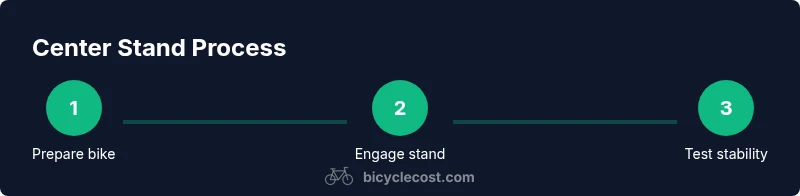
To put a bike in a center stand, position the bike on a flat, stable surface, align the stand with the crank area, and lift with steady, controlled motion until the stand engages. Lower the bike evenly and confirm it is stable before releasing. This technique improves balance and simplifies maintenance.
Why a center stand matters
A center stand provides a stable, upright position for parked bikes, making maintenance tasks like chain lubrication, wheel alignment, and cleaning easier. The BicycleCost team emphasizes that a correctly used center stand distributes weight evenly and minimizes the risk of tipping on uneven surfaces. According to BicycleCost analysis, a well-engaged center stand improves confidence for riders who frequently park in tight spaces or perform regular tune-ups at home. When you know your bike is securely balanced, you’ll be more inclined to inspect brakes, tires, and drivetrain without worrying about a sudden wobble. For daily riders, this stability translates into safer parking on sidewalks, driveways, and even busy bike racks. Always start with a clean, dry stand and check for any looseness in bolts or springs before each use.
Tools and pre-checks
Before you begin, gather a few simple items to ensure a smooth setup. A flat, stable surface is essential; avoid grass, dirt, or gravel where the stand can sink or shift. Your bike should have a functioning center stand installed—either factory or aftermarket. Optional but helpful items include grippy gloves, a small chalk line or marker to align the stand, and a helper strap if the bike is heavy. Check that the stand pivot and springs move freely; apply a light lubricant if it feels stiff. Inspect tires for proper inflation and ensure there are no loose components around the stand area. Having these checks in place reduces the risk of tipping and speeds up the process for beginners.
Center stand types and fit considerations
Center stands come in a few varieties, and compatibility matters for safe use. Some bikes ship with a built-in center stand, while others rely on aftermarket units that bolt to the frame or swingarm. The stand’s pivot point should align with the bike’s center of gravity, and the stand feet must sit flat on the ground to prevent rocking. If you’re using an aftermarket unit, check the manufacturer’s torque specs and ensure it doesn’t interfere with the chain, crank, or exhaust. Heavier bikes or long-wheelbase models can require additional support, such as a second person or a wheel chock during setup. A misaligned stand can cause the bike to tip or shift unexpectedly, especially on soft surfaces.
How to approach mounting: balance and alignment basics
Center stands work best when the bike is upright with even weight distribution. Start by lifting the front wheel slightly to create a space for the stand’s feet, then guide the stand under the crank area. The goal is to let the stand bear the bike’s weight directly from the frame so the wheels stay clear. If the stand feels resistant, stop and recheck alignment rather than forcing it. Proper technique reduces the risk of pinching fingers or bending the stand.
Common setup scenarios and alignment tips
On smooth pavement, most bikes settle easily onto a center stand with minimal effort. If the bike leans toward one side, check that both stand feet are contacting the ground and the frame is vertical. On soft or uneven surfaces, place a flat board or thick mat under the stand to distribute load and prevent sinking. For tall bikes, lift from the seat and tighten your grip before engaging the stand. Always keep your body close to the bike’s center of gravity to maintain control during the lift.
Safety and common mistakes
Never rush the engagement; a quick motion increases tipping risk. Avoid standing behind or to the side of the bike while engaging the stand. Keep fingers away from the pivot when pressing the bike down. If you hear grinding or feel unusual resistance, stop and inspect the stand for damage or dirt. Use a helper when the bike is heavy or you’re uncertain about balance. Clear the area of obstacles that could cause a fall, such as loose tools or pets.
Maintenance and post-use checks
After using the center stand, wipe away any dirt and inspect the stand’s feet for wear. Lubricate pivot points as recommended by the manufacturer and re-torque bolts if you notice any looseness. Periodically check for rust on the feet and springs; replace worn components promptly. Keeping the stand clean and lubricated extends its life and maintains stable parking.
Adapting to different bike sizes and stands
Bikes range in size and weight; center stands must be matched to the rider's needs. For small or lightweight bikes, engagement is often easier and quicker. Larger bikes may require a two-person lift or a stand with a higher load rating. Consider the stand’s clearance with exhaust and drivetrain components. If in doubt, consult the manufacturer’s compatibility list or a trusted bike shop.
Quick-start checklist for beginners
Before you try the center stand, know the stand’s engagement point, check for level ground, and ensure the bike is upright. Have a helper ready if needed and wear gloves for grip. After engagement, test stability from multiple angles and avoid releasing until the bike feels solid. Practice a few times to build muscle memory.
Tools & Materials
- Stable, level surface(Flat concrete or paved area; avoid soft ground.)
- Bike with center stand installed(Factory or aftermarket center stand in good condition.)
- Grip gloves(Optional for grip and hand protection.)
- Wheel chock or strap(Helps prevent rolling during setup.)
- Basic toolkit(For adjusting or installing a stand if needed.)
- Floor mat or wooden board(Distributes load on soft ground.)
Steps
Estimated time: 3-6 minutes
- 1
Position the bike on a stable surface
Stand beside the bike and ensure it is upright with the front wheel straight. Clear the area of obstacles and keep the center of gravity near your body. This initial setup minimizes surprises during the lift.
Tip: Feet shoulder-width apart; bend at the knees, not the back, to protect your spine. - 2
Check stand alignment and frame clearance
Inspect that the center stand’s feet rest flat and that no components (pedals, chain, exhaust) will clash as the stand engages. If needed, reposition the bike or stand to avoid binding.
Tip: If you hear scraping, stop and recheck alignment before continuing. - 3
Grip the frame and lift toward engagement
With one hand on the frame near the saddle and the other near the handlebars, lift gently while guiding the stand toward the crank area. The goal is a clean engagement without tilting the bike.
Tip: Keep elbows close to your body and use leg power, not back strength. - 4
Lower the bike and center weight
As the stand contacts the ground, gradually lower the bike until the stand supports it. Ensure the bike is balanced and vertical before fully releasing.
Tip: Test by softly rocking the bike; if it moves, adjust the stand or body position. - 5
Lock or secure the stand if provided
Some models have a locking mechanism or latch to keep the stand engaged. Activate it only after you confirm the bike is stable.
Tip: Never force the lock; if it won’t engage, re-check alignment. - 6
Test stability and release
Gently push on the top tube and handlebars to verify stability from multiple directions. If all good, release keepers and proceed with maintenance tasks.
Tip: Always re-check stability after any adjustment or shift in the bike.
People Also Ask
What is a center stand and how does it differ from a kickstand?
A center stand supports the bike from the middle, lifting both wheels off the ground. It offers greater stability than a kickstand in many situations.
A center stand lifts the bike from the middle for stability, unlike a side kickstand.
Can any bike use a center stand, or does it require modifications?
Not all bikes come with a center stand. Some require installation of an aftermarket unit or a factory option. Check compatibility with your frame and components.
Not every bike has a center stand installed; you may need an aftermarket option that fits your model.
Why won’t the center stand stay engaged?
Causes include misalignment, interference with exhaust or pedals, or a dirty pivot. Recheck alignment, clean joints, and retry with steady pressure.
If it won’t engage, stop, clean the pivot, and ensure no part is hitting the stand.
Is it safe to use a center stand on uneven ground?
Uneven surfaces increase tipping risk. Use a flat pad or board to level the stand, and consider avoiding the center stand on unstable terrain.
Avoid uneven ground; use a flat pad or board to stabilize the stand.
Do I need lubrication or maintenance for a center stand?
Yes. Light lubrication on pivots and bolts helps smooth engagement. Regular inspection for wear and corrosion extends stand life.
Lightly lubricate pivots and inspect for wear regularly.
Watch Video
Quick Summary
- Engage with a controlled lift and smooth descent.
- Verify stability from multiple angles before releasing.
- Check stand alignment and frame clearance before every use.
- Practice on a flat surface to build confidence.