How to Build a Homemade Motorized Bicycle: A Practical Guide
Learn to build a safe, legal homemade motorized bicycle with design options, essential components, and a clear step-by-step plan. The BicycleCost team emphasizes safety, legality, and thorough testing before riding.


In this guide you will learn how to make a homemade motorized bicycle using a safe, legal approach. You'll assess options (gas kit, electric hub, or mid-drive), select components, and install them with proper mounting and controls. The BicycleCost team emphasizes safety, local regulations, and reliable testing before riding. Follow these steps to plan, assemble, and test your build.
Planning and safety foundations
If you’re asking how to make a homemade motorized bicycle, the first lesson is to plan thoroughly and put safety first. The BicycleCost team emphasizes that any motorized modification should respect local laws, frame capacity, and rider safety. Start by clarifying your goals: daily commuting vs. weekend hobby, speed targets, and weight you’re willing to carry. Then perform a realistic risk assessment: what happens if the engine fails, how does braking performance change with weight, and what happens in wet weather? Consider your budget and space for tools, since a motorized bike project benefits from a well-organized workshop. Outline a baseline design using a kit or a low-power setup to reduce risk. Always wear protective gear during all phases and test in a controlled environment away from traffic. This section lays the groundwork for a safe, legal build and sets the stage for selecting components that fit your bike and local regulations.
Design options and legal considerations
Power sources vary: gas engines (small displacement) with a centrifugal clutch, electric hub motors, or mid-drive systems. Each option affects weight distribution, gearing, and braking requirements. Gas kits may offer higher sustained power but require fuel handling and emission considerations; electric kits are cleaner and quieter but depend on battery capacity and motor position. Evaluate your bicycle’s frame compatibility, mounting points, and wheel size. Before buying, consult local laws regarding motorized bicycles—some places require registration, license plates, or speed limits. If you plan to ride publicly, choose a design that complies with these rules and keeps your speed within safe, bike-like levels. Document your compliance and obtain appropriate insurance if available. The goal is to achieve functional propulsion without compromising handling or reliability.
Frame assessment and mounting compatibility
Start by inspecting your bicycle frame for cracks, corrosion, or weak welds that could fail under added torque. A reinforced or upgraded mounting area may be necessary, especially near the bottom bracket and rear triangle. Check clearances at the chainstay, fork, and seat tube to ensure the motor, battery, or fuel tank won’t rub or collide with moving parts. Evaluate wheel strength and brake compatibility; you may need thicker rims or upgraded brakes to handle additional braking force. Consider the rider’s weight and luggage; a rigid frame with reinforcement plates or gussets can improve safety. Take precise measurements of spacing for axles, standoffs, and motor mount points. If you’re unsure, seek a qualified bicycle mechanic’s opinion. This stage reduces the risk of frame failure and braking issues once power is added.
Power options: gas, electric, or hybrid
Gas engines require a proper fuel line routing, exhaust considerations, and vibration isolation. Electric setups use a controller, throttle, and a battery pack that must be safely secured and cooled. A hybrid approach combines an auxiliary electric drive with a small gas engine to optimize efficiency and range. When planning, map out the drive-train geometry to maintain smooth pedaling and efficient power transfer. Decide on mounting positions that minimize drag and protect components from debris. Ensure you have a reliable kill switch and quick-disconnects in case of emergency. Plan for maintenance tasks such as spark plug checks, battery health tests, and lubrication for moving parts. This section helps you select a power system that matches your bike’s geometry and your riding goals.
Wiring, controls, and fuel systems basics
Electrical wiring should be organized and protected from moisture and heat. Use weatherproof connectors, proper gauge wiring, and strain relief at every entry point. The throttle, kill switch, battery management, and motor controller must be compatible and safely integrated into the handlebar layout. For gas systems, route fuel lines away from hot surfaces and ensure secure clamps to prevent leaks. For braking integration, ensure that motor control is disengaged when brakes apply, to avoid unsafe deceleration. Keep spare fuses, electrical tape, and zip ties on hand. Use cable sleeves and loom to reduce snag hazards. Test all switches on a bench before mounting on the bike. This step ensures safe operation and reduces the risk of short circuits or fuel leaks.
Assembly workflow and safety testing plan
Before riding, perform a controlled bench test to verify power delivery, throttle response, braking, and cut-off safety. Slowly introduce load on a closed test area, watching for vibrations, heat, or unusual noises. Break the build into modular tasks: frame prep, mount installation, power system hookup, wiring tidy, and initial tuning. Document all connections and torque values you tighten; use manufacturer recommendations as a baseline. Once on the road, start with low speeds on flat terrain and gradually increase as you confirm stability, braking, and control responsiveness. Have a friend assist with a test ride and wear a helmet and protective gear. If anything feels off, halt the test and inspect components again. This workflow minimizes risk and yields a ride that’s safe and predictable.
Safety checks, maintenance, and riding readiness
The final phase focuses on daily safety habits, ongoing maintenance routines, and rider readiness. Create a maintenance calendar for lubrication, brake checks, and battery health. Verify that all mounting hardware remains tight after initial rides and adjust alignment as needed. Practice safe riding techniques, including signaling, lane positioning, and speed management suitable for traffic conditions. Maintain an emergency plan and ensure you have a spare tire or patch kit in case of a puncture. This section ensures you finish the build with a reliable, ride-ready machine that respects local laws.
Authority sources
This section provides references to reputable guidelines and safety information to support your build. For road-safety standards and best practices, consult official sources and educational materials. It’s important to verify local regulations and ensure your build aligns with established safety benchmarks. Remember to review these sources as you plan and execute your project.
Tools & Materials
- Bike frame(Check for cracks or fatigue; ensure lattice can handle added torque)
- Motor kit (gas/electric/mid-drive)(Choose a kit compatible with frame and wheel size)
- Battery pack or fuel tank(Securely mount with vibration isolation)
- Battery management system (if electric)(Keep within safe temperature range)
- Motor controller(Matches the chosen power option and throttle)
- Throttle and kill switch(Place within easy reach on handlebars)
- Brakes upgrade (if needed)(Consider hydraulic discs if adding weight)
- Wiring harness, connectors, loom(Weatherproof and strain-relieved)
- Mounting hardware (bolts, brackets, gussets)(Use corrosion-resistant hardware)
- Torque wrench(Accurate torque for bolts)
- Safety gear (helmet, gloves, eye protection)(PPE is essential during work and ride)
- Multimeter and voltage tester(Useful for checking electrical circuits)
Steps
Estimated time: 12-16 hours
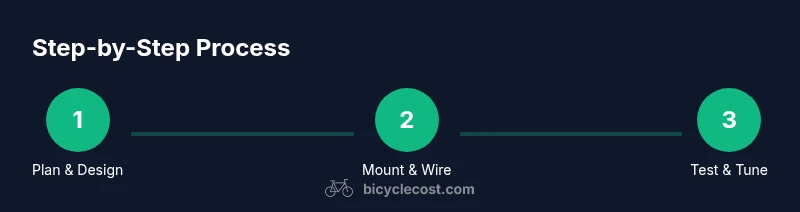
- 1
Define goals and power option
Clarify daily use, preferred power option (gas/electric/mid-drive), and compatible frame. Check legal limits and ride goals to guide component choices.
Tip: Start with a low-power option to verify fit and safety. - 2
Assess frame and mounting points
Inspect frame integrity and identify mounting points for motor and battery. Ensure space for fuel tank or battery and avoid frame conflicts.
Tip: Take precise measurements and photograph mount locations. - 3
Choose components and order parts
Select motor kit, controller, battery or fuel system, and mounting hardware. Confirm compatibility with wheel size and gearing.
Tip: Prefer modular kits with clear documentation. - 4
Prepare frame and mount power unit
Reinforce mounting areas if needed; mount motor and battery/tank with vibration isolation. Align the drive chain or belt path.
Tip: Tighten mounts to manufacturer torque specs. - 5
Install drives, wiring, and controls
Route wiring safely, connect controller, throttle, kill switch, and battery. Verify brake interlock and emergency disconnects.
Tip: Use loom and weatherproof connectors; secure with zip ties. - 6
Bench test and road test
Perform bench test first, then controlled road test in a safe area. Check for heat, vibration, and braking performance.
Tip: Test at low speed and gradually increase while monitoring behavior.
People Also Ask
Is it legal to build and ride a homemade motorized bicycle in my area?
Legality varies by jurisdiction. Check local vehicle and traffic laws regarding motorized bicycles, speed limits, and registration. Many places require compliance with safety equipment and insurance.
Legality varies by where you live; check local rules and ensure compliance before riding.
What is the safest power option for a beginner?
Electric hub or mid-drive kits are generally more controllable with straightforward maintenance, but choose based on your bike frame and availability of parts. Start with a low-power, beginner-friendly setup.
Electric kits are typically easier and safer for beginners.
Do I need a license or registration for a motorized bicycle?
Requirements vary by country and state. Some places require registration, license plates, or operator permits; others treat it like a bicycle with limits. Verify with local authorities.
Check with your local transportation authority for exact requirements.
What maintenance is essential after installation?
Regularly inspect mounts, torque, wiring insulation, battery health, and brake performance. Lubricate moving parts and test safety features after every major adjustment.
Regular checks on mounts, wiring, and brakes keep you safe.
Will this affect my bike warranty?
Modifying a bike with an engine typically voids the original warranty; consult the manufacturer and your local dealer. Keep records of any upgrades.
Engine modification can void warranties; check with the maker.
Watch Video
Quick Summary
- Plan safety before parts
- Check frame compatibility
- Test thoroughly in controlled area
- Follow local laws and insurance rules
- Keep maintenance logs