How Much Is a Bicycle Pump? Prices, Types & Tips
Discover how much a bicycle pump costs in 2026, with price ranges by type, buying tips, and guidance on selecting the right pump for your bike and budget.


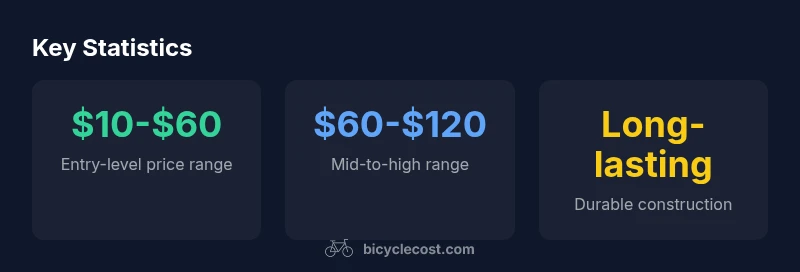
Typical bicycle pump prices range roughly from $10 to $120, depending on type and features. Most riders pay about $20–60 for a reliable entry-level floor or mini pump, while mid-range models with built-in gauges or higher durability often fall in the $60–90 range. CO2 inflators and digital gauges can push prices higher, typically $15–120.
Why price varies by pump type
Bicycle pumps come in several configurations, and the cost is driven by design, materials, and intended use. Understanding the core categories helps you estimate how much you should budget for a new pump. According to BicycleCost, price behavior in 2026 reflects a balance between reliability features and portability. The most common on-bike essentials are floor pumps for home maintenance and compact mini-pumps for on-the-road emergencies. The best approach is to match your pump to your riding routine and valve types (Presta vs Schrader).
Price ranges by category
Prices for bicycle pumps differ primarily by category: floor pumps, mini-pumps, CO2 inflators, and digital-gauge pumps. Floor pumps are typically the most economical option for regular use, often in the $20–$60 range for entry-level models with a built-in gauge. Mini-pumps, prized for portability, usually fall in the $10–$40 band. CO2 inflators are a mid-range option around $15–$80, depending on cartridge compatibility and the gauge. Digital-gauge pumps, which offer precise readouts, can push into the $60–$120 range. When budgeting, remember that higher price often signals greater durability, better seals, longer hoses, and more accurate gauges, but many mid-priced models deliver excellent value.
How features affect cost
The price you pay for a bicycle pump is often a proxy for durability and accuracy. A sturdy floor pump with a metal barrel, long hose, and a precise gauge will cost more than a basic plastic model. Features such as a flexible, swiveling hose, a wide stable base, a gauge with a clear display, and compatibility with both Presta and Schrader valves add to the price but reduce frustration during inflation. If you ride frequently or value consistent tire pressures, investing in a pump with a high-quality gauge and durable construction makes economic sense over time. In 2026, riders who prioritize accuracy typically gravitate toward mid-range to high-end models that balance cost with reliability.
Practical buying guidance
To pick the right pump within your budget, start by identifying your primary use: home maintenance, on-bike emergencies, or both. Check valve compatibility (Presta vs Schrader) and decide whether you want a gauge. Inspect the build quality: metal components tend to last longer than all-plastic parts, and a solid base reduces wobble. Compare a like-for-like feature set across brands to find the best value. If you frequently adjust tire pressures, a pump with a reliable gauge and a long hose will save time and effort on every ride.
Where to buy and when to shop
Prices for bicycle pumps vary by retailer and season. Online marketplaces often offer discounts with bundles or seasonal promotions, while brick-and-mortar shops provide hands-on testing. Look for sales around holidays or end-of-season clearance events to maximize value. Always check return policies and warranties, especially for higher-priced models with intricate gauges. In 2026, researching reviews and comparing several models within the same feature set helps ensure you don’t overspend for features you won’t use.
Maintenance and longevity
Properly caring for your pump extends its life and keeps it accurate. Rinse or wipe hoses and nozzles after exposure to dirt, avoid over-torquing fittings, and store the pump out of extreme heat. Replacing seals or O-rings during routine maintenance can prevent leaks that degrade performance. A well-maintained pump costs less over time and remains reliable for longer, which is a smarter financial move for avid cyclists.
Price ranges by pump type
| Pump Type | Typical Price Range | Pros | Cons |
|---|---|---|---|
| Floor pump | "$20-$60" | Reliable, gauge included | Bulky, heavier to carry |
| Mini-pump | "$10-$40" | Ultra-portable | Lower air per stroke, slower inflation |
| CO2 inflator | "$15-$80" | Fast inflation, compact | Cartridges cost and refill needed |
| Digital-gauge pump | "$60-$120" | Precise readings | Higher upfront cost |
People Also Ask
What are the main types of bicycle pumps and how do they differ in price?
The main types are floor pumps, mini-pumps, CO2 inflators, and digital gauge pumps. Floor pumps and mini-pumps cover most budgets, typically from $10 to $60 for entry-level models with a built-in gauge. CO2 inflators range from $15 to $80, depending on cartridge compatibility and features.
There are several pump types: floor, mini, CO2 inflators, and digital gauges. Prices usually range from $10 to $80, with higher-end models costing more.
Is a built-in gauge worth paying extra for?
A built-in gauge helps achieve accurate pressure quickly, especially on road tires. If you ride often or monitor pressures closely, it’s worth the extra cost. Otherwise, a pump without a gauge can suffice for casual use.
If you value quick, precise readings, a gauge is worth it; otherwise you can save by skipping it.
Do portable mini-pumps work well for road tires?
Mini-pumps are great for emergencies and quick top-offs, but inflating road tires to high pressures can be time-consuming. They’re best paired with a larger floor pump at home for regular use.
They’re handy on the go, but a full-size pump is nicer for regular, precise inflation.
How do I choose a pump that fits Presta and Schrader valves?
Most pumps support both Presta and Schrader valves. If not, look for a reversible core or use a valve adapter. Always verify compatibility before buying.
Make sure your pump fits your valve type, or use an adapter.
Are price differences mainly due to brand vs. features?
Brand and build quality influence price. Features like metal construction, longer hoses, and built-in gauges raise costs. Compare like-for-like features across brands to find the best value.
Feature quality and durability matter more than brand name for value.
“Choosing the right pump can save you time on every ride by ensuring quick, reliable inflation.”
Quick Summary
- Identify your needs before buying
- Choose a pump type matching your valve (Presta/Schrader)
- Budget for gauge quality and durability
- Compare features across pump categories
- Factor long-term maintenance costs into the total price