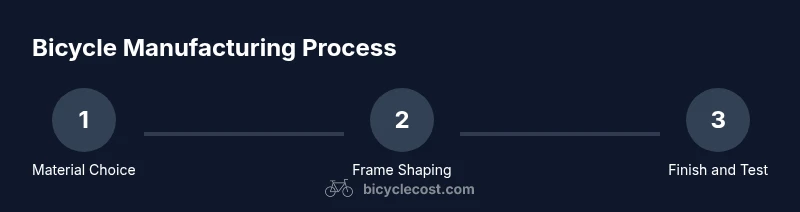
How a Bicycle Is Made: A Complete Guide
Explore the complete process of how a bicycle is made, from material choice and tubing to final assembly and safety testing. Great for curious riders and aspiring builders seeking practical, hands-on insight in 2026.


In this guide you’ll learn how a bicycle is made, from selecting materials and shaping tubes to welding, assembly, and final safety checks. You’ll see how frame geometry, finishes, and component selection influence ride quality and durability. This quick overview points you to a practical, step-by-step path you can follow or adapt for personal projects.
Core Materials and Frame Compatibility
According to BicycleCost, the journey from concept to a finished bicycle begins with selecting the right materials. The material choice—steel, aluminum, titanium, or carbon fiber—drives frame geometry, weight, stiffness, and long-term durability. The BicycleCost team found that entry-level models often favor aluminum for its balance of weight and cost, while higher-end bikes lean toward carbon for superior stiffness-to-weight ratios. Frame geometry then adapts to intended use—road, mountain, or gravel—while tubing diameters and wall thicknesses influence ride feel and fatigue life. Understanding materials helps riders predict performance and maintenance needs over years of use.
Shaping and Joining Tubes: Form, Fit, and Tolerances
Frames begin as raw tubes or sheets, which are cut to precise lengths and shaped into the main triangle and rear stays. Tubes may be bent, extruded, drawn, or hydroformed depending on the design. Jigs and fixtures hold components in exact alignment during joints, ensuring consistent geometry across units. Joints are formed by welding (steel and aluminum), brazing (traditional steel), or bonding (carbon fiber). Precise tolerances are critical: tiny deviations can affect steering, steering axis alignment, and overall ride quality. This stage sets the foundation for a bike that tracks true and feels balanced when ridden.
Geometry, Fit, and Rider Interaction: Turning Data Into Comfort
Geometry governs how a bike responds to rider input. Head angle, seat tube length, top tube length, and wheelbase combine with stack and reach measurements to define handling and fit. On mass-market frames, standardized sizes approximate rider ranges; custom builders tailor geometry to individual measurements and riding style. Proper fit reduces fatigue, improves power transfer, and lowers injury risk. Designers use CAD models and physical prototypes to test reach, standover height, and reach-to-peg relationships before committing to production.
Component Sourcing, Sub-assemblies, and On-Plant Flow
A bicycle is a complex assembly of drivetrain, braking, steering, wheels, and cockpit components. Manufacturers synchronize suppliers to ensure compatibility and quality, from chains and cassettes to bearings and hubs. On the line, frames move through sub-assembly bays for headsets, bottom brackets, and forks before final wheel mounting and drivetrain integration. Torque specs, alignment checks, and shim allowances keep assemblies within tolerance. Traceability systems track batches and serials for every finished unit, enabling recalls or quality investigations if needed.
Finishing, Coatings, and Durability: Protection That Performs
Finish work protects metal surfaces and project a bike’s aesthetic identity. Powder coating or wet paint layers are applied, cured, and clear-coated for gloss and abrasion resistance. Decals, logos, and color schemes go on after curing, followed by protective films in vulnerable areas (down tube, chain stays). Finishing steps impact corrosion resistance, UV stability, and cleaning ease. A robust finish not only looks good but also resists wear, weather, and road grit through years of riding. This phase also includes inspection for coating defects and adhesion quality.
Production Variants: From Mass Production to Custom Frames
Not all bicycles are made the same way. Mass production emphasizes repeatability and efficiency, leveraging standardized jigs, automated welding, and automated painting lines. Custom builders focus on fit, specific geometry, and unique finishes, often fabricating frames in small batches or one-offs. Across methods, strong quality systems—statistical process control, final inspections, and rider testing—help ensure each bike meets safety standards and customer expectations. The result is a spectrum of products, from affordable daily riders to bespoke performance machines.
Tools & Materials
- Tubing bender(Shaped tubes for precise diameters and contours)
- TIG or MIG welding equipment(Frame joints must be strong and uniform)
- Jigs and fixtures(Maintain exact geometry during assembly)
- Calipers and micrometers(Closely measure tube lengths and joints)
- Torque wrench(Apply correct torque to all fasteners)
- Paint spray booth or powder coating setup(Consistent finish and curing conditions)
- Sanding and surface prep tools(Ensure good adhesion of coatings)
- Reamer and thread-tapping tools(Critical for headset and bottom bracket threads)
- Safety gear (goggles, gloves, respirator)(Protect workers during cutting, welding, and painting)
- Workshop HVAC and ventilation(Maintain air quality and curing conditions)
- Quality control gauges and fixtures(Verify tolerances and alignment)
Steps
Estimated time: Total time: 4-8 hours
- 1
Define design and select materials
Start with a clear specification and CAD model. Choose frame material based on target weight, stiffness, and budget. Document tube sizes, joints, and finish requirements before cutting begins.
Tip: Create a bill of materials (BOM) and a tolerance map to avoid late-stage changes. - 2
Cut tubes and prepare pieces
Cut tubes to precise lengths according to the design. Deburr edges and inspect for defects before forming. Organize pieces by sequence to streamline assembly.
Tip: Double-check measurement references against the CAD model to prevent miscuts. - 3
Join joints and assemble frame
Weld, brazed, or bonded joints at designated joints using fixtures to keep geometry true. Assemble the main triangle, then align with the rear triangle using a jig. Verify no twist or misalignment occurs in the process.
Tip: Use fixture clamps to prevent heat distortion during welding. - 4
Check geometry and alignment
Measure head angle, seat tube angle, and wheelbase. Confirm consistent gaps and alignments across all joints. Adjust where necessary to meet tolerances before finishing.
Tip: Cross-check with multiple reference points (head tube, bottom bracket, dropout alignment). - 5
Finish sanding and apply coating
Prepare the frame surface with sequential sanding, then apply primer and base coat. Cure per product specifications and apply protective clear coat. Allow thorough curing before handling.
Tip: Keep a clean, dust-free environment to prevent inclusions in coatings. - 6
Assemble components and perform tests
Mount forks, wheels, drivetrain, and cockpit components. Torque fasteners to spec, adjust shifting and braking, and check for frame flex or unwanted noises. Conduct basic safety tests and wheel true checks.
Tip: Perform ride tests on a controlled surface to verify steering and braking response.
People Also Ask
What materials are commonly used for bicycle frames?
Most frames use steel, aluminum, titanium, or carbon fiber. Each material balances weight, stiffness, durability, and cost, influencing ride feel and long-term maintenance. Carbon is favored for lightness and stiffness at a premium, while aluminum offers good performance at a lower price.
Common frame materials include steel, aluminum, titanium, and carbon fiber. They differ in weight, stiffness, and cost, with carbon and aluminum popular for performance and affordability respectively.
How long does it take to manufacture a bicycle?
Manufacture time varies by production scale. Mass-produced bikes move quickly through automated lines, while custom frames take longer due to individualized fit and finishing. Planning and quality checks add to total lead time.
Timing depends on scale; mass production is faster, custom frames take longer due to fit and finish.
What is the difference between steel, aluminum, and carbon frames?
Steel frames are durable and affordable with good fatigue resistance but heavier. Aluminum frames are lighter and cost-effective but can feel stiffer. Carbon frames are very light and stiff, providing excellent ride quality but at a higher price.
Steel is durable and affordable, aluminum is light and cost-effective, carbon is ultra-light and ride-tuned but expensive.
Are bicycles handmade or mass-produced?
Most bikes are mass-produced on automated lines for consistency and efficiency. High-end frames may be handmade or built in small batches by skilled craftsmen offering customization and precise tuning.
Most bikes are mass-produced, but some high-end frames are handmade or made in small batches.
What safety checks are performed before a bike leaves the factory?
Quality checks cover geometry, wheel true, brake function, drivetrain indexing, and fastener torque. Final testing verifies that the assembled bike meets safety standards and rider expectations before shipment.
They verify geometry, wheel alignment, brakes, and torque, then perform a final safety check.
What maintenance should I expect after purchase?
Regular maintenance includes checking torque on bolts, inspecting tires and brakes, and lubricating moving parts. Proper setup and periodic safety checks help extend the bike’s life and keep performance consistent.
After buying, keep bolts tight, inspect brakes and tires, and lubricate moving parts regularly.
Watch Video
Quick Summary
- Understand material choices and their impact on ride quality
- Maintain strict geometry and tolerances for safe handling
- Use proper finishing to protect against wear and corrosion
- Different production scales require distinct quality controls