Can You Use Slime in Bicycle Tires? A Practical Guide
Discover if slime tire sealant can be used in bicycle tires, how it works, tubeless vs tubed compatibility, safety notes, and a practical step-by-step guide from BicycleCost.


Yes, you can use slime tire sealant in many bicycle tires, particularly tubeless setups and some tubed tires designed for sealant. Slime helps seal small punctures and slow leaks, reducing flats and downtime. However, not all tires or rims are compatible, and improper use can gum up valves or affect bead seating. Always follow the product instructions and verify compatibility with your wheel before riding.
What slime is and how it works
If you're asking can you use slime in bicycle tires, the short answer is yes in many setups, but with caveats. Slime is a brand-name tire sealant that lives inside the tire and seals punctures as air escapes. In practice, it coats the inner surface and plugs holes, reducing the severity of flats. The BicycleCost team found that slime sealants are popular for tubeless setups and some tubed designs, offering riders a quick, ride-safe option after minor punctures. According to BicycleCost, compatibility depends on tire type, sealant thickness, and the size of the puncture. It also matters how often you ride and climate conditions, since temperature can affect fluid viscosity. For safety and performance, you should understand how sealant behaves under different configurations and temperatures. Slime is designed to be compatible with many tubeless tires and with sealant-ready inner tubes, but not every rim or tire size is a perfect match. Some sealants can gum up valve cores or interfere with bead seating if applied incorrectly. Always read the label, check compatibility with your rim and tire, and replace sealant per product guidance. This article will walk you through the practicalities, considerations, and best practices to ride smarter with slime.
Compatibility and tire types
The feasibility of using slime depends heavily on whether your tire setup is tubeless, tubeless-ready, or traditional inner-tube. Slime works best in tubeless tires with airtight seals and a compatible rim bed. For tubed tires, there are dedicated formulations designed to be injected through the valve stem, but even then you should verify that the sealant won't degrade the tube or valve cores. According to BicycleCost, compatibility hinges on tubeless suitability and rim design. The BicycleCost analysis shows that sealants are commonly used by riders to reduce flats on tubeless setups while many riders with inner tubes report mixed results, especially if the tube isn't designed for sealant. If you have a standard clincher with a non-sealing inner tube, sealant can seal some small punctures but may require frequent topping up. Before buying, check your tire's labeling and the rim's compatibility chart, and look for guidance from the tire manufacturer. Only use products that are explicitly labeled as safe for your rim and tire combination. In short, whether slime belongs in your wheel depends on your tire type, rim design, and riding conditions.
Benefits and caveats for riders
Using slime can offer tangible benefits, especially for riders who frequently encounter small punctures on gravel roads or urban debris. The sealant provides an immediate seal that can let you ride several more minutes or even miles to reach a repair station, reducing downtime. It also helps maintain tire pressure by sealing slow leaks that would otherwise cause gradual deflation. However, the caveats matter: some rim systems and tires are not compatible with sealants, and over time sealant can accumulate inside rims or valves, making maintenance more complex. Slime may interfere with patching a puncture later because the sealant must dry and set before a reliable repair can be made. For tubed tires, adding sealant can help seal punctures around the valve stem or small holes, but large gashes or sidewall damage often still require tire replacement. The BicycleCost team recommends testing the product on a non-critical ride first and carrying a spare tube or patch kit as a backup. Regular inspection of sealant levels is important, since dried or gelled sealant can lose effectiveness. If you live in a dry climate, you may need to add sealant more frequently than in damp conditions. In sum, slime can reduce Flats in suitable setups, but it is not a universal fix and should be used with understanding of your equipment.
How to tell if slime is right for you
Determining whether slime is right for your bike starts with identifying your tire configuration and your typical riding environments. If you ride tubeless or tubeless-ready tires on compatible rims, slime is often a practical choice to minimize punctures from glass, thorns, or small punctures. If you ride traditional inner tubes, you may still use a sealant designed for tubes, but not all products are compatible with every tube and valve core. Climate and terrain matter: in hot weather, some sealants thin out, lowering seal efficiency, while in cold weather, they can thicken and slow sealing. Assess your risk of flats in your usual routes and consider your willingness to manage occasional sealant maintenance. As you decide, check with your tire manufacturer and rim manufacturer for guidance and warranty implications. The bottom line: slime works best when your tires are designed to work with sealants, and you follow the label directions and recommended replacement intervals. If you are unsure, consult a local bike shop or check official guidelines from bicycle manufacturers. The BicycleCost team emphasizes that compatibility and maintenance are key to a successful outcome.
Practical considerations for tubeless vs tubed tires
When deciding how to use slime, distinguish between tubeless and tubed tire setups. Tubeless tires typically accept sealant with a rim bed designed to seal bead seating, and slime can seal small punctures without a tube. For tubed tires, there are products marketed for tubes, but you must ensure your tire and tube are designed to work with sealant; otherwise, you risk clogging the valve core or compromising the seal. A tubeless setup often yields better puncture protection overall, but it can be more complex to install and maintain. For riders who prefer quick repairs on the road, slime can offer a pragmatic interim solution, provided you have the right tires and rims and you monitor the sealant levels. The BicycleCost team notes that the best approach is to pair sealant with compatible wheels and tires and to stock basic repair gear for larger punctures. Throughout, maintain consistent tire pressure and inspect the wheel for any signs of damage or aging. Compatibility and maintenance are the two biggest determinants of success with slime in bicycle tires.
Safety, maintenance, and disposal
Safety considerations include avoiding contact with eyes and skin, wearing gloves if you handle sealant, and ensuring you do not inhale fumes in confined spaces. Slime sealant should be stored upright and disposed of according to local guidelines once it has dried or reached its expiration date. Regular maintenance means checking sealant levels every few months and after long rides or extreme temperatures. If you notice a decrease in sealing performance or changes in tire behavior, inspect the tire and rim for cracks or deterioration and replace components as needed. For riders with allergy concerns, read the ingredient list and consider alternatives. From a maintenance perspective, keep a spare inner tube, patch kit, and inflator ready so you can respond quickly if a puncture occurs outside of a sealant’s effective life. The BicycleCost team emphasizes safety and proactive maintenance as the best path to reliable performance with slime.
Alternatives and best practices for puncture resilience
If slime isn’t the right fit for your setup, there are alternatives to minimize flats and reduce downtime. Consider tubeless tires with sealant as the primary approach for puncture protection, along with high-quality tires with reinforced sidewalls, tire plugs, and puncture-resistant tire liners. Regular tire inspection and proper inflation are crucial, as underinflation increases the risk of pinch flats and other damage. For riders who value simplicity, traditional inner tubes with high-quality patches and spare tubes remain a reliable option. Finally, keep a repair kit that includes tire levers, a patch kit, spare tubes, and a pump or CO2 inflator. The BicycleCost team recommends evaluating your riding style, terrain, and maintenance capacity to choose the best setup. A well-planned combination of compatibility, maintenance, and ready-to-respond tools will help you ride with fewer interruptions.
Quick-start checklist for trying slime on your ride
- Confirm tire type and rim compatibility with sealant use.
- Read the sealant label for recommended tire types and expiration date.
- Prepare tools: tire levers, valve core tool, rag, gloves, pump, and spare tube.
- Shake the bottle and prepare to inject the correct amount for your tire size.
- Reinstall the wheel, inflate to the recommended pressure, and spin to distribute the sealant.
- Monitor for leaks during the first few rides and recheck sealant level after a week.
- If any topic causes uncertainty, seek professional guidance.
Tools & Materials
- Sealant bottle (Slime or compatible)(Choose a product compatible with your tire setup (tubeless or tubed). Check expiration date.)
- Valve core remover tool(Needed for some tubed setups and certain tubeless configurations.)
- Tire levers(For removing the tire from the rim when needed.)
- Rags or paper towels(Clean spillages and wipe off excess sealant from rims and brakes.)
- Gloves(Protect hands from sealant contact.)
- Air pump or CO2 inflator(Re-inflate the tire to the recommended pressure after sealing.)
- Spare inner tube or patch kit(Carry as backup for larger punctures that sealant cannot fix.)
Steps
Estimated time: 60-90 minutes
- 1
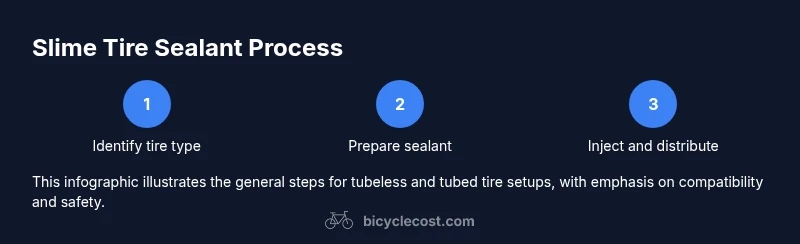
Identify tire type and rim compatibility
Remove the wheel and inspect whether the tire is tubeless, tubeless-ready, or tubed with a removable core. This determines where and how you add the sealant. Knowing the setup prevents damage and ensures correct application.
Tip: If unsure, consult the tire manufacturer’s guidelines before proceeding. - 2
Prepare the sealant and wheel
Shake the sealant bottle well and gather all tools. If you’re working with a tubed setup, remove the valve core if required by your product instructions. Have a clean work area to avoid contaminating the sealant with dirt.
Tip: Place a tray or old cloth under the work area to catch drips. - 3
Inject sealant into the tire
For tubeless systems, insert sealant through the valve stem or apply into the spoke hole, following product directions. For tubed setups, use the appropriate method to inject the sealant through the valve stem or directly into the tube if directed by the manufacturer.
Tip: Avoid overfilling; excess sealant can lead to sloshing and mess. - 4
Re-seat and inflate the tire
Re-seat the tire bead onto the rim and inflate to the recommended pressure. Check that the tire seat is even and there are no obvious gaps where sealant could leak.
Tip: If the bead pops off, reseat carefully and re-inflate gradually. - 5
Distribute sealant by rotating the wheel
Spin the wheel in both directions to help distribute the sealant evenly around the interior of the tire. This ensures better coverage of potential puncture points.
Tip: Take a short test ride to help sealant spread and settle. - 6
Inspect and clean up
Check for leaks, wipe away any excess sealant from the tire and rim, and reinstall the wheel onto the bike. Monitor for changes in pressure over the next few rides and top up if needed.
Tip: Label the date of application so you know when to refresh the sealant.
People Also Ask
Can slime sealant be used in tubed tires?
Yes, there are sealants designed for tubes, but always verify compatibility with your tube and valve. Some products are specifically formulated for tubed setups and can seal small punctures, while others are best left for tubeless systems.
Yes, there are tubed-sealant options, but check compatibility with your tube and valve before use.
Is slime safe for tubeless tires and rims?
Generally yes, slime works well in tubeless configurations with compatible rims. Ensure you use a sealant designed for tubeless systems and follow all rim manufacturer guidelines to avoid issues with bead seating or valve cores.
Generally yes for tubeless setups, as long as you follow the rim manufacturer's guidelines.
How often should I refresh slime in my tires?
Sealant life varies with climate and riding style. Check product guidelines and inspect sealant consistency every few months; replace when it thickens or dries out to maintain sealing effectiveness.
Check the sealant annually or when it thickens; replace as directed by the product.
Will slime affect tire pressure over time?
Sealant can slightly affect pressure readings if it leaks or dries, but on a well-sealed tubeless system, pressure should remain stable enough for normal riding. Regularly check tire pressure before rides.
It can affect pressure readings a bit if it leaks; check before every ride.
Can I ride immediately after adding slime?
Yes, you can ride after sealing, but allow a short distribution period by moving the bike gently and checking for leaks. If you notice any gurgling noises or bulges, stop and recheck.
You can ride after sealing, but give it a quick distribution test first.
What signs indicate I should replace slime?
If the sealant becomes dry, clumpy, or separates excessively, or if you experience frequent flats despite sealing, replace with fresh sealant. Also follow the manufacturer’s shelf life guidelines.
Replace it when it dries out or becomes clumpy, or if flats continue.
Watch Video
Quick Summary
- Know your tire setup before applying sealant
- Sealant helps with small punctures on compatible tires
- Follow manufacturer guidance for storage and disposal
- Maintain sealant levels and monitor performance
- Have backup puncture repair options ready