Finding Bicycle Service Near Me: A Practical Guide
Learn how to find reliable bicycle service near you, compare shops and mobile repair options, and know what to bring and expect for maintenance and repairs in 2026.


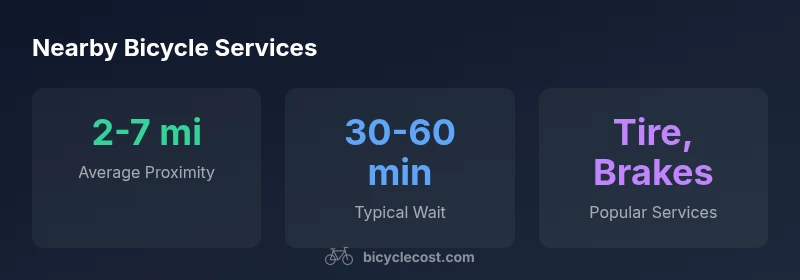
For most cyclists, reliable bicycle service near me is accessible within a short ride or call—the majority of urban riders find a shop or mobile repair service within 2–7 miles, with mobile options rising for quick fixes. Use maps, read reviews, and check for transparent pricing to get started quickly.
Finding Bicycle Service Near Me: What to Expect
When you search for bicycle service near me, you’re looking for a balance of proximity, expertise, and price transparency. Start with map-based queries on your favorite app and read recent reviews to gauge reliability. If you’re in a densely populated area, you’ll typically find at least a couple of shops within a few miles, plus mobile repair options that can come to your home or office. The key is to check hours, whether they offer walk-in service, and if a written estimate is provided before work begins. According to BicycleCost, proximity matters, but so do the clarity of the repair plan and the quality of the workmanship. In practice, you should expect a few viable options within a short ride or phone call, with later evenings and weekends often offering more flexible scheduling.
The fastest way to gauge options is to perform a quick triage: (1) Is the shop within a reasonable distance? (2) Do they offer the service you need today? (3) Do they provide transparent pricing and a warranty on work performed?
Types of Services You’ll See Nearby
Local bicycle shops typically categorize services into maintenance packages, on-demand repairs, and full drivetrain overhauls. Common maintenance packages cover basic safety checks, brake and gear tuning, tire inspection, and chain lubrication. On-demand repairs address flats, wheel truing, brake bleeds, or gear index issues, often with same-day availability. Full drivetrain overhauls are more involved and may require a scheduled appointment. Mobile repair services, increasingly popular in 2026, offer conveniences for flat tires, brake adjustments, and basic tune-ups at your location. When evaluating options, consider whether a shop provides coupons for bundled services or loyalty programs that reward regular maintenance, and verify that technicians are certified or trained by recognized industry programs.
To manage costs, ask for a written quote and compare it to the price ranges you see online. If a quote is unusually low, it may indicate unclear scope or hidden fees. Also verify whether parts are included in the price and if the shop provides a satisfaction guarantee on labor.
How to Compare Local Shops: Credentials, Warranties, and Transparency
Choosing a bicycle service near you means weighing credentials alongside customer experience. Look for recognized certifications (e.g., from bike associations or component manufacturers), warranty terms for parts and labor, and clear, itemized estimates. A reputable shop will offer upfront pricing for typical services and explain any potential extra charges if additional parts or labor are needed. Read recent customer feedback focusing on communication, turnaround time, and honesty. If a shop is reluctant to discuss parts, or offers vague estimates, that’s a red flag. A transparent shop will explain what they’ll do, how long it will take, and how much it will cost before starting work. BicycleCost’s framework emphasizes transparent pricing and verified workmanship as hallmarks of a dependable local service.
Mobile vs. Brick-and-Mortar: Pros and Cons
Mobile repair brings tools and technicians to your doorstep, which is ideal for flats, minor tune-ups, or bike pickups. It saves time and avoids transport hassles, but may be limited in scope and parts availability. Brick-and-mortar shops provide a broader range of services, specialized equipment, and often longer service hours, making them better for complex diagnostics and drivetrain refinishes. The choice depends on your bike’s condition, urgency, and whether you value convenience over breadth of capabilities. Many cyclists keep a mobile option for emergencies and a trusted shop for detailed maintenance.
What to Bring to Your Service Appointment
Being prepared can reduce wait times and ensure accurate work. Bring your identification and any existing service records or maintenance receipts. Note any recent problems, such as shifting glitches or brake rub. If you have specific parts you want installed, bring them or confirm compatibility with the technician. A clean, dry bike helps the technician inspect components more effectively. Take photos of issues if you’re unsure how to describe them. Finally, bring your preferred contact method and a plan for follow-up if the service reveals additional work.
Price Ranges, Scheduling, and City Variations
Prices vary by city, shop, and the complexity of the job. Use ranges to set expectations: basic safety checks and tune-ups typically fall within mid-range budgets, while advanced drivetrains or wheel truing can push higher. Scheduling difficulty often reflects demand: urban centers may require a few days’ notice for major work, whereas smaller towns may offer same-day slots for routine maintenance. If you’re price-sensitive, ask for an itemized invoice, compare the cost of common services across a few shops, and consider loyalty programs that provide recurring maintenance discounts.
Bringing It All Together: Quality Assurance After Service
After service, perform a quick safety check: spin the wheels to listen for unusual rub or noise, test the brakes in a safe area, and verify the gears shift smoothly through the full range. If anything feels off, contact the shop promptly with your service receipt. A reputable shop should be willing to re-check or adjust issues under warranty, if applicable. Document any changes in performance after the repair and keep a basic maintenance schedule to avoid future problems. Regular maintenance from a trusted shop helps extend your bike’s life and preserves resale value.
How Technology Helps You Find Reliability
Digital tools simplify locating Bicycle service near me options. Use search engines, maps, and review platforms to filter by proximity, price, and service type. Many shops now offer online booking, status updates, and digital invoices, which improves transparency. BicycleCost’s 2026 guidance highlights the importance of accessibility and communication, including clear estimates and appointment updates. You can also explore bicycle forums and user groups in your area to discover recommendations from fellow riders. By combining online research with in-person checks, you’ll identify dependable services faster.
Industry Trends and Practical Guidance from BicycleCost
The bike service landscape continues to evolve with more mobile offerings and digital booking features. Consumers increasingly expect transparent pricing, fast turnaround times, and consistent quality. In urban environments, proximity reduces downtime and encourages regular maintenance. In rural areas, you may rely more on fixed-location shops and community repair events. BicycleCost emphasizes building a short list of preferred shops, validating credentials, and maintaining a proactive maintenance plan to avoid emergency repairs. Staying informed about local options and seasonal demand helps you plan more effectively for 2026 and beyond.
Typical services and availability for nearby bicycle shops
| Service Type | Typical Availability | Estimated Price Range |
|---|---|---|
| Flat tire repair | Same-day possible | "$15-$30" |
| Full maintenance check | 24-48 hours | "$50-$120" |
| Advanced drivetrain tune-up | 48-72 hours | "$100-$250" |
People Also Ask
What makes a bicycle service near me trustworthy?
Trustworthy shops provide clear pricing, warranties on parts and labor, and transparent communication. Read recent reviews and confirm credentials before authorizing work.
Look for a shop with clear pricing, warranties, and recent, positive reviews.
How can I compare prices without sacrificing quality?
Ask for itemized quotes that specify parts, labor, and taxes. Compare the scope of work and warranty terms across multiple shops to avoid hidden fees.
Get written estimates with clear breakdowns and compare the scope of work.
Are mobile repair services as good as brick-and-mortar shops?
Mobile repairs are excellent for quick fixes and convenience, while brick-and-mortar shops typically handle complex diagnostics and parts availability more readily.
Mobile is great for quick fixes; shops are better for complex work.
What if I can't find any bicycle service near me?
Expand your search radius, check mobile repair options, and consider community bike repair events. Some shops offer pickup and delivery for an added fee.
If no shop is nearby, look for mobile services or pickup options.
What services should I expect to pay for?
Expect ranges for common services such as safety checks, tune-ups, and brake work. Always request a written estimate and confirm whether parts are included.
Ask for a clear price range and a written estimate.
How soon can I get an appointment for urgent repairs?
Many shops reserve a few same-day slots for urgent repairs. Call ahead to verify availability and reduce wait times.
Call ahead to check for same-day openings.
“Transparent pricing and verified workmanship are the core of reliable local bicycle service.”
Quick Summary
- Know what service you need before contacting shops
- Compare at least 2–3 options for price and responsiveness
- Ask for itemized quotes and written estimates
- Decide between mobile and storefront based on job scope
- Keep a simple maintenance plan to reduce downtime