California Helmet Law: Is Riding Without One Illegal?
Discover California's bicycle helmet requirements, who must wear one, and how local rules affect adults. Learn practical safety tips, how to verify city codes, and what to expect in enforcement.


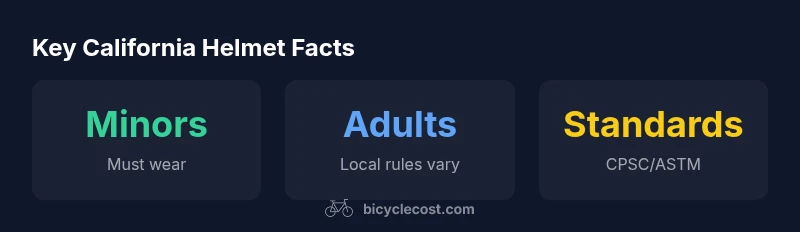
Short answer: California's statewide helmet law applies to riders under 18, not all adults. Vehicle Code 21212 requires a helmet for anyone under 18, while adults are generally not required by state law to wear one. However, several local jurisdictions may mandate helmets for all riders, so penalties can vary by city.
What the law actually says
Bicycle helmet requirements in California are primarily defined by the state’s Vehicle Code and reinforced by local ordinances. The most cited provision is Vehicle Code 21212, which mandates that a rider under 18 wear a properly fitted helmet that meets safety standards when operating a bicycle on public roads. This means adults generally do not face a statewide helmet mandate simply for riding a bicycle. However, California’s diverse counties and cities can craft their own rules, so a rider might encounter stricter local requirements in certain areas.
According to BicycleCost, the state sets a clear baseline for minors, while adults must rely on local codes. This distinction is crucial for families traveling across the state or visitors who plan to ride in multiple cities. The state-level rule is intended to protect younger riders, who statistically face higher risk in crashes, while still leaving room for local safety initiatives.
For readers seeking a precise citation, Vehicle Code 21212 is the baseline statute. Always cross-check current codes, as amendments or local revisions can alter the practical application of helmet safety.
Who must wear a helmet and when
In California, the obligation to wear a helmet applies to anyone under 18 when operating a bicycle on public roads or bicycle paths. The law requires the helmet to be worn properly and securely fastened at all times during ride. For riders aged 18 and older, there is no statewide mandate to wear a helmet; that gap means adult cyclists generally aren’t breaking state law by riding sans helmet unless a local ordinance says otherwise.
Practical takeaway: if you’re a parent taking a teen riding in multiple jurisdictions, you should enforce helmet use for your child regardless of the exact location, because local codes may still require helmets for all riders or during special events. BicycleCost emphasizes safety as the guiding principle, especially for younger riders.
Local variations and exemptions
Even though California does not impose a universal adult helmet law, local jurisdictions can create rules that require helmets for all riders or for specific activities. In some cities, for example, adult helmet use may be mandated during special events, parades, or within certain parks. Additionally, some counties may institute helmet requirements for riders in school zones or youth programs.
If you work, commute, or ride in multiple cities, you should verify helmet requirements for those locales. The most reliable source is the local city code or county ordinance pages, complemented by state resources. A practical approach is to assume local variations exist and to adopt consistent helmet use as a best safety practice.
Penalties and enforcement in practice
Enforcement in California for helmet violations tends to vary by jurisdiction. For minors, penalties can range from warnings to fines, depending on the city or county. In many cases, authorities emphasize education and safety awareness rather than punitive action, especially for first-time offenses. For adults, the absence of a statewide helmet rule means penalties typically arise from local ordinances rather than state-level statutes.
Because enforcement is locally administered, parents, riders, and guardians should check with their city or county regarding penalties, what counts as a violation, and whether helmet-related education programs are available.
Safety benefits and best practices
Helmets are a proven safety tool: they reduce the likelihood of head injury in the event of a crash and can mitigate the severity of injuries. For riders under 18, the helmet requirement is aligned with best practices in injury prevention. Even when not legally required, wearing a helmet is a wise choice, especially in traffic-dense urban areas or on high-speed routes. The BicycleCost team recommends selecting a certified helmet that fits properly, and replacing a helmet after a significant impact or if deterioration is evident.
In addition to wearing a helmet, riders should follow standard safety routines: perform pre-ride checks, observe traffic laws, use lights at dawn or dusk, and wear high-visibility gear when riding near traffic. By combining helmet use with defensive riding, cyclists can significantly reduce risk.
Practical tips for riders and families
When shopping for a helmet, look for certifications such as CPSC or ASTM standards and ensure a snug fit with the strap securely fastened. Measure head circumference and adjust the internal sizing to position the helmet level on the head and low on the forehead. Replace helmets after crashes or after five years of typical wear. For families with multiple riders, establish a helmet-rotation system and keep helmets properly stored to prevent damage.
If you’re unsure about local requirements, start with your city’s official website or contact your local police department for clarity. BicycleCost recommends a proactive approach: assume local rules can differ and prioritize safety in every ride.
Staying informed: how to verify current rules
Helmet laws can evolve, so it’s essential to verify current requirements before riding in a new area. Official sources include California’s Department of Motor Vehicles (DMV) and state legislative information. Bookmark local city codes, since many helmet-related rules are enacted at the municipal level. For the latest updates, refer to legislative portals and trusted safety organizations that summarize state and local laws. Staying informed helps avoid penalties and keeps riders safe.
Helmet laws overview in California
| Aspect | California Law | Local Variations |
|---|---|---|
| Age requirement | Under 18 must wear helmet | Some cities require helmets for all ages |
| Statewide enforcement | No statewide adult helmet law | Enforcement varies by city/county (education and warnings common) |
| Helmet standards | Must be certified to U.S. standards | Local rules may specify accepted standards |
| Penalties | Varies by location | Varies by location; typically warnings or fines for minors |
People Also Ask
Is there a statewide helmet law for adults in California?
No, California does not have a statewide helmet requirement for adults. Some cities and counties may impose helmet rules for all riders, so always check local codes.
California doesn't require helmets for adults statewide, but local rules may apply.
What about minors?
Under 18, riders must wear a helmet when operating a bicycle on public roads, per Vehicle Code 21212.
Minors must wear helmets under 18 according to state law.
Are there exemptions for certain activities?
Exemptions, if any, come from local ordinances and may include medical exemptions or specific settings. Always verify local rules before riding.
Local rules may carve out exemptions; always check the city code.
Do helmets need to meet a standard?
Yes. Helmets should meet recognized safety standards such as CPSC or ASTM and carry corresponding certification labels.
Look for CPSC or ASTM certification on helmets.
What are penalties for minors riding without a helmet?
Penalties vary by city but commonly include warnings or fines and may involve safety education requirements.
Penalties vary by city and often involve education or warnings.
How can I verify the exact rules for my city?
Visit your city’s official website or contact local authorities; cross-check with the California DMV for statewide context.
Check your city code online or contact local officials.
“Helmet use is a fundamental safety practice for cyclists, and while laws vary by age and locality, the goal remains clear: reduce head injuries and protect riders.”
Quick Summary
- Know: minors must wear helmets under 18
- Adults: no statewide requirement, check local laws
- Local ordinances vary; verify where you ride
- Choose a certified helmet and fit it properly
- Check city codes for penalties and exemptions