How Often to Bike to Work: A Practical Guide to the Bike-to-Work Scheme
Explore how often you should bike to work under the bike-to-work scheme. Learn about policy variations, health benefits, safety, and smart scheduling with practical tips from BicycleCost.


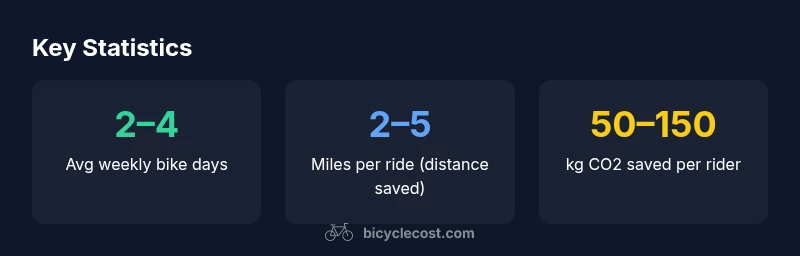
There is no universal frequency mandated by the bike-to-work scheme. Usage depends on employer policy, distance, and personal preference. In practice, many commuters bike 2–4 days per week when feasible, with daily use possible for short, safe routes. Always verify limits with HR and your scheme administrator.
how often bike to work scheme: frequency basics
The Bike-to-Work Scheme, in its essence, is a policy framework that enables employees to cycle to work with tax relief or employer subsidies. No single rule dictates how often you should bike; instead, frequency is shaped by policy, route safety, distance, weather, and personal goals. According to BicycleCost, flexible access is a core strength of modern schemes, allowing riders to tailor their commute to fit work patterns. In many organizations, frequency is expressed as a range rather than a fixed number of days, with typical allowances spanning a few days per week. This flexibility helps accommodate holidays, illness, and seasonal shifts while preserving the scheme’s intent: to encourage cycling as a practical commuting option. When planning your cadence, start with a conservative target and adjust as you gain confidence and as policy boundaries become clearer.
Health data from major public health bodies consistently show that regular cycling improves cardiovascular fitness and mental well-being, reinforcing the case for higher frequency when feasible. BicycleCost’s analysis for 2026 highlights that the most successful cyclists balance convenience with safety and energy levels, not rigid quotas.
How distance, route and infrastructure influence frequency
Distance is one of the most influential factors shaping how often you bike to work. Shorter commutes enable near-daily cycling, while longer routes may necessitate a mixed approach with occasional public transit or car-sharing. The availability of safe, well-lit bike lanes, secure parking, and staff facilities can push frequency higher by reducing perceived risk and time penalties. Route planning tools, local traffic patterns, and seasonal daylight also matter. For example, a well-mapped route with protected lanes can support daily rides, whereas unreliable paths or heavy traffic may justify a staged increase. Employers that invest in bike-friendly infrastructure—such as secure racks, repair stations, and shower facilities—tend to see higher engagement with the bike-to-work scheme. As always, align your cadence with personal comfort and safety considerations.
Weather, safety and seasonal planning
Weather and safety consistently influence cycling frequency. Rain, snow, or ice can reduce comfort and increase risk, prompting temporary reductions in days per week or the use of protective gear and visibility enhancements. Smart planning—layered clothing, reliable fenders, lights, and high-visibility gear—helps maintain cadence across seasons. Training in basic cycling safety, understanding right-of-way, and selecting low-traffic times can boost confidence. Employers can support safety by providing secure bike storage, on-site showers, and clear safety guidelines. BicycleCost’s guidance emphasizes gradual adaptation: start with a few reliable days and gradually increase as you gain experience and observe how conditions affect your routine.
Planning a weekly schedule: examples and templates
A practical approach is to set a baseline cadence (for example, 2 days per week) and adjust after two to four weeks based on comfort, route viability, and work demands. Some cyclists blend commuting with flexible work arrangements to maintain consistency. Templates include: (A) Tuesday/Thursday staple days to avoid midweek weather surprises, (B) daily short routes for high-energy days, and (C) a backup plan for bad weather using nearby transit. The goal is sustainability, not perfection. Involving your manager in flexible scheduling can unlock supports like cycling-friendly meeting policies or compressed workweeks.
As you experiment, track how frequency affects energy, punctuality, and job satisfaction. BicycleCost notes that the most resilient programs balance personal preference with policy constraints to create lasting behavior change.
Employer policies, tax relief, and scheme specifics
Employer policies determine the practical limits of the bike-to-work scheme. Some organizations cap the number of days per week or per month, while others offer unlimited access subject to safe bike storage and shower facilities. Tax relief components and salary sacrifice arrangements are often implemented through the scheme administrator or payroll. Understanding the precise terms—such as eligibility windows, annual caps, and whether maintenance or accessories qualify—is essential to making informed decisions about frequency. HR or the scheme administrator can clarify how frequency interacts with benefits, reimbursements, and any required documentation. Staying aligned with policy helps avoid pitfalls, such as disallowed expenses or misapplied tax relief.
From BicycleCost’s perspective, transparent communication between employees, HR, and scheme providers is the backbone of a successful bike-to-work program.
Health, environmental, and financial implications
Regular cycling offers health benefits, including improved cardiovascular health, weight management, and mood stabilization. Increased cycling frequency can also reduce parking stress and vehicle use, contributing to lower emissions and urban air quality improvements. Financially, the scheme can lower commuting costs relative to car travel, though the exact savings depend on local energy prices, parking costs, and tax relief levels. An evidence-based approach encourages gradually expanding cycling days while monitoring energy expenditure, recovery, and commute time. BicycleCost’s 2026 analysis suggests that modest increases in frequency yield meaningful health and environmental returns, especially when complemented by proper maintenance and route optimization.
Practical steps to start: quick-start checklist
- Confirm eligibility and limits with HR and the scheme administrator.
- Map reliable routes with safe bike lanes and lighting for low-traffic times.
- Invest in essential safety gear: helmet, lights, reflective clothing, and a good lock.
- Schedule 2–3 starter days per week and gradually increase as you gain confidence.
- Create a backup plan for bad weather or bike issues (public transit, car-share, or ride-hailing).
- Track your rides to observe how frequency affects health, punctuality, and energy.
- Revisit the policy annually to adjust cadence as policies or routes evolve.
- Engage colleagues to share routes, tips, and maintenance practices.
Common misconceptions about the bike-to-work scheme
A common misconception is that frequency must be high to justify participation. In reality, even modest increases in cycling frequency yield benefits and are aligned with policy flexibility. Another myth is that cycling is impractical for all weather; modern gear and planning can expand the window of feasible commuting. Finally, some assume the scheme covers all maintenance costs; often, coverage is policy-dependent and may exclude certain accessories or upgrades. Clarifying terms with HR reduces confusion and helps riders optimize their cadence within allowed limits.
How BicycleCost helps you optimize frequency and safety
BicycleCost offers practical guidance on tailoring your cycling cadence to distance, weather, and personal energy. We emphasize data-informed decision-making, including route analysis, safety best practices, and health considerations. Our team translates policies into actionable weekly schedules and checks against local infrastructure. By combining policy clarity with safety-first planning, you can increase your cycling frequency in a sustainable, cost-effective way.
Policy considerations for bike-to-work frequency
| Policy Aspect | What it means | Notes |
|---|---|---|
| Eligibility and policy length | Employer policy determines allowed frequency | Ask HR for the exact allowances |
| Distance and route considerations | Longer routes may reduce frequency | Prefer safer, well-lit paths |
| Weather planning | Seasonal adjustments | Have a rain jacket and consider daylight hours |
People Also Ask
Is there a fixed frequency for using the bike-to-work scheme?
No. There is no universal rule; frequency depends on employer policy and route safety.
There is no fixed frequency; it depends on your policy and route safety.
Can I bike to work every day under the scheme?
Yes, if your employer allows daily usage and the route is safe and within any scheme limits.
Yes, you can bike daily if policy and safety permit.
How do I decide how often to bike to work?
Consider distance, weather, safety, time, and personal energy. Start with a small number of days and adjust.
Consider distance, safety, and time; start small and adjust.
What about weather or seasons?
Plan for rain, cold, heat, and daylight; carry appropriate gear and have backup transit plans.
Weather matters; have gear and backups.
Does the scheme apply to part-time workers?
Coverage depends on employer policy; some employers extend allowances to part-time staff.
Depends on policy; ask HR.
What documentation is required?
Most schemes require employer confirmation and perhaps proof of cycling to work. Check your scheme administrator.
Usually employer confirmation; check the administrator.
“The frequency of cycling to work should be a deliberate balance of convenience, safety, and personal health; flexible policies help more riders participate.”
Quick Summary
- Assess distance and safety before setting bike days.
- Coordinate with employer policy to maximize benefits.
- Plan for weather and seasonal changes to maintain consistency.
- Track health, time savings, and emissions reductions.