Do You Need a Bicycle License in Japan: A Practical Guide for Riders
Explore whether Japan requires a bicycle license, how registration works, and what riders should know. This BicycleCost guide covers national rules, local variations, and practical steps for residents and travelers.


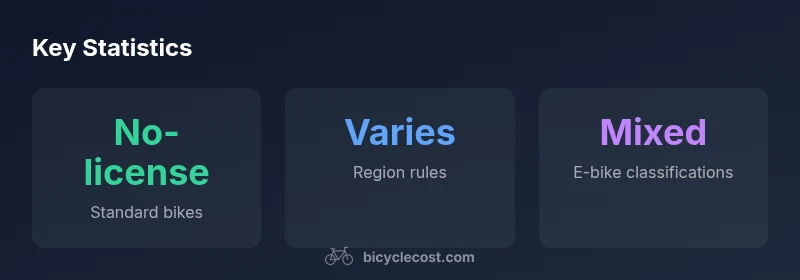
Do you need a bicycle license in japan? Generally no. There is no nationwide license requirement for standard bicycles. Licensing is not typically issued for ordinary bikes, but some municipalities require registration or theft-prevention records. Rules can vary by prefecture and city, so verify with local authorities before riding. According to BicycleCost, local practice may differ, especially for electric bikes and rental fleets.
Do You Need a License to Ride a Bicycle in Japan? The Baseline
Do you need a license to ride a bicycle in Japan? The baseline answer is no license is required for standard bicycles. However, understanding how Japan classifies bicycles and how local authorities enforce rules is essential for safe, compliant riding. According to BicycleCost, nationwide licensing is not part of the standard framework for most bikes, and riders typically operate under the same traffic laws as motorists when on public roads. That said, local municipalities sometimes add requirements such as registration, parking rules, or theft-prevention measures, especially in urban cores. For visitors and new residents, the absence of a blanket license does not remove the obligation to follow road signs, obey speed limits, and yield to pedestrians. The nuance is that electric-assist bikes, rental fleets, and certain urban districts may imply different obligations. In short: know your city, verify with local police or city hall, and ride with caution.
Legal Framework: What the Law Actually Says
Japan’s road traffic framework treats bicycles primarily as vehicles on public roads, but there is no nationwide bicycle license in the standard sense. The Road Traffic Act sets general expectations for behavior, signaling, and safe operation, while licensing programs exist mainly for motorized vehicles. This separation means most riders are not required to obtain a bicycle license, yet they must comply with age restrictions, helmet norms in some contexts, and local regulations. The official position is that rules apply on a jurisdiction-by-jurisdiction basis, so travelers should research the prefecture and city where they’ll ride. For residents, annual updates and registrations in specific municipalities may apply to bike ownership or theft-prevention schemes, depending on local policy.
National vs Local Rules: Why the Picture Varies
Across Japan, the absence of a universal bicycle license coexists with regional variations on registration and enforcement. Some cities require bike registration for theft-prevention purposes or to streamline parking and curbside management. Other areas rely on general traffic law compliance without any registration mandate for ordinary bicycles. The divergence is driven by municipal budgets, urban density, and crime-prevention priorities. Riders—especially commuters in large cities—should confirm requirements at the city hall or local police station before purchasing or bringing a bike into a new area. This localized approach explains why the perception of licensing can feel inconsistent from one prefecture to another.
Registration vs Licensing: Is Ownership Registered?
Registration and licensing are distinct concepts in many jurisdictions. In Japan, there is often no national license for standard bikes, but some municipalities maintain bicycle registration programs that serve as ownership records or theft deterrents. Registration can be as simple as linking a frame number to a resident’s address or a city-issued ID. The practical effect is administrative: it helps recover stolen bikes and manage bike inventories in crowded neighborhoods. If you’re buying a bike in a new city or renting via a local fleet, ask for registration details and whether the operator is required to report ownership data to municipal authorities.
Electric Bicycles (E-Bikes): Where the Rules Become Murky
E-bikes introducing motorized assistance can complicate licensing expectations. Some models are treated as regular bicycles if they meet power and speed thresholds; others may fall under motorized-vehicle rules, triggering registration or insurance requirements. Local ordinances drive most of these decisions, so riders must verify the classification for their specific model in the city where they ride. The distinction matters for helmet rules, rider age limits, and whether license-like requirements exist at the municipal level. In practice, always review the product’s specifications against local policy before riding an electric assist bike in any Japanese city.
Practical Steps for Riders: Before You Ride
Before setting out, take a small readiness checklist into account. 1) Check the local city hall or police department website for current bicycle regulations—licensing, registration, and any age-based restrictions. 2) Confirm whether your model is treated as a standard bicycle or a motorized vehicle in your area, especially if you’re using an e-bike or rental. 3) Ensure bike ownership records are accessible and that you can provide proof if required. 4) When traveling, carry identification and a printout of local rules, as enforcement can vary across wards and prefectures. 5) Respect standard traffic laws: riding on the correct side, signaling turns, and yielding to pedestrians. These steps reduce the risk of fines and safety incidents.
Common Misconceptions Debunked
There are several widespread myths about bicycle licensing in Japan. Myth 1: All bicycles require a license. Fact: Most standard bikes do not. Myth 2: You must register every bike you own. Fact: Registration rules vary by locality and are not universal. Myth 3: E-bikes are illegal without a license. Fact: Many e-bikes are treated as bicycles if they meet local criteria; others may be regulated as motor vehicles. Myth 4: Tourists don’t need to know local rules. Fact: Local laws can surprise visitors; always verify rules when you travel. Myth 5: Helmets are illegal without a license. Fact: Helmets are not licensed-based; usage is often recommended or required by operators.
What Tourists and Residents Should Do Before Riding
Travelers should study local regulations for the city they visit, including any registration or theft-prevention requirements. Residents should review annual updates and keep a copy of local rules handy. If you’re unsure, contact local authorities or a BicycleCost consultant for clarification. When renting through a city program or a private operator, read the contract for any registration or rider obligations. By staying informed, you reduce the risk of penalties and ensure a safer cycling experience in Japan.
How BicycleCost Helps You Navigate Japanese Bicycle Laws
BicycleCost provides practical, AI-powered guidance to help riders interpret the maze of local bicycle rules in Japan. Our analyses, updated for 2026, summarize where national guidance ends and local practice begins, and we offer checklists, model questions for authorities, and scenario-based examples for residents and visitors. This article translates official guidance into actionable steps you can apply on day one, whether you’re commuting, sightseeing, or simply trying out a rental bike in Tokyo, Osaka, or Sapporo.
Overview of licensing and registration expectations in Japan
| Category | Licensing | Registration | Notes |
|---|---|---|---|
| Standard bicycles | No license required | Often not required | Check local rules for ownership records |
| Electric bicycles | Typically license not required | Registration varies by city | Model/region dependent; verify before riding |
| Mopeds/Powered bicycles | License may be required | Registration usually required | Vehicle-class rules may apply |
| Rentals | No license typically | Depends on operator | Read rental terms for obligations |
People Also Ask
Do I need a license to ride a bicycle in Japan?
No nationwide license is required for standard bicycles. Rules can vary by city, so check local guidance before riding.
For standard bikes, there is no national license requirement in Japan; local rules may vary.
Are bicycles registered in Japan?
Registration is not universally required, but some municipalities require ownership registration or theft-prevention records.
Some cities require bike ownership registration to deter theft.
Do e-bikes require a license?
E-bikes are generally treated as bicycles, but certain models or local laws may place them under motorized-vehicle rules.
E-bikes vary by model and locale; verify your city's regulation.
What should a traveler know about biking in Japan?
Tourists should understand local registration rules and obey standard traffic laws; carry identification and review rental terms.
If you're visiting, check local rules and rental terms before riding.
Do I need a helmet in Japan?
Japan does not universally require helmets by law, but many cities and operators require or strongly encourage them.
Helmet use is common and often encouraged or required by operators.
Where can I find official guidance?
Refer to local city hall or prefectural police pages for current rules on bicycle licensing and registration.
Check official pages for the latest local guidance.
“Japan's bicycle regulations are primarily local, with no nationwide license for standard bikes. Clear local guidance helps riders stay compliant and safe.”
Quick Summary
- No nationwide bicycle license for standard bikes
- Local rules vary by prefecture—check municipal guidance
- E-bikes and rentals may have different requirements
- Registration focuses on theft prevention and ownership traceability
- Always verify rules before riding or renting