What Bikes Are 125cc: A Practical Rider Guide
Explore what bikes are 125cc, how they perform, licensing needs, and maintenance basics. This BicycleCost guide helps riders choose the right 125cc motorcycle for city commuting and light touring.


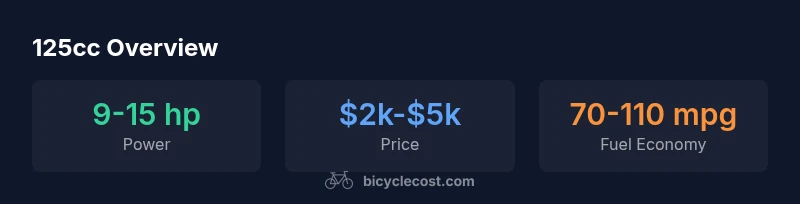
125cc bikes describe motorcycles and motorized bicycles with engines around 125 cubic centimeters displacement. They balance light weight and sufficient power for urban riding and open-road errands, with typical output in the 9–15 horsepower range depending on tuning. Licensing, insurance, and age requirements vary by country and region, so local rules matter.
What bikes are 125cc?
125cc bikes refer to motorcycles whose engines displace about 125 cubic centimeters. This class is widely used for commuter bikes, beginner-friendly machines, and light sport models. The displacement alone doesn't guarantee performance; factors like engine tuning, weight, gearing, and aerodynamics shape real-world feel. In many regions, 125cc models strike a balance between accessibility and practicality, making them popular for daily errands, weekend rides, and training. When you see a spec sheet labeled 125cc, it signals a compact engine designed for efficient city travel and predictable maintenance. This category often appeals to new riders who want manageable power without sacrificing highway capability in jurisdictions that permit it.
While the exact models vary by market, the underlying package is similar: compact engine, light chassis, and a price point that makes ownership approachable. In practice, the best 125cc bikes offer forgiving handling, predictable throttle response, and an inclusive service network. Reading reviews and comparing maintenance data can help you distinguish between commuter-leaning and sport-leaning options within this displacement class.
Engine technology and performance basics
Most 125cc bikes use four-stroke, single‑cylinder engines designed for reliability and efficiency rather than absolute top-end speed. This configuration emphasizes smooth torque delivery at low and mid RPM, which translates into easy city riding and confident accelleration on gentle hills. Modern models can be carbureted or fuel-injected, with transmission choices ranging from traditional manuals to semi-automatic setups that reduce clutch work for learners. Weight, aerodynamics, and gearing play large roles in practical performance: two bikes with identical displacement can feel noticeably different in acceleration, highway speed, and fuel economy. Expect modest peak power, but also excellent fuel efficiency and lower maintenance costs compared with larger displacements.
In all cases, check comfort factors like seat height and legroom, since those influence daily usability as much as engine output does.
Licensing and legal considerations
Regulatory requirements for 125cc bikes vary widely. In some regions, a dedicated licensing category restricts power and speed, while in others you may obtain a motorcycle endorsement that permits operation of 125cc models with additional training. Age restrictions, rider training courses, and helmet laws commonly apply. Always verify the exact licensing path, safety requirements, and insurance obligations with local authorities or trusted retailers before purchase. The practical takeaway is to map your typical riding environment—city streets, light highways, and occasional longer trips—and confirm that your intended model fits within those regulatory boundaries.
If you plan to ride across borders, inquire about cross-border licensing rules as well, since requirements can change within regions.
Sizing, fit, and rider comfort
Rider fit is as important as engine performance for 125cc bikes. Key measurements include inseam, saddle height, reach to the handlebars, and weight of the bike itself. A comfortable position reduces fatigue on longer commutes and improves control in traffic. For shorter riders, models with lower seat heights and reachable handlebars can dramatically improve confidence. For taller riders, consider seat and bar geometry that minimizes knee bend. Remember that even compact engines feel different depending on your weight and gear. Try several bikes in person, sit on them, and perform a 5–10 minute test ride to identify any hot spots or awkward postures.
Finally, assess ergonomics for carrying passengers or cargo—some 125cc bikes are optimized for daily errands, while others balance comfort with sportier riding.
How to choose the right 125cc bike for you
Begin by defining your typical use: daily commuting, weekend cruising, or light touring. Then rank priorities: price, fuel economy, service network, and riding comfort. Compare seat height, weight, and throttle response across models with similar displacement. Look for features like fuel injection, ABS, and modern diagnostics that reduce maintenance headaches. Consider insurance and licensing implications early in the process to avoid surprises after purchase. Factor in the total cost of ownership, including tires, oils, and potential consumables. Finally, test multiple bikes where possible, and read owner feedback on reliability and parts availability.
A structured decision matrix can help you weigh trade-offs between urban efficiency and highway capability.
Maintenance essentials for 125cc bikes
Maintenance costs for 125cc motorcycles are generally predictable, with routine items like oil changes, air filter replacements, chain lubrication, and tire inspections forming the core. Follow the manufacturer’s service intervals and use recommended lubricants and parts. Inspect brakes and tires before every ride, and keep tires inflated to the correct pressure for safety and fuel economy. Chain care—cleaning, lubrication, and proper tension—has a meaningful impact on performance and longevity. A lightweight, well-maintained bike is more dependable for daily use and reduces the chance of breakdowns on longer trips. If you ride in challenging weather, more frequent inspections help catch corrosion or wear early.
Invest in a basic tool kit and a simple maintenance schedule to empower self-service between professional visits.
Safety gear and riding techniques for 125cc riders
Protective gear is essential for riders of any displacement. A quality helmet that meets safety standards, a reinforced jacket with padding, gloves, pants, and sturdy footwear reduce injury risk in a fall or slide. Braking technique matters on lighter bikes with smaller rotors and lighter mass; practice smooth, progressive braking and cornering with proper signaling. Stay visible with bright clothing and reflective elements. Train to anticipate traffic patterns, maintain safe following distances, and plan escape routes in busy city environments. A well-fitting helmet, gear, and confidence in braking form the foundation of safer riding.
125cc vs other small-displacement classes
Compared with smaller engines, 125cc bikes typically offer better highway viability, more stable power delivery, and longer service intervals, but they may be heavier or pricier. When contrasted with larger displacements (like 250cc or 300cc classes), 125cc models favor urban efficiency and tax/regulatory simplicity while sacrificing high-end performance. The choice depends on your local road networks, climate, and how often you ride beyond city limits. For learners and commuters, the 125cc class often hits the sweet spot between access, cost, and practicality.
Buying new vs used and service networks
New 125cc bikes come with manufacturer warranties and the latest safety features, but prices can be high relative to used models. Used bikes offer significant value if you can verify maintenance history and mechanical condition; inspect for wear on the chain, tires, brakes, and the presence of a clear title. Regardless of age, ensure parts availability and a nearby service network so routine maintenance and repairs are convenient. If you’re in a region with robust scooter/motorcycle communities, you’ll likely find a healthy aftermarket for parts and advice. Keep receipts and documentation ready for resale, as well as any recalls or service campaigns.
Quick-start planning checklist for your first 125cc bike
- Define your riding needs (urban, highway, or mixed).
- Check licensing, insurance, and local regulations.
- Visit showrooms to compare models with similar displacement.
- Assess seat height, weight, and ergonomics for your stature.
- Verify service network and parts availability in your area.
- Review ownership costs, including tires, oil, and maintenance.
- Take multiple test rides to observe throttle response and braking feel.
- Plan for protective gear investment and a proper helmet fit.
Rough model comparisons for 125cc bikes
| Model | Displacement | Power (approx) | Ideal Use |
|---|---|---|---|
| City Runner 125 | 125cc | Lightweight power | Urban commuting |
| Sport Street 125 | 125cc | Balanced power | Urban & light highway |
| Retro Classic 125 | 125cc | Easy handling | Casual rides |
People Also Ask
What does 125cc mean in motorcycle terms?
125cc refers to engine displacement, the total volume of all cylinders. It correlates with potential power and efficiency but is not the sole predictor of performance.
125cc means engine displacement; it's a guide to power, but other factors matter for real-world performance.
Are 125cc bikes suitable for highway riding?
Many 125cc bikes can handle moderate highway speeds, but top speed and acceleration depend on the model, load, and gearing. Check local speed limits and choose a model designed for highway use.
They can work on highways if the bike is rated for higher speeds; always verify with the manufacturer.
What license or permits do I need for a 125cc bike?
Licensing varies by country and region; in many places, a motorcycle license or specific category is required, sometimes with restrictions. Contact your local motor vehicle authority to confirm exact requirements.
Usually you need a motorcycle license or category; rules vary, check local authorities.
How often should I service a 125cc bike?
Follow the manufacturer's schedule, typically every few thousand miles or months. Regular oil changes, chain maintenance, and tire checks are essential for reliability.
Follow the manual; regular oil, chain, and tire checks keep it dependable.
Is insurance required for a 125cc motorcycle?
Most jurisdictions require some form of insurance or registration to ride legally. The type and level of coverage depend on local laws and your usage.
Insurance is usually required; check your local laws.
What should I look for when buying a used 125cc bike?
Check maintenance history, test ride for performance, inspect tires, brakes, and chain, and verify title transfer. Have a mechanic inspect if possible.
Look at history, ride it, inspect key parts, and get it checked.
What are common downsides of 125cc bikes?
Limited top speed and power for heavy loads or steep climbs; some models may have older tech or higher maintenance needs.
They tend to be slower and lighter in power, with varied tech depending on model.
“125cc bikes offer approachable power and efficiency, making them a practical entry point for riders while still capable of daily commuting and weekend rides.”
Quick Summary
- Define your region's meaning of 125cc to set expectations
- Verify license, insurance, and safety requirements before buying
- Match seat height and ergonomics to your body for comfort
- Budget for maintenance and protective riding gear
- Compare several models to find service networks and reliability