Jetson ebike Review: An Analytical Look at Value, Performance, and Fit
In-depth, data-driven review of the Jetson ebike, covering performance, range, maintenance, and value for urban riders. Learn who it’s best for, how it stacks up against alternatives, and practical buying tips.


Jetson ebike delivers affordable urban electric riding with practical features for daily commuting. Our analysis finds solid value for budget-focused riders, modest weight, and straightforward maintenance, but trade-offs remain in range and refinement versus mid-range models. Overall, the Jetson ebike represents a sensible starter option for city cycling.
Jetson ebike: positioning in the market
The jetson ebike is positioned as an affordable, city-facing electric bicycle that prioritizes practicality over premium components. For urban commuters, errands, and short recreational rides, it offers essential pedal-assist, integrated lighting, fenders, and a comfortable upright riding posture. According to BicycleCost, this class of bikes fills a critical niche for riders who want reliable e-assistance without the complexity or price of premium models. The Jetson lineup typically emphasizes accessibility, broad dealer networks, and straightforward maintenance. Riders should expect a mixed bag of hardware choices across sub-models, with potential variation in finish quality and component refinement. This review assesses a representative Jetson model to illustrate typical performance, servicing needs, and long-term ownership considerations for cost-conscious cyclists.
Ride quality and ergonomics
Ride quality on a Jetson ebike is largely defined by geometry, suspension (if any), and rider posture. Most Jetson models lean toward a comfortable, upright stance that reduces lower-back strain during city commutes. The step-through frames common to budget models improve mounting/dismounting for riders of varying heights. Weight distribution favors stable handling at walking speeds, but quick sprints or cornering can feel less planted than higher-priced bikes due to lighter components. Comfort features such as cushioned grips and broad saddle options contribute to all-day usability. In this evaluation, we note that fit and saddle selection dramatically influence perceived ride quality, so testers should spend time sizing and trying multiple handlebars to optimize ergonomics.
Motor assist and power delivery
Jetson ebikes typically employ a mid-range pedal-assist system designed for urban acceleration and hill-climbing in light traffic. The power output is aimed at providing assist without overpowering the rider, resulting in intuitive acceleration that feels natural to new e-bike users. Power delivery is generally smooth but can exhibit noticeable drop-off at higher cadence or when the battery is near depletion. The assist levels offered across Jetson models determine how aggressively the bike responds to pedal input, which in turn affects energy use and range estimates. Users who anticipate extended rides should plan their assist strategy to maximize efficiency while maintaining comfortable speeds.
Battery life, range, and charging habits
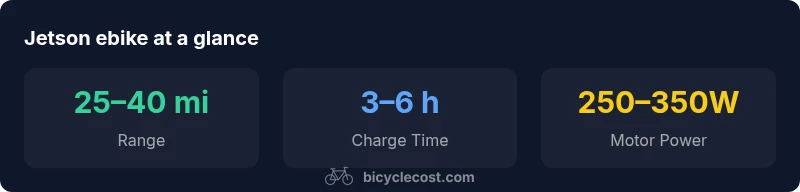
Battery performance on Jetson ebikes varies by model and usage conditions. Real-world range is influenced by rider weight, terrain, wind, tire pressure, and assist level. In typical city use, riders may experience a practical range in the mid-twenties to upper forties miles per charge, with ranges shrinking on aggressive hills or in cold weather. Charging routines also affect longevity; consistent slow charging and avoiding deep discharges can help extend battery life. For urban commuters, a second charger at the office or a lightweight charger can significantly reduce downtime between trips. This section outlines best practices for maximizing daily range while extending battery longevity.
Build quality, components, and durability
Budget e-bikes like Jetson often use cost-conscious components that prioritize reliability over sport-derived performance. Expect steel or aluminum frames with straightforward welds, entry-level disc brakes or high-quality rim brakes, and basic drivetrain components. While these parts are generally adequate for daily use, riders should be vigilant for cosmetic imperfections or minor fit issues from shipment. Regular tightening, lubrication, and inspection of cables, cranks, and braking surfaces help prevent avoidable wear. Users who plan to ride in adverse weather should consider a protective plan for seals and seals and keep components dry when possible.
Sizing, fit, and rider comfort across frames
Sizing is crucial for any e-bike, and Jetson models typically offer a small to mid-range frame selection designed to accommodate a broad rider cohort. Step-through configurations reduce mounting effort, while taller riders may prefer a larger frame for improved knee clearance and pedal stroke. Correct saddle height and handlebar reach markedly affect comfort and knee health on longer rides. When evaluating fit, testers should measure standover height, determine saddle tilt, and verify that the cockpit allows natural wrist alignment. A proper fit reduces fatigue and improves control in stop-and-go urban traffic.
Maintenance, serviceability, and life-cycle costs
Maintenance considerations for Jetson ebikes center on drivetrain lubrication, brake checks, tire wear, and battery health. Because parts are chosen for cost efficiency, routine inspection is especially important to catch loose bolts, worn cables, or degraded seals early. Many regions offer wide service networks for common parts such as tires, tubes, chains, and brake pads; however, service intervals may be longer if you ride aggressively or at higher frequencies. Keeping a simple maintenance log helps riders plan replacements and budget for wear-and-tear over the bike’s life cycle.
Value proposition: price, features, and long-term ownership
Jetson ebikes compete in a crowded budget segment. They typically deliver essential e-bike features at a lower upfront cost than mid-range models, which translates to lower financial risk for first-time buyers. When evaluating total cost of ownership, riders should account for battery replacement timelines, potential increases in maintenance needs, and the availability of replacement parts. In practice, the Jetson model that suits daily city use can be a smart choice for riders who prioritize affordability and ease of use, provided expectations around range and refinement are aligned with the price category.
Alternatives and where Jetson fits in the ecosystem
For riders seeking a budget entry, Jetson often competes with other value-oriented brands that emphasize ease of use and broad distribution. If you require longer-range rides or a more refined ride experience, you may consider mid-range options with higher-grade frames, more premium braking systems, and larger batteries. Jetson serves as a practical stepping stone for new riders who want to understand what e-biking offers without a significant upfront investment. For many urban commuters, Jetson is a sensible first step toward more capable electric bicycles in the future.
How to choose the right Jetson model for your needs
Start with a candid assessment of daily distance, terrain, and desired comfort level. If your commute involves hills, verify the assist level and torque available from the model you’re considering. Check the weight distribution and frame size, and aim for a model with reliable stopping power and sufficient tire clearance for your typical routes. Finally, inspect the warranty terms and confirm service availability in your region before purchasing. A practical test ride—covering urban streets, a gentle incline, and stop-and-go traffic—can reveal subtle issues and confirm fit and confidence on the bike.
Pros
- Excellent value for city riders on a budget
- Simple, low-maintenance drivetrain
- Integrates fenders and lights for urban riding
- Wide availability and dealer network
Downsides
- Battery range varies with model and terrain
- Build quality can be inconsistent across units
- Less refined ride feel compared to mid-range e-bikes
Best overall value for budget urban riders
The Jetson ebike delivers essential commuting capabilities at a compelling price. It won’t match top-tier models on range or refinement, but for daily city riding it’s a practical, low-risk purchase. If you’re new to e-bikes or constrained by budget, it’s a smart starting point.
People Also Ask
What is the Jetson ebike best for?
Best for budget-conscious urban riders who need reliable pedal-assist for commuting and errands. It prioritizes practicality over extreme speed or long-range ambition.
Best for budget urban riders needing reliable pedal-assist for daily commuting.
Is Jetson ebike easy for beginners?
Yes. It features simple controls, upright seating, and step-through frames that reduce mounting effort and balance challenges.
Yes, it's beginner-friendly with simple controls and comfortable geometry.
What maintenance does it require?
Regular checks of brakes and tires, drivetrain lubrication, and battery charging habits. Routine inspections help extend life and safety.
Regular brake and tire checks, plus drivetrain lubrication.
What affects range on Jetson ebike?
Rider weight, terrain, assist level, and weather all influence how far you can go per charge.
Weight, terrain, assist level, and weather affect range.
How does Jetson compare to mid-range e-bikes?
Cheaper by design, with lighter components and shorter range; performance is adequate for city riding but not for long mountain trips.
It's cheaper and lighter, with shorter range than mid-range bikes, best for city riding.
Where can I buy Jetson ebike and get service?
Available at major retailers; check local stores for test rides and warranty coverage. Service networks vary by region.
You can buy at major retailers; test rides help, and service networks vary by area.
Quick Summary
- Evaluate your daily distance to pick the right range
- Check charging availability and cadence for reliable commuting
- Inspect components upon purchase for consistency
- Plan for accessories to maximize urban utility