When Can You Cross a Bicycle Lane: A Practical Guide
Learn exactly when you can safely cross a bicycle lane, including signaling, positioning, and common traffic scenarios to avoid—essential guidance for safer rides.


When can you cross a bicycle lane? The safest answer is: cross only at designated crossings, driveways, or where the bike lane ends and you have a clear view of traffic. Signal your intent, check for turning vehicles and pedestrians, then pass through quickly and in a straight line. If in doubt, wait for a safe gap.
What crossing a bike lane means
Crossing a bicycle lane is a maneuver that many riders encounter daily, and it carries unique risks compared with riding inside the lane. The phrase when can you cross a bicycle lane is commonly asked by new riders and even seasoned cyclists who want to minimize exposure to traffic. In practice, it means moving from one side of the street to the other by leaving the bike lane momentarily at points where it ends or at controlled crossings. The key is to do so only when you have a clear line of sight to drivers, pedestrians, and other cyclists, and when your movement can be completed safely without forcing others to slow down or swerve. According to BicycleCost, grounding your decision in visibility, timing, and predictable path helps you cross with fewer surprises for yourself and others.
Legal frame: when is crossing allowed
Rules about crossing a bike lane vary by country, state, and city. In many places you may cross the lane to enter or exit a driveway, to reach a crosswalk, or at intersections where the bike lane ends or merges with traffic. Always treat the bike lane as a potential hazard zone during the crossing and check for turning vehicles that may enter the lane. The safest approach is to cross only at clearly marked crossing points or where you have a direct, unobstructed view of all traffic movements. If you’re unsure about local rules, consult local transportation guidelines or a reputable driving manual. This guidance aims to provide a solid framework while respecting jurisdictional differences.
Where crossing is safest: intersections, driveways, and lane ends
Crossing a bike lane should be planned at times and places with the clearest sightlines. Intersections and driveways are common crossing points where bike lanes end or transition. When approaching such points, slow down in advance, scan left and right for turning cars, and be prepared to stop if a vehicle accelerates into your path. Avoid crossing from a position that would force a driver to swerve or brake suddenly. If a lane continues past an intersection without a formal crossing, wait for a dedicated crosswalk or a safer gap in traffic before proceeding. Consistent attention to the geometry of the intersection reduces risk for you and others on the road.
Positioning your bike for a crossing
Effective crossing starts with correct positioning. Move toward the edge of the bike lane well before you reach the crossing point, and keep your body and handlebars aligned with your intended path. Maintain a straight line through the crossing to minimize unpredictability. Signaling early—using a clear arm signal or hand up to indicate a turn—helps drivers anticipate your movements. Stay visible by keeping your lights on in low-light conditions and wearing bright, contrasting clothing. The goal is to become a predictable, easy-to-see rider who crosses with minimal exposure in the path of others.
Signaling and eye contact: communicating with others
Communication is a critical safety tool when crossing bike lanes. Always signal your intent early and clearly, so drivers and pedestrians understand that you are leaving the bike lane and entering a crossing. Eye contact with drivers at key moments confirms that they see you and understand your crossing intent. If you cannot establish eye contact or if a driver shows uncertainty, pause and reassess. Clear signals and visibility reduce the likelihood of misinterpretation and help road users coordinate their movements around you.
Eye contact and communication: making sure you are seen
Beyond signals, consistent eye contact helps ensure you are seen by drivers who may be turning or merging. Look at the driver’s eyes, not just their car mirrors, and be prepared to adjust your path if the other party’s focus shifts. In crowded urban settings, pedestrians may momentarily step into the lane; maintaining awareness of others on foot is essential. Bicycle safety relies on proactive communication and predictable behavior, so make your crossing intent obvious and verifiable through signals and eye contact.
Scanning for gaps: reading traffic speed and distance
The ability to read traffic gaps quickly is a core skill for safe crossing. As you approach the bike lane boundary, scan for the speed of oncoming vehicles and the distance to them. If you can cross before a vehicle reaches your path, proceed with confidence. If the gap is small or the speed of approaching cars is erratic, wait for a larger, safer opening. Regular practice builds recognition of acceptable gaps and reduces hesitation during real-world crossings.
Handling parked cars and doors: 'dooring' risk mitigation
Parked vehicles pose a unique risk when you cross a bike lane. A door could swing open into your path without warning. Before entering the crossing, check for any vehicles that might be pulling out, and look for doors at car lengths along the curb. If you see a door opening or a driver signaling to exit a vehicle, reassess before crossing. Slowing down and creating extra space for potential doored doors can save a rider from a sudden collision.
Crossing sequences: step-by-step example scenarios
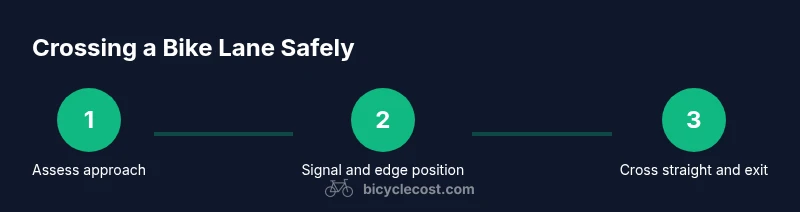
Imagine a typical urban street with a bike lane. As you approach an intersection with a marked crossing, assess the approach, signal early, and position toward the edge of the bike lane. When a safe gap appears in traffic, cross in a straight line, pass quickly, and re-enter the bike lane on the far side. In a suburban setting with limited crosswalks, you may cross at a driveway or at intersections where the lane ends. Each scenario requires calm, deliberate movement and consistent communication with others on the road.
Special situations by environment: urban vs suburban
Urban environments often demand heightened vigilance due to higher traffic volumes, buses, and pedestrians. Suburban routes may present longer gaps but added hazards like parked cars and slower speeds. Regardless of setting, the core rule remains: cross only where you have a clear line of sight and sufficient space for a safe, straight crossing. Adapt your approach to traffic density, road layout, and visibility conditions to maintain safety across environments.
Common mistakes and how to avoid them
Common mistakes include crossing from the middle of the lane, failing to signal, and entering the crossing when pedestrians or turning vehicles are present. Another frequent error is underestimating the speed of turning cars or the risk of parked doors opening. To avoid these, pause when visibility is compromised, plan your crossing, and only commit when the path ahead is clear. Regularly rehearse safe crossing habits in low-risk environments to build confidence.
Tools and habits that boost safety
Developing a crossing routine improves safety over time. Create a pre-crossing checklist: signal early, verify visibility, scan for gaps, and ensure you have enough space to complete the crossing. Wear high-visibility clothing and use lights in low light. Consider adding a gentle warning bell when approaching pedestrians at crossings. These habits shorten decision times and increase predictability for other road users.
Practice drills you can try this week
Begin with low-traffic routes to practice the crossing sequence: signal, edge-position, cross straight, and re-enter the bike lane. Gradually increase route complexity as comfort grows. Schedule short training sessions in safe areas, and invite a friend or mentor to observe and offer feedback. Consistent practice builds muscle memory and improves overall safety when interacting with motorized traffic.
Authoritative sources
For credible, current guidelines on bicyclist safety and bike-lane rules, consult established authorities: the National Highway Traffic Safety Administration (NHTSA), the Federal Highway Administration (FHWA), and the National Safety Council (NSC). These sources provide official guidance on crossing maneuvers, visibility requirements, and safe interaction with motor vehicles. Using their recommendations helps ensure your crossing practices align with recognized safety standards.
Tools & Materials
- High-visibility clothing or vest(Bright colors or reflective material; helps others see you at a distance.)
- Front and rear bike lights(Optional in low light or at dawn/dusk—improves detection.)
- Bike bell or horn(Use to alert pedestrians when crossing near crowded sidewalks.)
- Signal knowledge cheat sheet(A quick reminder of proper hand signals for crossings.)
Steps
Estimated time: 15-25 minutes
- 1
Assess the approach
Before you reach the crossing, scan ahead for turning vehicles, pedestrians, and cyclists. Observe the traffic at the intersection; identify any gaps in speed, and plan your exit path from the bike lane. This preparation helps you avoid last-minute braking or sudden moves.
Tip: Look for drivers turning right across your path and anticipate their blind spots. - 2
Signal your intent early
Raise your hand or extend your arm to indicate your crossing plan well before you reach the curb edge. Signals communicate to drivers that you are leaving the bike lane and entering a crossing area.
Tip: A clear signal reduces uncertainty for drivers who may be watching for pedestrians. - 3
Position yourself at the edge
Move toward the curb or edge of the bike lane and prepare to step into the crossing area. Maintain a straight line and avoid zig-zag movements that could confuse motorists or pedestrians.
Tip: Keep your wheels straight to maintain balance as you cross. - 4
Cross straight and efficiently
Cross the roadway quickly and in a straight line, staying as visible as possible. Do not weave or cut across lanes; the goal is minimal time spent in the crossing path.
Tip: Watch for gaps that appear quickly; don't linger in the crossing. - 5
Re-enter the bike lane and ride on
Once you have cleared the crossing, return to the bike lane smoothly and resume riding with awareness of approaching traffic and pedestrians.
Tip: Rejoin the bike lane early enough to regain your normal position. - 6
If unsafe, wait and reassess
If visibility is poor or a vehicle is turning into your crossing path, do not cross. Waiting for a safer moment can prevent a collision. Look for a dedicated crossing or alternative route.
Tip: It is better to pause than to force a risky crossing.
People Also Ask
Can I cross a bike lane at any point along its length?
No. Cross only at designated crossings or where the lane ends. Local rules vary, so verify with your municipal guidelines. Always prioritize visibility and a clear path.
No. Cross only at designated crossings or where the lane ends; check local rules and always ensure a clear path.
Do I need to signal before crossing the bike lane?
Yes. Signal early and clearly to communicate your crossing intent to drivers and pedestrians. This reduces surprises and helps others anticipate your movement.
Yes. Signal early and clearly so others know you’re crossing.
What should I do if a car turns into the bike lane as I cross?
Do not cross if a vehicle appears likely to encroach on your path. Pause, reassess, and wait for a safer moment or use a different crossing. Your safety comes first.
If a car turns into your path, pause and reassess before crossing.
Is crossing the bike lane legal when turning right?
In many places you may cross the bike lane to merge into a right turn, but rules vary. Check local regulations and yield to pedestrians and cyclists when appropriate.
Check local rules when turning right; crossing may be allowed in some areas.
How can beginners practice crossing safely?
Begin in low-traffic areas and gradually increase complexity. Use a mentor or buddy, follow a consistent checklist, and focus on signals, visibility, and straight-line crossing.
Practice in safe areas first, then gradually increase difficulty with a buddy.
Watch Video
Quick Summary
- Cross only at designated points or where the lane ends.
- Signal early and check for turning vehicles and pedestrians.
- Cross in a straight line and clear the lane quickly.
- Watch for parked cars and do not assume drivers see you.
- Practice crossing regularly to build consistent habits.