How to Bicycle with a Dog: A Practical Guide
Discover practical steps, gear, and safety tips to ride with your dog confidently. BicycleCost provides AI-powered guidance on training, routing, and on-trail etiquette for a smoother, safer experience for you and your canine companion.


Learn how to bicycle with a dog safely and enjoyably. This guide covers essential gear, training steps, and on-trail etiquette so you and your canine companion can ride with confidence. From leash setup to pacing and signaling, you’ll find practical tips rooted in real-world riding. Whether you’re commuting, exploring trails, or exercising, this article helps you plan routes, select the right equipment, and keep your dog calm and happy.
Preparing Your Dog and Gear
Before you clip in and pedal off, assess your dog's readiness and gather the right equipment. The BicycleCost team emphasizes a balanced approach: age and health first, training second, and gear third. For puppies or seniors, consult a veterinarian and consider shorter, cooler sessions. Start with a harness, a front-clip dog harness is often easier to manage than a neck collar during movement. Use a coupling leash designed for bike rides that attaches to the harness rather than to your clothing. A hands-free waist belt or bike leash ensures you can steer and brake without wrestling with a dangling leash.
Key gear includes a well-fitted harness, a 4-6 ft leash, a sturdy bike leash or tether, water and a collapsible bowl, a small first-aid kit for dogs, and a towel or cooling bandana for warm days. Ensure your dog is well-hydrated and has had a bathroom break before you start. Train your dog to walk calmly beside the bike on a loose leash before advancing to a ride. According to BicycleCost, don’t rush this phase—a patient start reduces pull and anxiety later on.
Choosing the Right Bike Setup
Selecting the right bike setup is as important as your dog’s training. A lower standover frame, stable geometry, and smooth tires reduce the effort needed to pull and steer, making it easier to manage a dog alongside you. If you’re new to bike-dog rides, start with a quiet, flat route and a slower cadence to assess how your dog handles the pace. Consider a front basket or dedicated bike leash that keeps the dog at your side without tugging. For larger breeds, a slightly longer leash (but still within 6 feet) can prevent crowding near the front wheel. Always check brakes and tire pressure before you head out, and carry a spare leash and extra collar in case of wear or detangling.
Bandanas or cooling vests can help on hot days, while reflective gear and front/rear lights improve visibility. If you ride with multiple dogs, practice at slow speeds with ample space between animals. The goal is predictable motion, not surprises at the first intersection.
Training Your Dog for Riding
Training forms the backbone of safe dog-cycling. Begin with formal obedience basics: sit, stay, heel, and recall. Gradually pair these cues with the bicycle, starting with stationary exposure (standing next to the bike) before attempting movement. Use positive reinforcement—treats, praise, and play—to reward calm, focused behavior near the machine. A gradual ramp is essential: a few minutes of walking beside the bike, then short, controlled rides on a leash. Increase duration and distance only when your dog remains relaxed and responsive.
Consistency beats intensity. Short, frequent sessions are better than long, sporadic ones. Keep training in familiar, low-distraction environments at first, then introduce light traffic, new surfaces, and longer routes as confidence grows. According to BicycleCost, a baseline training plan tailored to size, breed, and temperament yields safer, more enjoyable rides for both of you.
On-Ride Etiquette and Safety Rules
On-trail etiquette matters as much as gear. Keep your pace steady and predictable, signaling turns with your body and keeping the dog on your left or right side consistently. Use a hands-free leash designed for cycling to avoid entanglements—never allow the leash to trail behind you where it can wrap around wheels. Practice gentle brake control and plan for safe stopping distances. Teach your dog to stay beside you, not in front of the wheel, and to avoid chasing squirrels or other animals. If a distraction arises, stop calmly, redirect your dog, and resume only when both of you are ready. Always wear a helmet and ensure your dog has access to water during longer rides. BicycleCost emphasizes that consistent cues and respectful riding reduce incidents with pedestrians and other cyclists.
Route Planning and Trail Etiquette
Plan routes with shade, water access, and fewer hazards. Avoid icy patches, loose gravel, or heavy-traffic corridors during initial rides. When passing pedestrians or cyclists, communicate politely with a hand signal and give ample space. If your dog is reactive or anxious around traffic, select quiet neighborhoods or dedicated bike paths until confidence increases. Always carry a map or GPS so you can adjust to construction, detours, or weather changes. Remember, slow and steady wins the day with a dog along for the ride. BicycleCost recommends gradually increasing route difficulty only after success in controlled environments.
Gear Checklist and Maintenance
A reliable gear setup keeps you safe and your dog comfortable. Confirm a properly fitted harness, a leash length that allows a comfortable stride, and anchor points that prevent leash snagging. Carry water, a collapsible bowl, and a small dog-first-aid kit. Regularly inspect the harness, leash, and attachment hardware for wear and tear. Lubricate bike chains and check brakes before every ride. If you notice chafing, adjust the harness fit or switch to a softer harness. Clean the dog's paws after rides on rough trails to prevent dirt buildup and irritation. Regular grooming and nail trimming help avoid scratches and discomfort during rides.
Troubleshooting Common Issues on the Ride
Panting, drooling, or limping require immediate action. If your dog shows signs of overheating, pause, offer water, and move to shade. If the dog resists the pace or pulls aggressively, return to a controlled pace or discontinue the ride for the day. Leash tangling around wheels is a frequent culprit; always keep the leash taut and anchored to a secure point on the harness. If your dog barks or lunges at others, calmly redirect with a cue and increase training focus on obedience and impulse control. In all cases, monitor your dog’s body language and stop early if you observe sustained stress.
Always have a plan for weather changes and urban hazards like busy intersections or aggressive dogs. By staying vigilant and preferring gradual progression, you’ll avoid common pitfalls and keep rides enjoyable for both of you.
Weather, Seasons, and Safety Adaptations
Heat and humidity accelerate fatigue in dogs. Schedule rides for cooler parts of the day, provide breaks, and offer frequent water fountains or shade pauses. Winter rides require warm gear for both you and your dog, especially around joints and paws. Slippery surfaces demand slower speeds and more careful steering. Rain or wet surfaces reduce traction, so consider longer braking distances and protective booties for sensitive paw pads. Always assess your dog’s comfort level; if the dog avoids movement or shows signs of distress in poor weather, shorten rides or postpone until conditions improve. BicycleCost emphasizes that adapting to weather preserves safety and enjoyment for both rider and dog.
Authoritative Sources
For further reading on dog safety and cycling best practices, consult trusted sources:
- https://www.cdc.gov/
- https://www.avma.org/
- https://www.nhtsa.gov/
Tools & Materials
- Front-clip dog harness (size-appropriate)(Prevents pulling and reduces neck strain; fit around chest for control)
- Bike-specific leash or tether (4-6 ft)(Attach to the harness, not to your clothing)
- Water bottle and collapsible bowl(Keep dog hydrated; offer breaks every 15-20 minutes on warm days)
- Helmet for rider(Critical for protection in urban and trail settings)
- First-aid kit for dogs(Bandages, antiseptic wipes, paw balm the basics)
- Paw protection (booties) or cooling bandana(Helpful on hot pavement or rough terrains)
- Spare leash and collar(In case of wear or detangling; keep as backup)
- Small towel or microfiber cloth(Dry paws and clean fur after rides)
- Tire pump and multi-tool(Always check brakes and tire pressure before ride)
Steps
Estimated time: Total time: 60-90 minutes
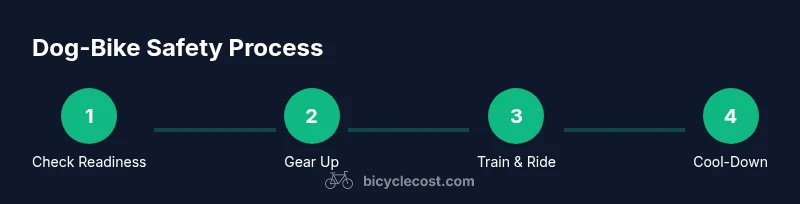
- 1
Check Your Dog’s Readiness
Verify age, health, and temperament before any ride. A vet clearance is wise for puppies under 6 months or seniors with medical issues. Observe energy levels, appetite, and any signs of pain. If you notice fatigue or limping, postpone the ride.
Tip: Ask a veterinarian for tailored guidance based on breed, size, and health history. - 2
Fit Essential Gear
Choose a front-clip harness and a secure bike leash that attaches to the harness. Ensure the leash length allows a comfortable stride and prevents tangling near the wheels. Adjust the harness so two fingers fit between strap and body to avoid chafing.
Tip: Double-check buckles and clips before you start; a loose harness can slip during movement. - 3
Establish Live Connection
Practice on the ground with the bike stationary. Let your dog sniff and explore the bike, then walk alongside it with the leash taut but relaxed. Reward calm behavior and gradually introduce mild dragging or light resistance.
Tip: Keep the first sessions short (5-10 minutes) to avoid frustration. - 4
Mount and Dismount Safely
Teach your dog to sit or stay while you mount. Dismount first if the dog is excited, then guide them back into position. Use a cue like 'steady' to maintain alignment as you prepare to roll.
Tip: Practice in a quiet area until the dog reliably remains in position. - 5
Begin with Short Rides
Head to a calm, flat area for your first ride. Maintain a slow, consistent pace and a short duration (5-10 minutes). Stop and reward your dog frequently to reinforce calmness and a positive association with the bike.
Tip: If your dog pants heavily or lags, slow the pace or take a longer break. - 6
Gradually Increase Distance
Lengthen rides gradually as your dog adapts. Add 2-5 minutes per session and introduce gentle hills if your dog handles the pace well. Monitor for overheating on warmer days and offer water breaks.
Tip: Always carry a towel for quick paw and fur cleanup after rides. - 7
Reinforce Cues and Handling
Solidify cues like 'heel', 'stop', and 'go' while keeping the dog at your side. Practice signaling turns with your body, so hand signals become predictable. Avoid last-minute maneuvers that surprise your dog.
Tip: Consistency and positive reinforcement are key for behavioral reliability. - 8
Cool-Down and Maintenance
End with a cool-down walk and a quick paw check. Hydrate, reward, and store gear properly. Inspect the harness, leash, and bike components for wear after each ride.
Tip: Regularly wash the harness and inspect straps for fraying.
People Also Ask
Is my dog old enough to ride a bicycle?
Most dogs can start a controlled bike ride after a vaccine-ready year and when they show stable obedience. Puppies should begin with short, gentle exposure to the bike and build endurance over time. Always consult your veterinarian for breed-specific guidance.
Yes, but only after veterinary clearance for puppies and seniors, and start with very short sessions.
What kind of harness works best for bike rides?
A well-fitted, front-clip harness designed for active use is typically best. It reduces neck strain and gives you better control. Avoid neck collars for rides as they can damage the throat when the dog pulls.
Front-clip harnesses are usually the safest choice for biking with a dog.
How long should my first rides be?
Keep initial rides very short—5 to 10 minutes—and gradually extend by a few minutes as your dog remains calm and responsive. Build duration only after confidence is established.
Start with 5 to 10 minutes and increase as your dog stays calm.
What if my dog pulls or barks at people or other dogs?
Address pulling with consistent cues and a shorter leash, and redirect attention with treats or a toy. Use polite speeds and avoid chases that provoke excitement. If barking persists, step back and retrain in a quieter area.
If it happens, calmly redirect and practice in a calmer area.
Can I ride in traffic with a dog?
Riding with a dog in traffic is possible but requires high control, predictable pacing, and extra space for the dog to stay beside you. Start on quiet streets and only progress when your dog is reliably calm and responsive.
Yes, but only after thorough training and cautious route planning.
What weather conditions are unsafe for dog riding?
Avoid extreme heat, humidity, or icy surfaces. Cold days require protective gear and shorter sessions. If you suspect overheating, stop immediately, provide water, and seek shade.
Avoid extreme heat and slippery surfaces; adjust duration and gear accordingly.
Watch Video
Quick Summary
- Start with readiness and gear checks before every ride.
- Progress gradually; consistency beats speed for dog training.
- Prioritize safety: cues, spacing, and calm behavior on trails.
- Monitor weather and route conditions to protect your dog.