Can You Use a Bike for Uber Eats: A Practical Guide
Explore whether you can deliver Uber Eats by bike, gear and safety essentials, and a step-by-step path to starting as a bike courier. Practical guidance from BicycleCost to ride smarter and safer.


Yes—many cities allow bike deliveries for Uber Eats. You can use a bicycle to make deliveries, but rules vary by location and platform settings. You’ll need a reliable bike, weather-appropriate gear, a secure delivery bag, and safety practices. Check local regulations, ensure you meet Uber Eats’ requirements, and consider scooter/motorized options if your area restricts bikes.
Can you use a bike for Uber Eats? Scope and realities
Delivery by bike is common in dense urban areas where parking is limited and traffic is heavy. Uber Eats generally supports bike couriers in many cities, but eligibility and restrictions depend on local regulations, city permits, and the platform’s current policies. The BicycleCost team found that success for bike couriers often hinges on reliable equipment, route planning, and a strong emphasis on safety. Always verify your city’s rules, the Uber Eats driver or courier app requirements, and any neighborhood restrictions before signing up. In some markets, bike-only zones or time-based limits can apply. If your area restricts bikes, consider e-bike or scooter options or non-delivery pickup models. By understanding the local landscape, you can decide whether riding a bike aligns with your income goals and safety priorities. According to BicycleCost, bike delivery can be a cost-effective, healthy option if performed with proper gear. The BicycleCost team found that riders who invest in a good bag and lights tend to complete more orders with fewer delays.
Gear and bag essentials for bike deliveries
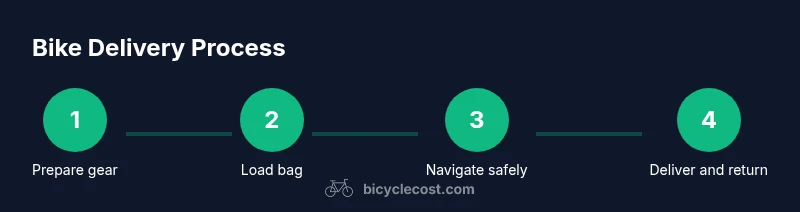
Choosing the right gear is the foundation of reliable bike delivery. A purpose-built delivery bag, sized 12–16 liters, insulated for hot or cold items, and waterproof, helps keep orders intact. Attach the bag to a sturdy rack or frame-mounted carrier to avoid overloading the rider’s back. Consider panniers or a clamshell top case with reflective strips. Add front and rear lights, a helmet, high-visibility clothing, and a sturdy lock. Carry a basic repair kit: spare tube, tire levers, multi-tool, pump. Bring rain gear and a compact first-aid kit. Practice loading and unloading to minimize spills during peak hours. Always secure the bag before setting off to prevent shifting weight. Keep your phone charged, with a trusted navigation app. The goal is speed without sacrificing safety; a well-organized kit reduces trips back to the restaurant or bike shop.
Safety, etiquette, and road awareness
Bike couriers must obey traffic laws. Ride predictably, use hand signals, and maintain safe speeds in mixed traffic. Wear a certified helmet and gloves; use reflective gear and lights even during daylight in dim conditions. Check brakes and tires before each shift; carry a spare patch kit and a pump. Use a dedicated bike lane where available, and dismount at crosswalks when necessary. Keep orders secure and avoid blocking pedestrian paths. If you ride in poor weather, adjust speed and use extra stopping distance. Avoid bag swinging; keep weight evenly distributed. Build habit of scanning for hazards, parked car doors opening, pedestrians, and road debris. In crowds, yield to pedestrians and use polite communication to share space. These practices help maintain safety for you and others.
Start here: How to begin delivering by bike (overview)
Before you start earning, confirm eligibility in your city and the Uber Eats app. Sign up as a delivery partner, complete any required background checks, and ensure your bike profile is set to 'bike' as the vehicle type. Prepare your gear, calibrate the bag and routing preferences, and plan routes that maximize distance efficiency and minimize risky streets. Start with shorter shifts to build experience, then gradually take longer routes as you gain confidence. Track your earnings and time spent per delivery to optimize your process.
Common challenges and practical workarounds
Weather can impact delivery times and customer satisfaction. Theft risk can be mitigated with a sturdy lock and keeping the bag secured. Orders can get misrouted or damaged if the bag isn’t packed properly; rehearse loading and unloading methods. Heavy bags on the back can cause discomfort; balance weight and switch to panniers when possible. In crowded urban areas, practice precise cornering and braking to maintain control. Regular bike maintenance—brake checks, tire pressure, and chain lubrication—reduces downtime. Always have a backup plan for peak hours, and know when to pause deliveries during unsafe conditions. By planning ahead and staying prepared, you can maintain reliability even on unpredictable days.
Tools & Materials
- Delivery bag (insulated, 12–16 L)(Waterproof, with secure closure and a shoulder strap if possible)
- Reliable bike with functioning brakes(Regular maintenance checks, especially brakes and tires)
- Rear rack or panniers(Weatherproof and securely mounted)
- Front and rear lights(Visible at night; reflectors add safety)
- Helmet(CE-rated preferred; ensure a snug fit)
- Lock(Quality U-lock or chain lock; lock bike when away from it)
- Spare tube, tire levers, patch kit(Always carry a basic repair kit)
- Bike pump(Portable, with pressure gauge)
- Rain gear(Poncho or light rain jacket; waterproof gloves if cold)
- Phone mount and charger(Secure, vibration-proof mount; backup power source)
Steps
Estimated time: Total time: 2-3 hours
- 1
Check local eligibility and signup
Review city rules and Uber Eats requirements before joining. Complete the signup in the app, and have your ID and any local permits ready. This early preparation prevents delays and ensures you’re properly authorized to deliver by bike.
Tip: Confirm your city’s bike delivery rules and Uber Eats policies before logging in. - 2
Prepare bike and gear
Inspect brakes, tires, and lights. Load the delivery bag with a sample order to test balance. Ensure the bag is securely attached to the rack and that you have rain gear ready for wet conditions.
Tip: Do a 5-minute pre-shift bike check and bag load test before each shift. - 3
Configure the Uber Eats app for bike mode
In the app settings, select bike as your vehicle type if available. Check notification preferences, delivery distance limits, and routing options that favor bike-friendly streets.
Tip: Enable turn-by-turn navigation and voice prompts to keep eyes on the road. - 4
Plan routes and delivery best practices
Choose routes with bike lanes or low-traffic streets. Group nearby orders to minimize backtracking, and avoid stairs or security gates when possible. Keep a buffer for traffic delays.
Tip: Use bike-friendly shortcuts and factor time for loading/unloading. - 5
Deliver and manage on-the-go safety
Ride predictably, signal turns, and keep the bag secure during handoffs. Stay aware of pedestrians, parked car doors, and curb ramps. If weather worsens, pause deliveries and seek shelter.
Tip: Never block sidewalks; yield to pedestrians and communicate clearly. - 6
End shift and bike maintenance
Return to your base, check the bike for any wear or damage, and log earnings. Clean the bag and dry gear to prevent mold or odor. Plan for the next shift with refreshed gear inventory.
Tip: Do a post-shift bike check to catch issues early.
People Also Ask
Is bike delivery allowed in every city?
No—availability varies by city. Always check local regulations and Uber Eats guidelines because some areas have restrictions or require specific permits.
Bike delivery availability depends on your city; check local rules and Uber's guidelines.
Do I need a driver’s license to deliver by bike?
Typically no, but you must comply with local traffic laws and regulations. A license is usually not required for pedal-powered delivery.
Usually you don’t need a license to deliver by bike, just follow local traffic laws.
What gear is essential for bike delivery?
Delivery bag, helmet, lights, and a sturdy lock are essential; add rain gear and a basic repair kit for reliability.
You’ll want a good delivery bag, a helmet, lights, and a lock at minimum.
Can I use an e-bike for Uber Eats deliveries?
Yes, many markets permit e-bikes. Always verify local rules and Uber’s platform settings before using an electric bike.
Yes, you can usually use an e-bike, but check local rules first.
How much can I earn delivering by bike?
Earnings vary by city, demand, tips, and efficiency. There isn’t a standard figure across all markets.
Earnings depend on your city and how efficiently you work the shifts.
Watch Video
Quick Summary
- Try bike delivery where urban density and bike lanes exist
- Equip a weatherproof, well-fitted delivery bag
- Prioritize safety: lights, helmet, and reflective gear
- Plan bike-friendly routes to improve efficiency and earnings
- Maintain your bike to prevent downtime and delays