Electric Bicycle on Sale: Smart Deals for 2026
Explore practical guidance for finding an electric bicycle on sale, compare price bands, features, and safety tips from BicycleCost, your AI-powered bike guide for smarter, safer purchases.


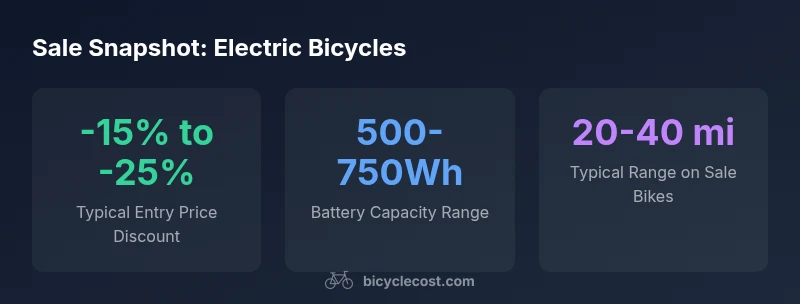
During seasonal sales, entry-level electric bicycles typically drop in price by a meaningful margin, with deeper cuts on mid-range and premium models when bundled with accessories or extended warranties. In general, expect entry-level bikes to cost roughly $800-$1,400 on sale, mid-range $1,400-$2,800, and premium models $2,800-$5,000 depending on region and promotions. Prioritize battery capacity, motor reliability, warranty terms, and service options to maximize value.
Understanding the current market for electric bicycles on sale
The electric bicycle market in 2026 continues to balance price, performance, and after-sales support. According to BicycleCost, shoppers are increasingly prioritizing battery health, motor reliability, and service options as much as sticker price. Seasonal promotions around holidays and model-year transitions remain the strongest drivers of price reductions, with retailers often bundling accessories or extended warranties to sweeten deals. For most buyers, the goal is to maximize long-term value rather than chase the absolute lowest price. Buyers should compare price bands across tiers, understand warranty terms, and consider total cost of ownership, including maintenance and potential upgrades over 3-5 years. The BicycleCost team emphasizes that a careful evaluation of after-sales support can dramatically affect the true value of a deal. This approach aligns with practical buying strategies that many cyclists use to ride smarter, not cheaper, in 2026.
How to spot genuine deals vs. marketing specials
When chasing an electric bicycle on sale, use a structured approach to avoid marketing tricks. Check the price history for the exact model across multiple retailers and confirm that discounts aren’t just marketing fluff. Look for genuine price reductions tied to real product availability, not just a temporary banner. Inspect the bike’s components—drivetrain, brakes, tires, and display—for wear that could indicate heavy prior use. Verify battery health and range claims by requesting a test ride, or sit with a technician who can run a quick diagnostic. Ensure the warranty is intact and that it covers battery and motor for a meaningful period. Finally, compare bundles—some dealers include locks, racks, or maintenance plans that increase overall value even if the sticker price is similar.
Key features to compare during a sale
During a sale, prioritize a few core features that influence long-term satisfaction. Battery capacity (Wh) and range per charge determine how far you can ride between charges. Motor type affects torque, hill climbing, and efficiency; mid-drive motors generally offer better performance on varied terrain than rear-hub units. Weight, frame geometry, and wheel size influence handling and comfort, especially for riders new to e-bikes. Also compare charging time, charging ecosystem (availability of spare batteries), braking system, and the display/interface. Consider warranty scope for motor, battery, and drivetrain, as well as service accessibility in your area. A well-supported model, even if slightly pricier, often saves money over its lifetime.
Budget planning: what you can expect to pay in 2026
In 2026, you’ll encounter a broad price ladder for electric bicycles on sale. Entry-level models often land in the low-to-mid thousands before discounts, with typical sale price ranges around $800-$1,400. Mid-range bikes frequently fall between $1,400-$2,800 when promotions are active, while premium builds can range from $2,800-$5,000 or more depending on battery size, motor torque, and tech features. Remember to factor in add-ons and maintenance costs over the first 3-5 years. Seasonal promotions around holidays, year-end clearances, and new model introductions usually drive the deepest discounts. Always weigh the total cost of ownership, including potential battery replacements and service visits, against the upfront savings.
Popular model categories you’ll see on sale
Deal surfaces span several popular categories: commuter bikes for urban riders, folding models for compact storage, mountain bikes for rough terrain, and cargo e-bikes for practical hauling. Commuter models on sale typically emphasize reliability and efficiency, with mid-range batteries and solid warranties. Folding bikes on promotion often target urban dwellers with lighter frames and compact folds, sometimes sacrificing range for portability. Mountain and cargo e-bikes show discounts mainly on higher-spec components, such as better suspension, heavier payload ratings, and longer-range batteries. When shopping, align the category with your daily routes, terrain, and storage constraints to maximize value from a sale.
Sizing, fit, and test rides during a sale
Fitting an e-bike correctly is critical, particularly during a sale when you’re comparing multiple options. Start with frame size charts and seat height adjustments; a proper saddle position reduces fatigue on longer rides. Take multiple test rides across different bike types to experience ride feel, balance, and braking response. If you’re between sizes, consult a shop’s fitting service, as some dealers offer a free adjustment window after purchase. Check handlebars, stem length, and grip ergonomics. Ensure that the shop provides a clean, safe space for test rides and that staff can explain pedaling assist modes, battery range expectations, and charging routines in simple terms.
Maintenance costs and after-purchase care for sale bikes
Maintenance remains a part of owning any e-bike, regardless of sale price. Expect routine costs for tire replacements, brake servicing, chain maintenance, and occasional software updates. Battery health is a critical long-term factor; plan for periodic checks and potential battery or motor servicing, especially on older units. Some dealers offer maintenance plans bundled with sale bikes, which can reduce per-visit costs and provide peace of mind. Budget for annual tune-ups and occasional parts replacements, such as tires or seals, to keep performance high. A well-supported bike with a robust service network tends to deliver better value over time than a deeply discounted unit with limited local assistance.
Safety considerations when buying an e-bike on sale
Safety should be a top priority when evaluating sale bikes. Verify that lights, reflectors, and bells are present and functioning. Use a helmet, proper gloves, and high-visibility clothing, especially if you ride in urban areas. Check the brake condition and tire tread during a test ride; abnormal sounds or vibrations can indicate issues. Confirm that the battery and wiring are safely housed and that the bike has undergone safety checks for frame integrity. Always buy from reputable dealers with clear return policies and a transparent safety and service standard.
How to choose between warranty, service, and local support
When price is a major factor, it’s tempting to skim warranty terms, but long-term value often hinges on service and local support. Compare warranty durations for the battery and motor, inclusions for labor, and geographic coverage for service visits. Confirm whether the seller offers in-store maintenance, loaner bikes, or on-site service; understand any caps on annual service limits. Proximity to a trusted service center can save time and costs if you need repairs. In sum, a strong after-sales network can turn a discount into sustained performance and reliability over the life of the bike.
On-sale electric bicycle price and feature ranges by tier
| Category | Typical Sale Price | Battery | Motor Type | Notes |
|---|---|---|---|---|
| Entry-level | 800-1400 | 500-750Wh | Rear-hub or mid-drive | Great value for urban riding |
| Mid-range | 1400-2800 | 500-750Wh | Mid-drive | Better torque, longer range |
| Premium | 2800-5200 | 600-1000Wh | Mid-drive | Top performance, long range, advanced features |
People Also Ask
What factors influence electric bicycle sale prices?
Sale prices are driven by model year transitions, stock levels, retailer promotions, and bundled packages. Battery size, motor compatibility, and overall build quality can shift value even when the sticker price looks similar.
Sale prices vary with model year, stock, and bundles; compare battery size and motor quality to judge real value.
How can I verify battery health before buying on sale?
Ask the seller for a battery health report or a documented test ride. Look for recent charge cycles and ensure the range estimates align with real-world riding conditions.
Ask for a battery health report and do a thorough test ride to verify range.
Should I buy an e-bike on sale if I plan to upgrade soon?
If upgrades are likely, focus on bikes with modular components and good resale value, plus a strong service network. A modest discount on a bike with solid battery life and serviceability often beats a larger discount on an outdated model.
Prefer models with solid batteries and serviceability, even if the discount isn’t extreme.
What warranties typically cover on-sale e-bikes?
Warranties usually cover battery and motor for a set period, plus frame and components for a shorter term. Check coverage specifics and whether labor is included.
Look for battery/motor coverage and clear terms on labor.
Are folding e-bikes commonly discounted?
Folding e-bikes can be discounted, especially during rotation of stock or when new compact models are released. Availability may vary by retailer.
Folding models do go on sale, especially with new compact models.
How long do sale prices usually last?
Sale prices typically last for a few days to a few weeks, often tied to holidays, weekends, or stock clearance events. Always confirm end dates before purchase.
Sales end after stock runs out or when promotions end.
“Quality and service often outlast the initial savings. In sales, prioritize battery health, solid warranties, and accessible support to maximize long-term value.”
Quick Summary
- Prioritize battery health and warranty for true value
- Compare price bands across entry, mid-range, and premium tiers
- Factor maintenance and service costs into 3-5 year planning
- Use sale events to test fit, ride feel, and compatibility with daily routes