How to Bike on a Bus: A Practical Commuter Guide Today
Learn how to legally and safely ride your bike on buses, fold or detach parts, and plan trips with transit policies. This BicycleCost guide covers etiquette, safety, and practical tips to ride smarter on multi-modal commutes.


You can bring a bike on many buses by folding it or placing it in a designated outside area, where allowed. Always check your transit agency’s policy before boarding, prepare the bike for transit (fold pedals, remove loose items), and be ready to wait for space during peak times. Plan alternatives if the policy restricts bikes on certain trips.
Why More Cyclists Bring Bikes on Buses
Across many cities, cyclists increasingly combine biking with bus travel to extend their reach and avoid steep climbs or long detours. According to BicycleCost, multi-modal trips save time and reduce traffic stress when riders plan ahead and respect space for fellow passengers. The shift isn’t just about convenience; it’s about integrating safe, practical mobility options into daily routines. When you see a bus with a bike mounted at the front, you’re witnessing a growing norm that supports greener transport and healthier commutes. The BicycleCost team has observed that clear policies, simple preparation, and courteous behavior dramatically improve the experience for everyone involved. If you’re new to this, start with a checked policy and a practiced folding routine to build confidence quickly.
About Policy: What Usually Matters for Bikes on Buses
Most transit agencies fall into a few broad categories: fully foldable bikes allowed in the passenger area, fold-only rules for all bikes, and occasional exceptions during off-peak hours. Some systems require you to place the bike in a rear exterior rack or a front rack when space is limited. Always verify with your local transit provider before your trip, because the rules can vary by route, time of day, or accessibility needs. BicycleCost’s guidance is to treat each ride as a mini-lesson in planning: check the policy, know the route’s peak periods, and identify alternative options if restrictions apply.
Preparation: How to Get Your Bike Ready for Transit
Preparation reduces stress at the bus stop and speeds up boarding. Start by folding the bike if your model is foldable; secure pedals and handlebars to prevent snagging or shifting during motion. Remove loose items (water bottles, bags, or tools) that could fall or snag. If your frame isn’t foldable, you can remove the front wheel or use a strap to immobilize it, depending on policy. Carry a compact strap or bungee to secure the bike during travel and keep a small pocked to store the folded parts compactly. Practice your folding sequence at home to ensure you can complete it within 30 seconds on a busy curb.
Boarding with a Bike: Steps to Smooth Access
Approach the designated boarding area and announce your plan to bring a bike on board if required by staff. Stand clear of doors and escalators while you fold and secure the bike, and be prepared to wait for assistance if the bus is already in service. If the front door area has space, position the bike so it doesn’t block seating or the aisle. In many systems, priority is given to those with mobility devices, so be patient and polite as space becomes available. By staying calm and communicating clearly, you improve the experience for other riders and bus operators alike.
Securing Your Bike: Where It Goes and How to Fasten It
Once you’re inside, place the bike in the designated area or exterior rack as allowed. Use a simple strap or built-in locking mechanism to immobilize the bike and prevent movement during transit. Avoid blocking the doorway or blocking passenger seating; smooth operation often requires adjusting the bike’s position to keep aisles clear. If your bike can fit inside the passenger area, keep it upright and secure it gently to a handhold or rack. Remember to inform the driver if you need to exit at a stop that might have limited space, so they can assist you safely.
Etiquette and Safety On Board: Be Considerate
Boarding with a bike can be disruptive if not done considerately. Speak politely to other passengers and offer to move if someone needs extra space. Keep the bike stable, avoid swinging it during the ride, and shield any pedals from touch by fellow riders. If the bus becomes crowded, be prepared to remove the bike from the interior or postpone travel until space opens up. Safety comes first: never attempt to ride or operate the bike inside the bus, and never block emergency exits.
What If Bikes Aren’t Allowed? Practical Alternatives
If the policy disallows bikes on your chosen route, explore alternatives: use your bike to a different stop with policy-compliant access, or ride to a transit hub with bike-friendly facilities. Some systems offer climb-and-ride options, where you pedal to a station and then bike to your destination. You can also transport foldable bikes in car racks, or arrange last-mile options such as scooters or shared bikes. Prepared riders maintain flexibility and reduce stress by knowing multiple ways to reach their destination.
Real-World Scenarios: Urban Commutes and Peak Hours
During peak commuting windows, space on buses can be tight, so arrival time may be longer and options might be limited. In busy corridors, many riders fold their bikes and wait for a quiet bus, then reassemble quickly at their stop. In suburbs, off-peak routes tend to have greater feasibility for bikes on board. If you map your route in advance and consider transfer points with bike-friendly policies, you’ll experience fewer delays and a smoother multi-modal journey. The key is consistent preparation and courteous behavior toward fellow riders and transit staff.
Planning for Transfers: Multi-Modal Travel Integrations
Multi-modal trips demand clear planning. Before you leave, double-check bus connections, bike-accessible stations, and any time restrictions on bikes at particular times. If you’re transferring from a train to a bus, ensure there’s a suitable space for your bike and enough time to manage the handoff. Carry a small folded toolkit or spare parts bag just in case, but keep it compact. Finally, save digital copies of policy pages and route maps on your phone so you can verify details en route.
Tools & Materials
- Foldable bicycle(Must fold quickly; practice to fold in 30 seconds or less.)
- Bike strap or bungee cord(Secure the bike to a rack or handhold without obstructing aisles.)
- Policy printout or digital copy(Shows bike-on-bus rules for staff if needed.)
- Compact toolkit or spare parts bag(Only if you expect a minor adjustment at a transfer point.)
Steps
Estimated time: 15-25 minutes per trip, depending on policy and crowding
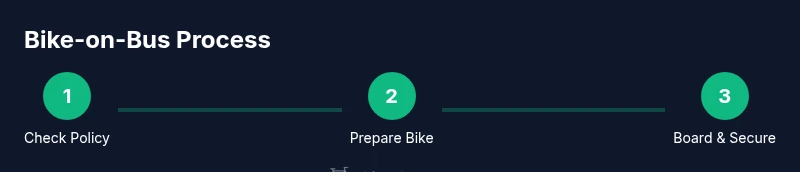
- 1
Check transit policy
Review your agency’s bike policy for the route you plan to take. This saves you from surprises and helps you prepare the correct equipment and timing. If you’re unsure, call or check the transit website before leaving home.
Tip: Have a printout or screenshot of the policy handy. - 2
Prepare the bike at home
Fold the bike if it’s a folding model, secure pedals, and remove loose items. Practice the folding sequence so you can do it smoothly in under 30 seconds at the stop. Pack essential parts in a small bag to avoid losing items during transfer.
Tip: Rehearse the sequence when you’re not in a hurry. - 3
Approach the boarding area
Walk to the doors with your bike, announce your intent if required, and position yourself to minimize blocking doors and passengers. Have flags or polite cues ready to communicate with the driver or staff if you need assistance.
Tip: Stay near the door but not in the gap between bus and curb. - 4
Board and secure the bike
Place the bike in the designated area or exterior rack. Use a strap to immobilize it and avoid placing it in the aisle. If inside the passenger area, keep it upright and secured so it doesn’t shift during the ride.
Tip: Ask staff if you’re unsure where to store the bike. - 5
Respect space and etiquette
Be mindful of other riders; avoid blocking seating or walkways. If someone needs to pass, hold the bike steady and allow space without forcing a move. Communicate politely if you need to disembark at a crowded stop.
Tip: Offer assistance to riders with mobility devices when possible. - 6
Disembark and unload
At your stop, release any straps, fold if needed, and move away from doors to clear the way for others. If space is tight, wait for a later bus rather than forcing a crowded exit.
Tip: Have a plan for a quick reassembly after you reach your destination. - 7
Store or reassemble
Take the bike to your next destination, reassemble it if needed, and store your gear safely. If you used an exterior rack, check your bike’s security before continuing your journey.
Tip: Make sure all clamps and fasteners are secure before riding again.
People Also Ask
Can I bring a full-sized bicycle on a bus?
In many systems, full-sized bicycles are not allowed inside passenger areas. Most riders bring folded bikes or use exterior racks where permitted. Always check the local policy for your route.
Most buses require folding or exterior racks for bicycles; check your route policy before boarding.
Do I have to pay extra fare for my bike?
Fare policies vary by transit system. Some allow bikes with no extra fare, while others reserve space for wheelchair users or require a special pass. Always confirm with the operator or website.
Bike fares vary; check your system’s rules or ask staff at the stop.
Are e-bikes allowed on buses?
Policy on e-bikes differs by agency. Some allow non-pedaled assist bikes if they fit in the designated area, while others prohibit motorized bikes entirely. Verify the policy before travel.
E-bikes are not universally allowed; confirm with the transit agency before riding.
What should I do if the bus is crowded?
If space is limited, wait for a later bus with clearer space or consider other transfer options. Being early and patient helps reduce conflicts.
If the bus is crowded, wait for a less busy bus or use an alternate route.
Where should I store a bike on the bus?
Store in the established bike area or exterior rack. Do not block doors, aisles, or emergency exits. Ask staff for help if you’re unsure.
Use the bike area or exterior rack and avoid blocking passageways.
What if my bike doesn’t fold?
If your bike isn’t foldable, many systems won’t permit it inside the bus. Look for routes with exterior racks or plan to ride to a nearby transit hub that allows bikes.
Non-folding bikes may not be allowed; check for exterior rack options or alternative routes.
Watch Video
Quick Summary
- Check policy before boarding with a bike.
- Fold and secure the bike to avoid movement.
- Be courteous and respect other riders’ space.
- Have backup plans if bikes are not allowed on certain trips.