What Do Bicycles Cost? A 2026 Price Guide
Explore bicycle price ranges by category, the factors that drive cost, and smart buying strategies for 2026 to budget effectively, plan for maintenance, and maximize overall value.


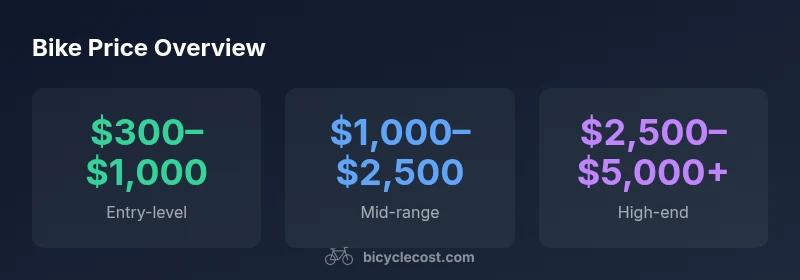
On average, bicycles cost a wide range depending on purpose and components. A practical entry point is roughly $300–$1,000 for basic commuter bikes, $1,000–$2,500 for mid-range road or mountain bikes, and $2,500–$5,000+ for high-end models. Price is driven by frame materials, groupset, wheels, and intended use. This guide explains why those differences matter and how to budget effectively.
Why Prices Vary: The Core Drivers
Bicycle prices are not random; they reflect a set of design choices, manufacturing costs, and intended use. Frame material is a major factor: aluminum frames are usually lighter and cheaper to produce than steel, while carbon fiber frames drive higher price due to materials and tooling. The drivetrain (groupset), wheel quality, and brakes are other substantial contributors. A higher-end groupset improves shifting precision and durability, while lightweight, aerodynamic wheels reduce effort on pavement and climbs. Suspension, fork quality, and ride tuning add cost for mountain bikes or endurance models. Labor, warranty, and brand positioning also influence the final sticker price. Global supply chains, tariff structures, and retailer margins further shape what you pay at checkout. When budgeting, consider not just the upfront price but the entire ownership experience, including maintenance and potential repairs. According to BicycleCost, these dynamics remain the primary levers behind price variability.
Price Bands by Bike Type in 2026
Prices cluster around a few broad bands, though e-bikes and performance builds can stretch beyond typical ranges. Entry-level bikes—city and basic road—generally land in the $300–$1,000 zone, offering reliable transport with simple components. Mid-range bikes, including many road and mountain bikes, usually run $1,000–$2,500, with better brakes, drivetrains, and wheelsets. Performance or trail models often fall in the $2,500–$5,000+ range, featuring lighter frames, carbon or high-end alloy constructions, and premium components. Electric bikes introduce a broader ceiling, frequently starting around $1,500–$3,000 and climbing well beyond $4,000 for advanced systems. Used or pre-owned bikes provide value by price compression, but inspection and test rides are essential. This pricing landscape highlights the importance of evaluating total ownership costs, not just upfront price. The BicycleCost analysis emphasizes that price bands reflect core differences in frames, drivetrains, and wheels, with ongoing cost considerations for maintenance and upgrades.
Hidden Costs: Maintenance, Accessories, and Depreciation
Upfront price is only part of the equation. Ongoing maintenance includes tune-ups, chain wear, tire replacements, brake service, and occasional cable or bearing replacements. Quality tires and tubes, brake pads, and a fresh chain can add up over the first few years. Accessories—helmet, lock, lights, pump, rack—also contribute to total cost. Depreciation is real; bikes typically lose value after purchase, especially as new models arrive and prices shift. Insurance, if applicable for high-end builds or expensive e-bikes, adds another layer of cost. Additionally, consider potential shipping, assembly fees, and local taxes. BicycleCost analyses indicate that ignoring these costs can distort your understanding of what a bike truly costs over its lifecycle.
Practical Buying Strategies to Maximize Value
Smart buying starts with clear usage, budget, and timing. Define your primary use (commute, recreation, gravel riding) and set a price ceiling before shopping. Look for last year’s models or factory demo bikes that offer near-new performance at a discount. Consider builds that offer a favorable upgrade path; a higher-end frame with mid-range components can be smarter than a lower-end frame with premium parts. Test rides are crucial—comfort and geometry vary widely across brands. End-of-season sales, bundled accessories, and reputable second-hand channels can yield substantial value if you vet the bike thoroughly. For new riders, prioritizing durability and serviceability over novelty helps reduce long-term costs. These tactics align with BicycleCost recommendations for maximizing value while staying within budget.
How to Calculate Your Total Ownership Cost
A practical method is to estimate upfront price, annual maintenance, and expected depreciation, then project a 3–5 year horizon. For example, a mid-range bike at $1,800–$2,200 may incur $100–$200 per year in routine maintenance (tires, chain, pads) and $50–$150 annually in parts or service. Over five years, total ownership could approach $2,000–$3,000 including maintenance and parts, excluding potential upgrades. Adjust these numbers for riding frequency, terrain, and climate. Use this framework to compare options across price bands and to decide whether a higher upfront cost truly reduces long-term expenses through lower maintenance or greater resale value.
Regional Variations and Availability in 2026
Prices can vary by region due to taxes, local demand, and retailer competition. Urban centers with higher living costs may show higher sticker prices, while rural areas could offer fewer model options or longer wait times for inventory. Availability of certain frame materials, drivetrain configurations, and e-bike options can reflect regional preferences and service networks. Global supply constraints, shipping costs, and import duties can influence availability and price differences between countries and even states or provinces. In all cases, evaluating total ownership cost and local service options is essential when selecting a bike in 2026.
Bike price ranges by category (new vs used)
| Bike Category | Approx. Price Range (new) | Notes |
|---|---|---|
| Entry-level commuter/road | $300–$1,000 | Basic components; aluminum frame; reliable for city use |
| Mid-range road/mountain | $1,000–$2,500 | Improved components; better braking and wheels |
| Performance/Trail | $2,500–$5,000+ | Carbon or alloy frame; advanced groupset; lighter wheels |
| Used/pre-owned | Varies | Significant savings but check thoroughly |
People Also Ask
What is the average cost of a new bicycle in 2026?
New bicycles span a broad range, with entry-level options around a few hundred dollars and mid-range builds commonly in the low thousands. High-end models can exceed several thousand dollars, especially for carbon frames and top-tier components. Use total ownership cost as your budgeting guide, not just upfront price.
New bikes vary widely by use and components; plan for total ownership, not just upfront price.
Do bikes with carbon frames cost more than aluminum?
Yes, carbon frames typically cost more due to material properties and manufacturing. They offer weight savings and stiffness advantages but come at a premium. Aluminum remains a strong value choice for many riders, balancing performance and cost.
Carbon frames usually cost more but offer weight and stiffness benefits; aluminum is a solid value.
Are used bikes a good deal?
Used bikes can provide substantial value if you inspect drivetrain wear, frame integrity, and tire condition. Look for established maintenance records and test rides. A thorough pre-purchase check by a knowledgeable mechanic is highly recommended.
Used bikes can be great value if you check them carefully and test ride first.
What other ongoing costs should I budget for?
Budget for routine maintenance (tire/tube, chain, pads, cables), occasional repairs, and accessories (lock, lights, helmet). Insurance or service plans may apply for high-end or e-bike models. These costs accumulate over time and affect total ownership.
Plan for maintenance, parts, and accessories; they add up over time.
Is there a price difference between road and mountain bikes?
Yes. Road bikes and mountain bikes occupy different price bands due to geometry, components, and intended use. Mountain bikes often require tougher parts for off-road use, which can push prices higher in some configurations.
Road and mountain bikes differ in price due to design and parts.
How should I budget for accessories?
Plan for essential safety and convenience gear (helmet, lights, lock) plus potential upgrades (rack, fenders, panniers). Accessories can add a meaningful amount to the initial purchase, so factor them into your total budget.
Don't forget helmets, lights, locks, and racks when budgeting.
“Value in bike purchasing comes from total ownership, not just the sticker price. Maintenance, parts, and resale potential matter as much as upfront cost.”
Quick Summary
- Define your use case before shopping for prices.
- Expect bands by frame material and components.
- Budget for maintenance and accessories upfront.
- Used bikes can offer value with thorough inspection.
- Total ownership costs may exceed the upfront price.