How to Bike on Street: Safe Urban Riding Guide
A comprehensive, step-by-step guide to street riding for safety and confidence. Learn positioning, signaling, intersections, gear, and practical street-smart tactics for urban biking.


You will learn how to bike on street safely, covering street positioning, signaling, lane sharing, and essential gear checks. This guide provides practical, street-smart steps and safety best practices for urban riding. Follow these steps to ride with confidence on city streets.
Street Riding Principles: Safety First
If you’re wondering how to bike on street, start with safety as your baseline. The street is a shared space where visibility, predictability, and anticipation matter more than speed. According to BicycleCost, the safest riders are those who establish a clear presence, communicate intentions early, and keep a steady course. This section outlines the core mindset: think ahead, scan for hazards, and ride as if drivers do not always see you. By prioritizing predictable movements and proactive signaling, you reduce surprises for both yourself and others. In urban environments, even small habits—like checking mirrors, eye contact with other road users, and avoiding sudden lane changes—can prevent many conflicts. Embrace a rider’s code: be courteous, be consistent, and stay off the phone. Your goal is a stable, confident ride, with room for others to react to your actions. This approach aligns with BicycleCost Team guidance on safe urban riding.
Why it matters: Street riding safety compounds over time; small, repeatable actions build lasting habits that protect you and others on crowded roads.
The Right Equipment and Visibility
Your gear is your first line of defense on busy streets. Start with a well-fitting helmet, front and rear lights, and high-visibility clothing or reflective gear so you’re easily seen in daylight and at night. A bell or horn helps you alert pedestrians and slower road users of your approach, while a mirror aids awareness of traffic behind you. Carry a basic repair kit, tire levers, spare tube, and a pump or CO2 inflator for on-the-go fixes. Vehicle-distance awareness improves when you add gloves for grip and control, and sturdy footwear that grips pedals. Regular checks before each ride reduce the chance of mechanical failure mid-journey. BicycleCost Analysis, 2026 emphasizes visibility gear and reliable lighting as key factors in street safety. Remember, your bike should be ready to ride: brakes, tires, and drivetrain should be in good condition. Pro tip: test your brakes in a safe, open area before entering traffic.
What to stock up on: Helmet, lights, bell, high-visibility clothing, repair kit, pump, gloves, and a spare tube.
Positioning Yourself in Traffic: Lane Choice and Position
On urban streets, where you sit in relation to motor vehicles is a constant decision. Position yourself where you are most visible and least vulnerable to sudden door openings or aggressive passes. In moderate traffic, ride near the center of your lane if you anticipate fast passes or if a right-turning vehicle might squeeze by you. In bike lanes or shoulders, stay aware of opening doors and parked cars. Keep a straight line and avoid weaving between cars; smooth, deliberate movements communicate confidence and predictability. Don’t fixate on the vehicle in front of you—scan for hazards ahead and plan a few moves in advance. Eye contact with drivers at intersections goes a long way toward mutual understanding. As you gain comfort, adapt your lane position to the speed of the traffic and the width of the road, always prioritizing your safety and the comfort of nearby road users.
Navigating Intersections and Signals
Intersections are high-risk moments for cyclists. Before entering an intersection, slow down a touch and look both ways; make eye contact with drivers where possible. Signal every intention well in advance: left turns require extended left arm signals, and lane changes necessitate clear signaling as well. When turning from a through lane, consider moving to a visible position in advance and yield to pedestrians with the right-of-way. If the intersection has dedicated bike signals or marked crosswalks, obey them as you would for motor vehicles. BicycleCost Team emphasizes predictable signaling and scanning for turning vehicles as core habits to reduce conflicts. If a light changes to yellow as you approach, evaluate whether you can stop safely; do not race the signal. Keep your cadence steady and avoid last-second maneuvers that surprise other road users.
Riding Techniques: Turning, Stopping, and Signaling
Mastering basic riding techniques makes street riding smoother and safer. Approach turns at a controlled speed, lean with the bike, and look through the turn to where you want to go. When stopping, brake progressively with both brakes to avoid skidding on slick surfaces. Hand signals should match your actions: signal your turns well before you begin and confirm with eye contact where applicable. For stopping, position yourself where you have a clear view of oncoming traffic and pedestrians. A predictable deceleration helps motorists anticipate your path. Practice these maneuvers in quiet sessions before attempting busy streets. The BicycleCost Team recommends practicing basic signaling and braking in a safe area to build confidence for real-world streets.
Dealing with Common Street Hazards
Street riding involves persistent hazard awareness. Watch for potholes, gravel, sand, drain grates, and wet patches that can cause instability. Anticipate pedestrian crossings, bus doors, and opening car doors in parked rows. Maintain a safe following distance from vehicles and look ahead several seconds to spot hazards early. If a car edges into your path, reduce speed smoothly and create space by adjusting your line, rather than making abrupt swerves. Regularly check your tires for embedded debris and keep your drivetrain clean to prevent unexpected stops. Based on BicycleCost Analysis, 2026, riders who stay visually predictable and preplan responses to hazards report fewer incidents. Stay calm and adjust your ride to the conditions rather than forcing a risky pass.
Key habit: treat hazard spotting like a game of chess—anticipate options, keep momentum, and choose the safest move.
Night Riding and Weather Considerations
Riding at night or in poor weather requires enhanced visibility and traction awareness. Use bright, steady lights and reflective gear; ensure your lights are aimed correctly to avoid blinding others while still illuminating the road ahead. Wet surfaces reduce grip; slow down and increase following distance to compensate for longer stopping distances. Wind, rain, and temperature changes affect tire grip and rider comfort, so adjust pressure and clothing accordingly. When visibility is poor, yield to pedestrians and give yourself extra space at intersections and crosswalks. The BicycleCost Team emphasizes that preparedness and visibility are the backbone of safe nighttime riding. Consider adding a compact rain shell and a thermal layer for colder commutes; stay dry and maintain control.
Practical Scenarios: City Streets, Suburban Roads, and Bike Lanes
Urban environments vary widely, from busy city centers to quieter residential streets. In busy city streets with mixed traffic, stay alert and maintain a steady pace that allows you to anticipate the actions of drivers. On suburban roads with higher speeds but fewer pedestrians, position yourself to be seen and avoid relying on motor vehicles to notice you. In dedicated bike lanes, stay within the lane boundaries and use the lane only when necessary to avoid being squeezed by opening car doors or buses. Always scan for merging traffic and driveways, and prepare for vehicles turning across your path. By applying consistent positioning, signals, and speed management, you can navigate diverse street contexts with greater safety and confidence.
Real-world tip: Communicate with drivers through eye contact and signals, and avoid aggressive riding that escalates risk for yourself and others.
Building Confidence: Practice Drills and Checklists
Confidence on the street grows with deliberate practice and a simple pre-ride checklist. Start in low-traffic environments or bike lanes before venturing onto busier streets. Daily pre-ride checks should include helmet fit, lights operation, brakes, tire condition, and gear shifts. Create a routine: start with slow rides, practice essential maneuvers like signaling and braking, and gradually introduce more complex scenarios such as roundabouts or right/left turns. Use practice routes that mimic your typical commute to reinforce muscle memory and reduce hesitation. The BicycleCost Team recommends documenting your practice sessions, noting which maneuvers still feel uncertain and scheduling focused drills to address those areas. With time, street riding becomes a predictable sequence of checks and actions rather than a rush of split-second decisions.
Tools & Materials
- Helmet(Certified by safety standards; proper fit)
- Front and rear lights(Visible in daylight and night; use steady or flashing modes)
- Bell or horn(Audible alert for pedestrians and slow road users)
- High-visibility clothing or vest(Fluorescent or reflective for daytime visibility)
- Repair kit (tire levers, patch kit, spare tube)(Know how to patch a tube and reinflate)
- Multi-tool and chain lubricant(Small, portable toolkit for minor adjustments)
- Mirrors(Optional for rear awareness)
- Water bottle(Stay hydrated on longer rides)
Steps
Estimated time: 60-90 minutes
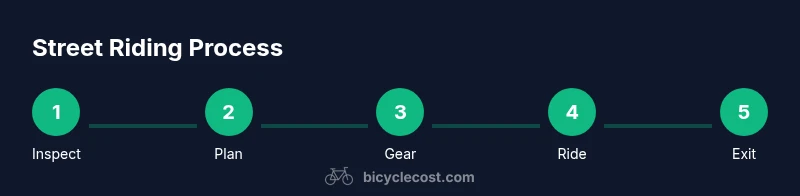
- 1
Inspect gear and bike
Before you ride, check brakes, tires, chain, and gears. Ensure lights work and your helmet fits snugly. Inflate tires to the recommended pressure and verify your repair kit is complete. This saves time and reduces the risk of a mechanical failure on the street.
Tip: Do a quick orbital check by spinning wheels and tapping brakes to hear or feel any issues. - 2
Check route and plan
Choose a route with lower-stress segments when you’re new to street riding. If possible, start with bike lanes or streets with slower traffic. Have a backup plan in case you encounter road work or detours. Mapping apps can help you anticipate signals and transitions.
Tip: Share your intended route mentally to anticipate turns and potential hazards. - 3
Position at the curb
Stand near the curb with space to move and an exit path in case you need to stop. Look for gaps in traffic, make eye contact with drivers, and prepare to merge when it’s safe. This stance communicates readiness and reduces last-second lane changes.
Tip: Keep your hands on the brakes and be ready to move forward if the traffic flow allows. - 4
Enter traffic with signals
Move into traffic using a smooth, predictable path. Signal early for turns and lane changes; maintain a steady cadence so drivers can predict your speed. Avoid weaving and monitor for door zones near parked cars.
Tip: Signal before you change lanes even if no one seems nearby; it reduces surprise for drivers behind you. - 5
Maintain lane position
Ride in a straight line with a consistent gap to parked cars and wheel-track away from obstructions. If the lane is narrow, you may remain near the center to deter unsafe passes. Scan ahead and communicate with motorists by eye contact and predictable movements.
Tip: Avoid riding too close to the curb where debris collects or door openings occur. - 6
Handle turns and signals
Approach turns at a safe speed, anticipate intersection traffic, and use clear hand signals. Keep your head up to scan cross-traffic and pedestrians. Re-enter your lane smoothly after completing a turn.
Tip: Practice left and right turns at moderate speeds in a quiet area to build confidence. - 7
Watch for hazards and adjust
Constantly scan for hazards like potholes, drainage grates, or wet patches. If a risk is detected, adjust your line early rather than braking hard at the last moment. Use controlled braking and maintain steering control.
Tip: If you must brake suddenly, do so with both brakes evenly to avoid skidding. - 8
Park and post-ride checks
Find a safe place to park and secure your bike. Do a quick post-ride check of brakes, tires, and chain. Hydration and stretch after a ride help maintain focus for your next trip.
Tip: Turn off lights if you’re parking in a low-visibility area and lock the bike securely.
People Also Ask
Is it legal to bike on streets in most places?
In most areas, bikes may ride on streets where traffic laws apply; always follow local regulations and yield to pedestrians where required. Check your city or state rules for specifics. Practicing safe visibility and signaling is universally encouraged.
Yes, street riding is generally allowed where traffic laws apply; follow local rules and yield to pedestrians. Always prioritize visibility and signaling.
What is the best lane position for urban riding?
Position yourself to be seen and to reduce unsafe passes. In narrow lanes, ride toward the center and stay predictable. In bike lanes, stay aware of door zones and pedestrians.
Ride where you’re most visible and predictable, and be mindful of door zones in bike lanes.
How should I signal turns while biking on streets?
Use clear hand signals well before turns or lane changes. Maintain eye contact with drivers when possible and confirm signals with riders behind you. Practice signaling in safe areas before tackling busy streets.
Signal early and clearly, then look for drivers and adjust as needed.
What safety gear is most important?
A well-fitting helmet, lights for day and night, and high-visibility clothing are essential. Add a bell or horn, and carry basic repair gear. Safety gear reduces risk and increases your visibility.
Helmet, lights, and visibility gear are essential for safety.
How can a beginner practice street riding safely?
Start in quiet neighborhoods or bike lanes, gradually introducing more complex scenarios. Build confidence with predictable signaling, smooth braking, and route planning. Consider a skills class or guided ride.
Begin in safe areas and gradually increase complexity with practice.
How do I handle parked-car hazards effectively?
Stay well clear of the door zone and anticipate doors opening. If a parked car pulls out, yield and adjust early. Maintain a safe distance behind vehicles and scan for pedestrians in driveways.
Be vigilant for door openings and slowly adjust your path.
Watch Video
Quick Summary
- Ride predictably with clear signals.
- Stay visible with lights and high-visibility clothing.
- Scan, plan, and practice in safe spaces first.
- Treat street hazards as expected challenges and adjust early.