How to Bike for Doordash: A Practical Guide for Cyclist Couriers
Learn how to bike for Doordash with practical gear, maintenance, and routing strategies. This BicycleCost guide covers safety, packing, night riding, weather prep, and quick bike checks to keep deliveries on time.


You can bike for Doordash by using a dependable bike, proper safety gear, and efficient routing. Before each shift, perform a quick bike check and pack essentials. This approach keeps you safe and speeds up deliveries.
Why biking for Doordash makes sense
For many couriers, biking offers a low-cost, high-flexibility way to earn. It reduces fuel costs, parking hassles, and vehicle wear while letting you navigate urban streets with agility. The BicycleCost team has seen riders complete more deliveries per hour when they maintain a fast cadence and keep a light, responsive bike. According to BicycleCost, optimizing gear, staying visible, and planning short, direct routes yields safer rides and more reliable on-time performance. But success requires more than speed: it requires discipline, maintenance, and smart packing. In this section, we explore why cycling fits the DoorDash model and where most riders stumble early on.
First, consider the economics. While ride-hail cars might attract high tips, bike deliveries minimize overhead and maintenance costs, which matters when your earnings depend on hours worked. Biking also reduces carbon footprint and fosters a healthier routine, which can boost long-term stamina. The key is to view each shift as three linked activities: prep, ride, and handoff. If any link slips—like a flat tire or a mis-pack—the entire shift slows. By focusing on gear readiness, lightweight bags, and consistent routes, you can maintain a predictable pace throughout a shift. Many top cyclists document a simple ritual: pre-ride check, quick route sketch, and a short warm-up ride before the real deliveries begin. This ritual translates into fewer surprises and more confident riding, even in dense traffic. The BicycleCost team notes that keeping a light pack and stable load helps center changes and reduces fatigue.
This guide is designed for riders at all levels who want to maximize safety, efficiency, and earnings when delivering on two wheels.
note":null},
Tools & Materials
- Reliable commuter or folding bike(Ensure frame fits rider height and is well-maintained)
- Helmet (CPSC-certified)(Always wear for head protection)
- Front and rear lights(Bright, visible at dawn/dusk and in traffic)
- High-visibility clothing or reflective gear(Wear reflective vests or bands for daytime safety)
- Panniers or courier backpack(Weatherproof if possible; distribute weight evenly)
- Smartphone with cycling/navigation apps(Map apps and DoorDash app should be ready)
- Bike repair kit (tire levers, patches)(Spare tube, patch kit, tire levers)
- Portable pump or CO2 inflator(Maintain proper tire pressure)
- Basic multi-tool(Allen keys, screwdriver bits for quick fixes)
- Rain gear (jacket, shoe covers)(Optional but recommended in poor weather)
- Bike lock(Useful for parking if you need a break or collide with a store)
- Water bottle and snacks(Stay hydrated and energized during long shifts)
Steps
Estimated time: 60-90 minutes
- 1
Inspect bike and gear
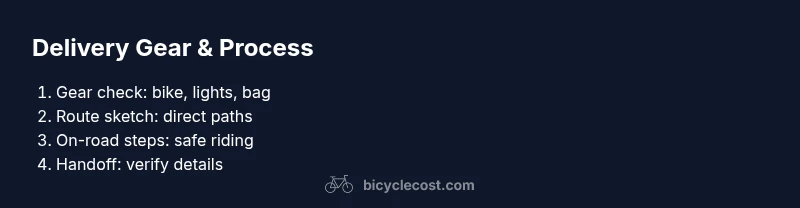
Before you start your shift, perform a full pre-ride check: tires for wear and proper inflation, brakes for responsiveness, chain lubrication, lights and reflectors, and bag securely mounted. A quick test ride around a block helps confirm everything feels right. This step reduces the chance of mid-shift mechanicals that slow you down.
Tip: Carry a compact repair kit and set your tire pressures to the recommended range before starting. - 2
Prepare bag and items
Pack orders securely in weather-appropriate bags, balancing weight to avoid front-back tilt. Label or group items by delivery to streamline handoffs. Ensure the DoorDash bag is clean, insulated if needed, and that you have a power bank for phone reliability.
Tip: Keep a small spare item in a separate pocket for quick substitutions without opening the main bag. - 3
Log in and plan your route
Open the DoorDash app and confirm your first few orders. Use a lightweight routing tool to sketch direct routes with minimal turns. Consider traffic patterns, bike lanes, and potential detours for faster handoffs.
Tip: Pre-select a fallback route in case of congestion and avoid known construction zones. - 4
Hit the road with safe riding
Maintain a steady cadence, use hand signals, and ride predictably. Keep at safe distances from parked cars and pedestrians. Adjust speed for street conditions and weather, and be mindful of door zones in dense urban areas.
Tip: Signal early for turns and stop at red lights as required; safety comes first over speed. - 5
Deliveries and handoffs
Approach each customer with a friendly greeting, verify the order details, and hand off via the accepted method. Recheck the next destination and prepare the next route while moving to the next pickup point. Leave with a clear plan for the next leg.
Tip: Double-check the door number and cross streets to prevent mis-deliveries. - 6
End shift and secure gear
Return to base or home, park in a safe spot, and perform a quick post-ride check. Wipe down the bike if needed, and re-inflate tires to resting pressure. Record shifts and note any recurring issues for future maintenance.
Tip: After a shift, do a brief maintenance log for items that wore quickly.
People Also Ask
Is biking for Doordash more profitable than driving?
Profitability depends on location, order frequency, and tips. Biking reduces fuel and vehicle costs, which can improve hourly earnings in some markets.
In many cities, biking lowers costs and can increase earnings if you work consistently and efficiently.
What bike is best for DoorDash deliveries?
A reliable commuter or light road bike with good braking, comfortable saddle, and compatible bags works well. Prioritize stability, ride feel, and fit over speed.
A sturdy, comfortable bike with good brakes and storage setup is ideal for daily deliveries.
Do I need special insurance or permits for bike delivery?
General liability coverage through a personal policy or a rider-specific plan is common. Check local regulations and the DoorDash policy in your area.
Most riders rely on personal insurance; verify with your provider and DoorDash guidelines.
How can I stay safe while delivering in busy cities?
Ride predictably, stay visible, use bike lanes when available, and avoid blind spots near cars. Plan routes with pedestrians in mind and avoid high-risk intersections.
Stay visible, predictable, and aware of your surroundings to keep safe in busy streets.
What equipment is essential for DoorDash biking?
Helmet, lights, bags, a basic repair kit, pump, phone mount, and a reliable bike are essential. Weather-appropriate gear helps with comfort and safety.
Helmet, lights, a sturdy bag, and a repair kit are must-haves for every shift.
Watch Video
Quick Summary
- Do a pre-ride bike check before every shift
- Pack with balance and weather in mind for efficient handoffs
- Plan routes to minimize hills and congested streets
- Prioritize safety gear and visibility at all times